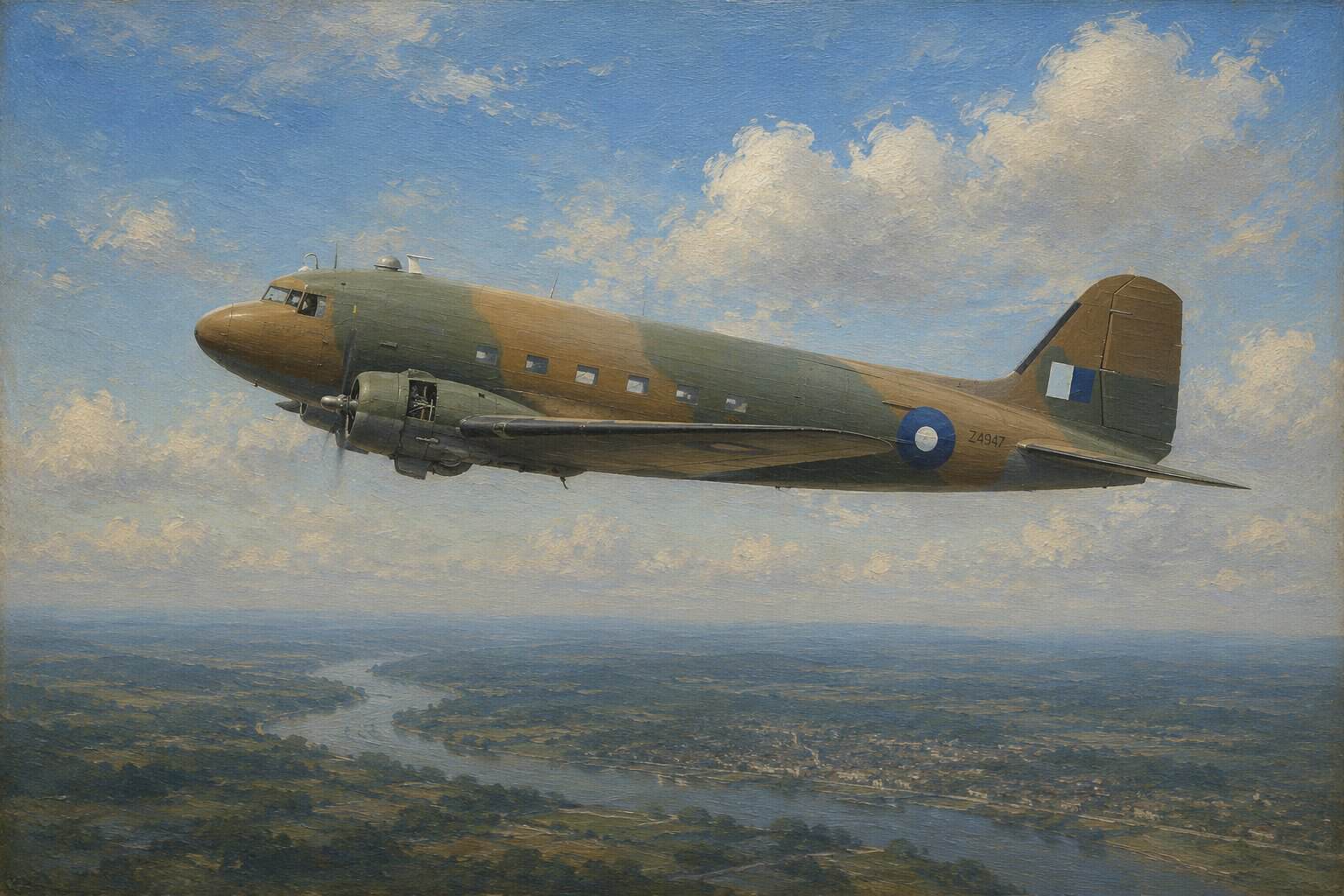
On 11 September 1945, Dakotas of No. 62 Squadron began flying Indian troops into Saigon, with French forces following the next day. The opening of the Saigon airlift reflected how quickly RAF transport assets were drawn into the unsettled political and military aftermath of Japan’s surrender in South East Asia. Although the global war had formally ended, the region was entering a new and unstable phase in which air transport became essential to the rapid projection of authority and the movement of troops into uncertain conditions.
The war after the war
Japan’s surrender did not produce immediate calm across Southeast Asia. Power vacuums, competing political claims and the collapse of Japanese control created a volatile landscape in which military presence still mattered. Saigon was one of the places where the transition from war to post-war settlement was especially tense.
In that environment, the RAF’s transport force proved immediately useful. Aircraft could move troops faster than sea or road, bypass damaged infrastructure and help establish a presence before local disorder hardened further. The Dakota, already one of the most important transport aircraft of the war, again became central because of its proven reliability and flexibility.
Why the Dakota mattered
The Saigon airlift shows how transport aircraft could shape events in the earliest hours of post-war occupation and re-entry. This was not a dramatic combat operation of the sort more often associated with wartime air power, yet it had strategic significance. Whoever could move organised troops first had an obvious advantage in restoring order, securing installations and influencing the direction of events on the ground.
The Dakota was ideal for such work. It could sustain repeated sorties, carry practical troop loads and operate in circumstances where speed of response was more important than spectacle. In Saigon, that made it an instrument of immediate policy rather than simply a logistical convenience.
RAF transport in a changing imperial world
The airlift is also important because it sits at the intersection of the end of war and the reassertion of empire in an unstable form. British and Commonwealth forces, French interests and local nationalist forces all formed part of the post-surrender picture. The RAF’s transport role therefore belonged not only to military administration, but to the politics of reoccupation and transition.
That gives the operation wider meaning in RAF history. It demonstrates that the Service’s transport arm could be pivotal even when the fighting had formally ceased. Aircraft remained essential because political control, relief, reinforcement and military presence still depended on movement.
Significance
The beginning of the Saigon airlift on 11 September 1945 matters because it reveals the RAF operating in the uncertain interval between global war and post-war settlement. Dakotas carried troops into a city where authority had to be re-established quickly and where the consequences of delay could be serious. In RAF history, the episode stands as a reminder that the Service’s wartime transport system remained crucial after surrender, when mobility, speed and control still shaped events on the ground.