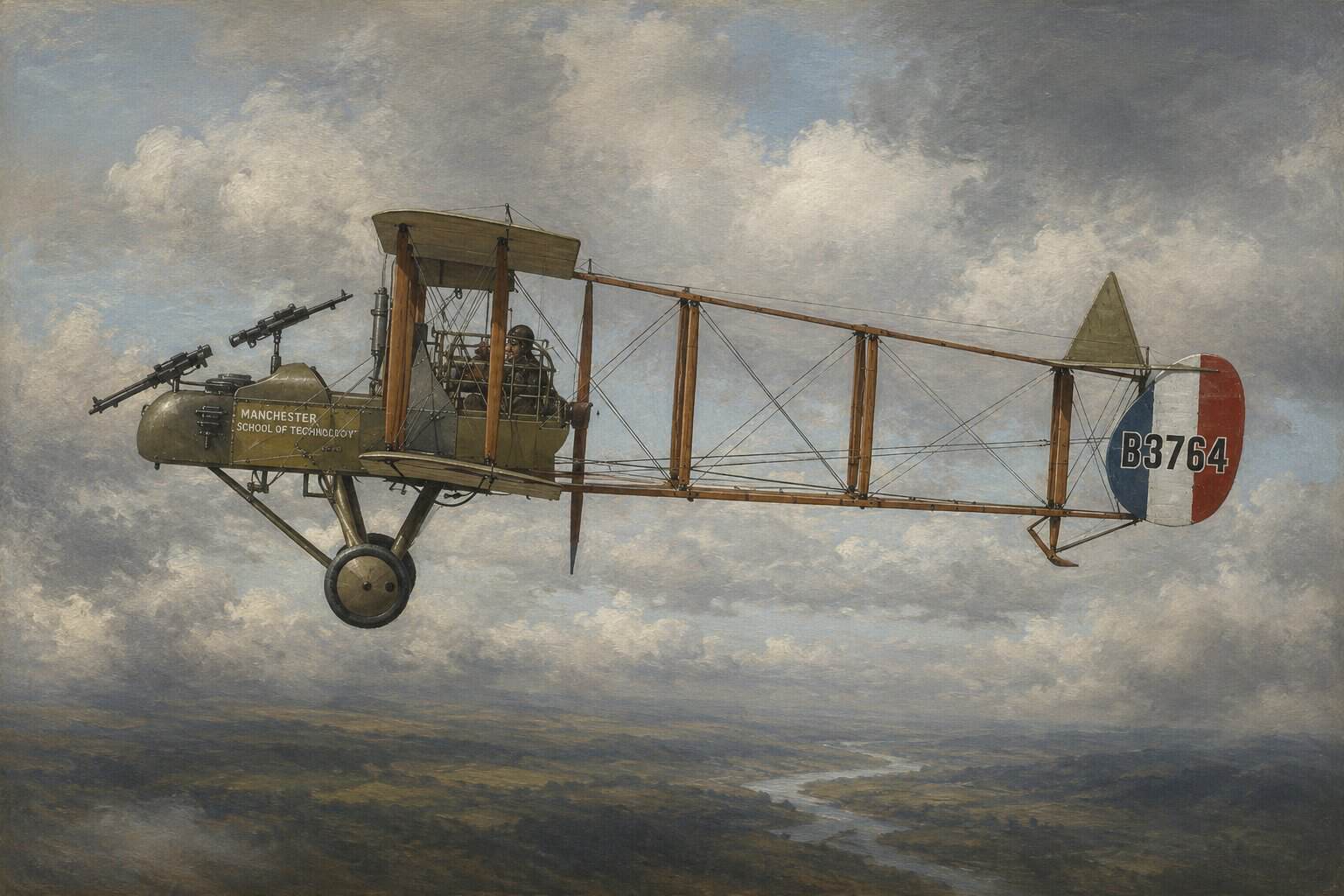
On 29 July 1914, as the European crisis deepened towards general war, the Royal Flying Corps received instructions to prepare aircraft, personnel and equipment for immediate overseas deployment. The order did not yet send the Corps into battle, but it marked the moment when Britain’s young military aviation arm began to move from peacetime routine to war readiness. In retrospect, it was a small administrative step with enormous historical consequences.
A young service on the edge of war
The Royal Flying Corps was still a relatively new organisation in 1914. Aviation itself remained immature, aircraft were fragile and doctrine was still evolving. Yet the strategic situation in Europe was deteriorating so rapidly that even an experimental-looking force could not be left unready. Mobilisation meant more than assembling machines. It required transport planning, stores, maintenance arrangements, personnel readiness, and clarity on which aircraft could actually be sustained in the field.
That is why the order deserves notice. Institutions are tested not only by combat but by the speed with which they can convert intention into usable force. For the RFC, July 1914 was the beginning of that test.
Preparing to go overseas
The importance of the instruction lay in its urgency. Once the political crisis intensified, Britain could no longer assume that aviation would remain peripheral. Aircraft offered reconnaissance, communication and observation capabilities that were already proving valuable, even if their future potential was not yet fully understood. Preparing them for immediate overseas deployment acknowledged that military flying had become operationally relevant from the first days of any continental war.
Readiness in 1914 was a demanding business. Aircraft needed packing, transport and support arrangements; trained air and ground personnel had to be assembled; and commanders had to think about how this new arm would fit into an army moving to France under great pressure of time. The RFC’s preparations formed part of the larger machinery of British mobilisation.
Why the order mattered
The Royal Flying Corps that prepared itself in late July 1914 was not the vast air force Britain would later possess. It was small, technically limited and still defining its role. Even so, its readiness mattered because early information from the air could influence decisions out of all proportion to the size of the force collecting it. Reconnaissance in particular would become one of the first indispensable contributions of military aviation in the opening campaign.
This helps explain the significance of the date. The order to prepare did not produce instant drama, but it set the conditions for later action. Without prompt administrative movement, there could be no timely operational movement. In military history, those are often the hinge moments that get overshadowed by the better-known battles.
The opening of Britain’s wartime air story
For RAF history, 29 July 1914 stands close to the true beginning of Britain’s modern wartime air effort. Before victories, losses, aces or famous machines came the more prosaic business of getting a fledgling air arm ready to move. The RFC’s mobilisation preparations were the first practical expression of that transformation.
In wider air-war terms, the date reminds us how rapidly aviation was absorbed into the structure of industrial war. Only a few years earlier, military flying had still looked experimental. By the eve of the First World War, it was already important enough to mobilise with the field army. That is what makes this order so revealing: it captures the moment when British air power ceased to be a possibility and became an instrument of war preparation.