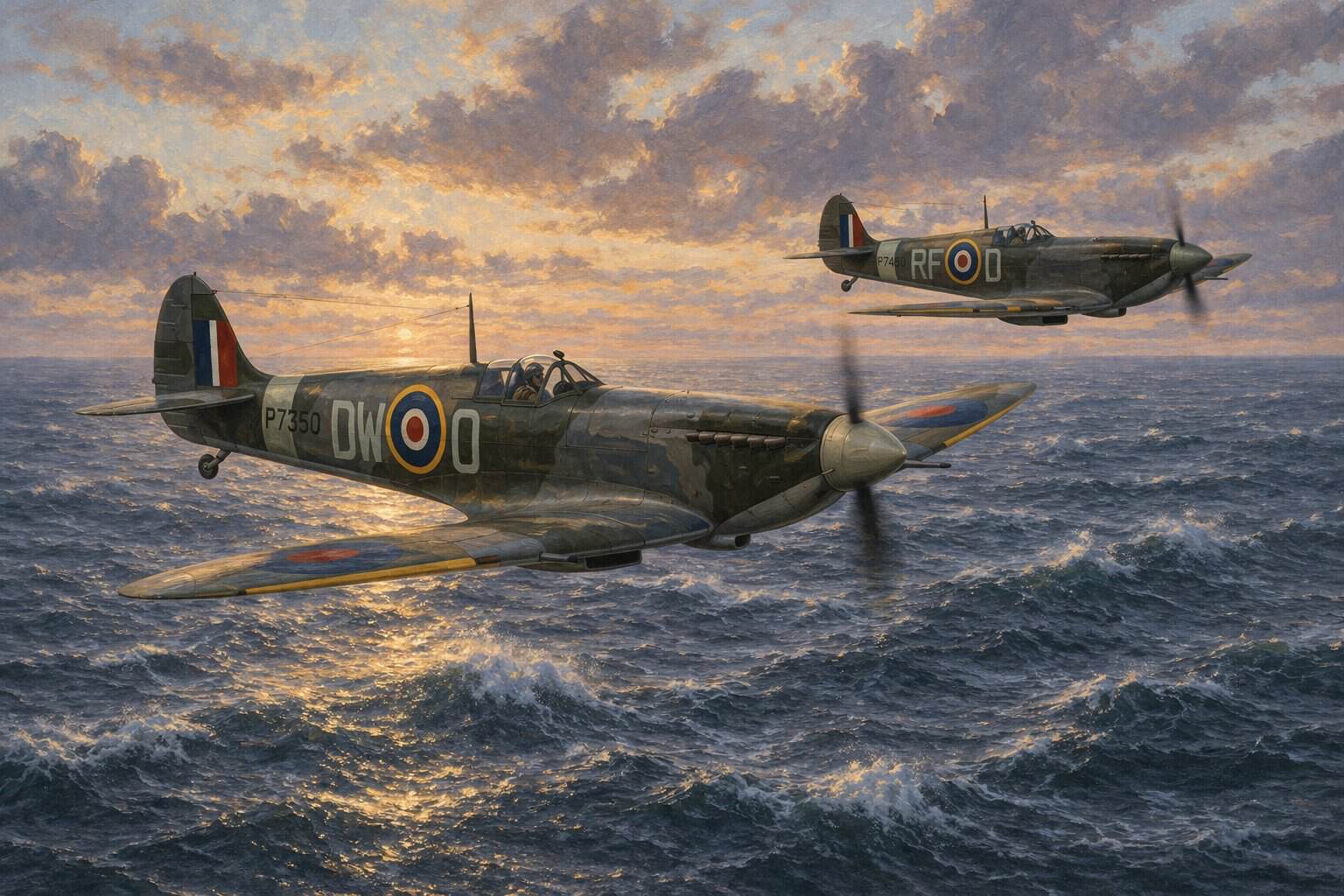
On 20 April 1942, Supermarine Spitfire fighters were ferried from the American aircraft carrier USS Wasp to Malta in Operation Calendar during the Siege of Malta, an urgent attempt to strengthen the island’s battered air defences. The need was clear enough. Malta had endured relentless Axis attacks, and every reinforcement mattered. Yet the operation is remembered not only for the arrival of much-needed fighters but also for the bitter fact that many were quickly destroyed or damaged on the ground during intense follow-up raids. In RAF history, it stands as a lesson in both necessity and vulnerability.
Reinforcement under extreme pressure
Malta’s defence depended heavily upon fighter strength, but keeping that strength in being was exceptionally difficult. Aircraft had to be delivered across long distances to an island already under close enemy attention. Operation Calendar showed the ingenuity with which the Allies sought to solve that problem. By launching Spitfires from a carrier for onward use from Malta, they created a way of moving fighters into a besieged theatre where ordinary reinforcement routes were perilous and constrained.
The operation represented a genuine achievement in coordination and resolve. It joined the naval and air effort in support of a strategic position whose survival mattered across the Mediterranean. For the RAF personnel defending Malta, the incoming aircraft offered the prospect of renewed resistance and a chance to contest enemy pressure more effectively. Reinforcement was not a luxury but a condition of survival.
Success overshadowed by immediate loss
What followed, however, revealed how narrow the margin remained. Intense enemy raids struck soon after the Spitfires arrived, and many of the aircraft were destroyed or damaged before they could make the full contribution hoped for. That outcome gave Operation Calendar its tragic edge. It was possible to deliver fighters to Malta, but far harder to ensure they could be protected, serviced and dispersed quickly enough under constant attack. In a siege environment, success in one stage of an operation could be undone with brutal speed in the next.
This does not make the operation pointless. Rather, it highlights the reality that wartime reinforcement is only the beginning of capability, not its guarantee. Aircraft on the ground remain vulnerable unless the wider system around them is resilient enough to absorb enemy blows. In April 1942, Malta was operating at the limits of that resilience. RAF history on the island is full of examples of courage and improvisation, but it also records how little room there was for error or delay.
Operation Calendar deserves remembrance because it captures the larger story of Malta in miniature. It contains strategic urgency, allied cooperation, ingenuity in delivery and the harsh consequences of sustained enemy pressure. On 20 April 1942, reinforcements reached the island, and that in itself was significant. Yet the immediate losses that followed served as a stark reminder that in the Mediterranean siege, simply getting aircraft to Malta was never the same as securing victory in the air.