On This Day, 1939: On 21 October 1939, 46 Squadron Hurricanes intercepted Heinkel He 115 floatplanes over the North Sea in the…
Read the entry →Boeing Poseidon MRA1
Boeing
The Boeing Poseidon MRA1 restored a fixed-wing maritime patrol capability to the RAF, combining anti-submarine warfare, long-range surveillance and modern networked maritime operations.
The Boeing Poseidon MRA1 restored the Royal Air Force’s dedicated fixed-wing maritime patrol capability after a decade-long gap. Based on the Boeing P-8A Poseidon, itself developed from the 737-800 commercial airliner, the aircraft brought modern anti-submarine warfare, maritime surveillance and long-range reconnaissance back into RAF service. Its arrival in 2020 marked a significant change in British maritime defence, particularly in the North Atlantic and the waters surrounding the United Kingdom.
Poseidon is operated from RAF Lossiemouth in Scotland by a force of nine aircraft. It supports the Royal Navy, protects Britain’s maritime approaches and contributes to NATO surveillance and anti-submarine operations. Although its sensors and weapons differ greatly from those of the Sunderland, Shackleton and Nimrod, its underlying task remains familiar: finding, tracking and understanding activity at sea, often far beyond the sight of land.
The Long History of RAF Maritime Patrol
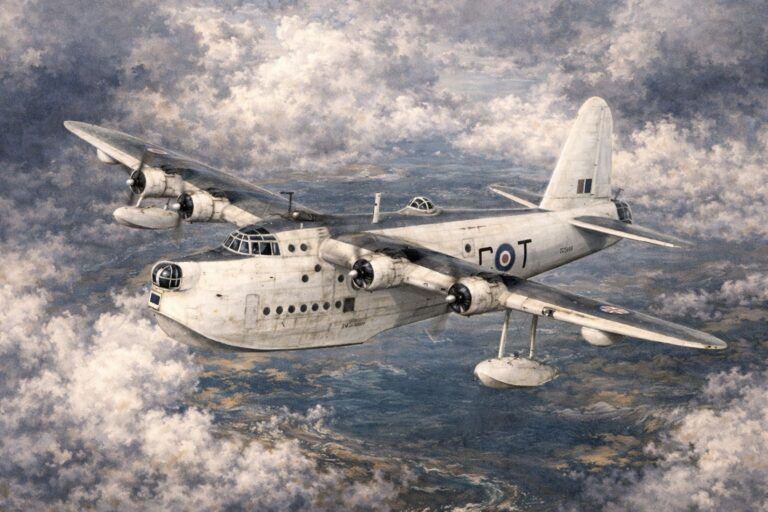
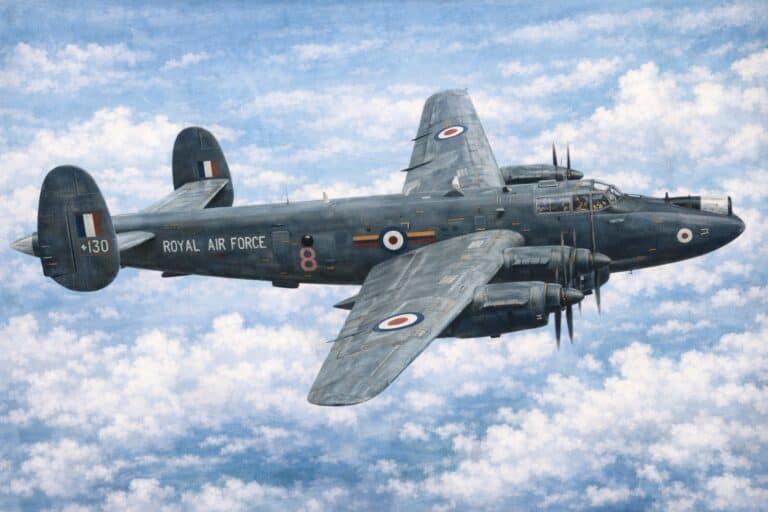
Maritime reconnaissance has been part of British air power since the earliest years of military aviation. During the Second World War, RAF Coastal Command used aircraft including the Short Sunderland and Consolidated Liberator to search for submarines, protect convoys and monitor hostile shipping. The post-war Avro Shackleton extended the RAF’s long-range maritime patrol role into the Cold War, followed by the jet-powered Hawker Siddeley Nimrod.
These aircraft were developed in different technological eras, but all addressed the same strategic problem. Britain is an island nation dependent on maritime trade, naval communications and access to the Atlantic. Aircraft able to search large areas of ocean can provide warning, gather intelligence and assist naval forces in responding to threats.
The Poseidon inherited this mission in a period when undersea activity, protection of vital infrastructure and the security of the North Atlantic were receiving renewed attention. It was not simply a replacement aircraft; it represented the rebuilding of an entire specialist capability.
The Nimrod Withdrawal and Capability Gap
The Nimrod MR2 had served the RAF for decades, but by the end of its career the fleet faced ageing airframes and increasing support demands. The type was withdrawn from service in 2010. A planned successor, the substantially rebuilt Nimrod MRA4, was intended to provide a modern maritime patrol system using extensively modified Nimrod airframes.
The MRA4 programme suffered major delays and cost increases. In the 2010 Strategic Defence and Security Review, the government cancelled the programme before the aircraft entered operational service. The decision left the RAF without a dedicated fixed-wing maritime patrol fleet, an absence that became a prominent issue in British defence debate.
Other RAF and allied aircraft could contribute to maritime surveillance, and Royal Navy ships and helicopters retained important anti-submarine capabilities. Nevertheless, these assets did not reproduce the combination of range, endurance, specialised acoustic sensors and maritime command systems provided by a dedicated patrol aircraft. The gap was especially significant for sustained operations over the North Atlantic and the approaches to the United Kingdom.
The Decision to Buy Poseidon
The 2015 Strategic Defence and Security Review announced the acquisition of nine Boeing P-8 maritime patrol aircraft. The aircraft would enter RAF service as the Poseidon MRA1, restoring a fixed-wing capability for anti-submarine warfare, maritime reconnaissance and support to naval operations.
The choice reflected the attraction of an aircraft already in service with the United States Navy. Selecting an established platform reduced some of the risks associated with developing a wholly new British design and offered opportunities for common training, equipment support and operational cooperation with allied forces.
The decision also reflected the importance of protecting Britain’s strategic deterrent and monitoring activity in the North Atlantic. Maritime patrol aircraft cannot guarantee that every submarine will be detected, but they add a mobile, wide-area search capability that complements ships, helicopters and other intelligence systems.
A Military Aircraft Based on the Boeing 737
The P-8A was developed from the Boeing 737-800 airliner, with structural and systems changes for maritime operations. It uses a 737-900-derived wing design and incorporates military communications, surveillance equipment, weapons arrangements and mission workstations. Two CFM International CFM56-7 turbofan engines provide power.
Its commercial ancestry offers advantages in established airframe technology, maintenance experience and a global support base. Yet the Poseidon is a specialised military aircraft rather than an airliner fitted with a camera. Its structure and onboard systems must support repeated long-range patrols, sensor operation and the carriage and release of military stores.
The aircraft’s jet performance allows it to transit quickly to distant patrol areas. Once on task, crews balance speed, altitude and fuel consumption against the needs of surveillance or anti-submarine search. The ability to reach an operating area rapidly can be as important as the time available to remain there.
Sensors and the Maritime Picture
Poseidon’s value depends on combining information from several types of sensor. Its maritime surveillance radar helps detect and track surface contacts, while electro-optical and infrared equipment can provide closer visual assessment. Electronic support systems contribute information about emissions from ships and other sources. These inputs are combined with navigation data, tactical information and reports received from other units.
A surface radar contact alone may reveal little about a vessel’s identity or purpose. Mission specialists examine its course, speed, behaviour and relationship to other contacts. They can compare sensor information with intelligence and reports from ships, aircraft and command centres. The resulting maritime picture supports decisions about where to search, which contacts warrant closer attention and how other forces should respond.
The aircraft also carries specialised equipment for underwater search. Acoustic information from sonobuoys is processed by mission systems and interpreted by trained operators. Finding a submarine is a demanding task because the ocean is noisy and variable, and because submarines are designed to avoid detection.
Sonobuoys and Anti-Submarine Warfare
Sonobuoys are expendable sensors deployed into the sea to listen for, or in some cases actively search for, underwater contacts. Different buoy types support different search methods. Information transmitted from the buoys allows the aircraft’s acoustic operators to assess possible submarine activity and refine a search.
A successful search requires more than dropping sensors into the water. Crews consider ocean conditions, likely submarine movements, the geometry of their buoy patterns and information received from other assets. Contacts must be evaluated carefully because natural and human-made sounds can complicate interpretation.
Poseidon can work with Royal Navy frigates, destroyers, submarines and Merlin helicopters as part of a coordinated anti-submarine effort. A ship or helicopter may contribute a different sensor perspective, while the aircraft can move quickly between areas and distribute sonobuoys over a broad search region. Sharing information helps each platform make better use of its strengths.
Weapons and Anti-Surface Capability
The P-8A design includes a weapons bay and external carriage arrangements for appropriate military stores. Its principal anti-submarine weapon capability centres on lightweight torpedoes, which can be used against a confirmed hostile submarine when authorised under the applicable rules of engagement.
The wider Poseidon family also has anti-surface warfare capabilities, but it is important to distinguish equipment available on the international P-8 platform from weapons actually integrated, cleared or routinely carried by the RAF fleet. British service descriptions should not assume that every weapon associated with a United States Navy aircraft is automatically part of the RAF’s operational fit.
Weapons are only one part of the aircraft’s contribution. A patrol may be concerned with locating, classifying and tracking a contact or passing information to a naval commander. Many of its most valuable missions will involve surveillance and deterrence rather than the release of weapons.
The Crew and Mission System
Poseidon is flown by pilots supported by a specialist mission crew. The mission specialists operate radar, acoustic and other sensors, maintain tactical awareness and coordinate with external units. Their work requires detailed knowledge of maritime operations as well as the aircraft’s equipment.
On a long patrol, the crew must manage competing priorities. An unexpected contact may require further investigation while the aircraft is already committed to a planned search. Operators assess incoming data, refine the search pattern and decide what information should be passed to ships, aircraft or headquarters. Effective maritime patrol therefore depends on crew training and judgement as much as the sophistication of the sensors.
The aircraft’s communications and data-sharing arrangements support joint operations. Its role is to turn observations into useful information that can be acted upon by naval and air commanders.
The First RAF Aircraft Arrive
The RAF’s first Poseidon, named Pride of Moray, arrived in the United Kingdom in February 2020, initially operating from Kinloss while facilities at RAF Lossiemouth were being completed. This marked the practical return of dedicated RAF maritime patrol aircraft after the Nimrod withdrawal.
RAF Lossiemouth became the permanent operating base later in 2020. The fleet grew as additional aircraft were delivered, and all nine had arrived by early 2022. Delivery of the complete fleet, however, should be distinguished from the progressive development of trained crews, maintenance support and full operational capability.
Establishing a new aircraft type involves building procedures and experience as well as receiving airframes. Aircrew and engineers undertook conversion and training, including cooperation with American personnel and facilities associated with the established P-8 community. The return of maritime patrol was therefore a phased process rather than a single event.
RAF Lossiemouth and the Atlantic Building
RAF Lossiemouth, on Scotland’s Moray coast, is well positioned for operations towards the North Atlantic, Norwegian Sea and northern approaches to the British Isles. The base also offers proximity to maritime operating areas of long-standing strategic importance.
Substantial infrastructure was developed to support Poseidon, including the Atlantic Building, which provides maintenance and operating facilities for the fleet. Such facilities are essential for an aircraft carrying specialised mission equipment that requires technical support alongside conventional airframe and engine maintenance.
Lossiemouth’s role extends beyond providing a runway. It is the centre of a maritime patrol force that needs crews, engineers, mission planning, secure communications and links to naval and allied command arrangements. The location also became important to the planned introduction of the E-7 Wedgetail, although the two aircraft have distinct missions and should not be treated as interchangeable.
No. 120 Squadron and No. 201 Squadron
No. 120 Squadron was selected to become the first RAF Poseidon unit, reviving a squadron with a distinguished maritime history. During the Second World War, No. 120 Squadron operated long-range Liberators in the Battle of the Atlantic, contributing to the campaign against U-boats. Its return to maritime patrol linked the modern fleet with that earlier tradition.
No. 201 Squadron also re-formed for Poseidon operations. The squadron had previously operated maritime aircraft including the Sunderland, Shackleton and Nimrod, giving it a direct historical association with the RAF’s long-range patrol role. Together, the two squadrons form the operational core of the RAF Poseidon force.
Squadron identity provides continuity, but the present-day mission differs greatly in technology and methods from wartime convoy escort or Cold War patrols. Today’s crews operate digital mission systems and share information within multinational networks, while still confronting the basic challenges of searching enormous areas of sea.
Protecting Britain’s Maritime Approaches
The waters surrounding the United Kingdom carry merchant traffic, naval movements and important undersea infrastructure. They also form the approaches through which ships and submarines move between the Atlantic, North Sea and other operating areas. Monitoring activity across these regions is a continuing defence requirement.
Poseidon supports that requirement through patrols, reconnaissance and anti-submarine search. Its contribution is particularly relevant to the security of Britain’s sea-based nuclear deterrent, although details of specific protective operations are necessarily sensitive. The aircraft should be understood as one element of a wider system rather than as a guarantee of submarine detection or maritime security.
Modern maritime threats can involve conventional submarines, surface vessels and activity near infrastructure. A flexible surveillance aircraft helps commanders investigate developing situations and assemble information from multiple sources.
NATO and the North Atlantic
The North Atlantic has long been a central area for NATO maritime defence. During the Cold War, allied patrol aircraft monitored submarine activity and supported the protection of shipping routes. Although the strategic environment changed after 1991, the need to understand undersea movements never disappeared.
Poseidon has become part of a wider allied maritime patrol network. The United States, Norway and other operators use variants of the P-8, creating opportunities for common procedures, training and logistical cooperation. RAF aircraft can contribute to allied surveillance while retaining the ability to support British national requirements.
Interoperability matters because a submarine or surface contact may move through areas watched by several nations. Information gathered by one patrol can assist another aircraft, ship or headquarters. Common equipment can simplify cooperation, but effective operations still depend on agreed procedures, communications security and trained personnel.
A Different Approach from Nimrod
The Nimrod MR2 was a distinctive British maritime patrol aircraft developed from the Comet airliner. Its long service created considerable RAF experience in maritime reconnaissance and anti-submarine warfare. Poseidon inherited the mission but approached it with newer sensors, a commercial-derived support model and close alignment with the international P-8 fleet.
That difference should not obscure the operational continuity. Both types were designed to search large ocean areas, investigate contacts and support naval forces. The methods of acoustic processing, data sharing and mission planning have evolved, while the fundamental uncertainty of finding a submarine in a vast and changing ocean remains.
The ten-year gap between the Nimrod MR2 withdrawal and the first Poseidon arrival also meant that specialist skills and operating arrangements had to be rebuilt. Introducing aircraft was only part of restoring the capability; training and retaining experienced crews was equally important.
Historical Significance
The Boeing Poseidon MRA1 represents the RAF’s return to a mission central to Britain’s maritime security. It combines long-range jet performance with sophisticated radar, acoustic processing and communications, allowing crews to contribute to anti-submarine warfare, surface surveillance and allied maritime operations.
Its arrival followed a controversial capability gap and required the creation of new infrastructure, squadrons and specialist expertise. The fleet’s significance is therefore both technological and institutional: it restored an aircraft type and rebuilt the RAF’s ability to conduct dedicated maritime patrols.
From Coastal Command’s wartime aircraft through Shackleton and Nimrod to Poseidon, the RAF’s maritime history has been shaped by the need to observe and defend the sea. Poseidon carries that responsibility into an era of networked operations, renewed North Atlantic competition and close cooperation with the Royal Navy and NATO allies.
| Dimensions | |
| Wingspan | 123 ft 6 in (37.64 m) |
| Length | 129 ft 6 in (39.47 m) |
| Height | 42 ft 1 in (12.83 m) |
| Wing area | 1,441 sq ft (133.9 m²) |
| Weights | |
| Empty weight | 138,300 lb (62,732 kg) |
| Max takeoff weight | 189,200 lb (85,820 kg) |
| Performance | |
| Maximum speed | 564 mph (907 km/h) |
| Cruise speed | 490 mph (789 km/h) |
| Service ceiling | 41,000 ft (12,497 m) |
| Range | 4,500 miles (7,242 km) |
| Powerplant | |
| Engines | 2 × CFM56-7B turbofan engines |
| Power | 27,300 lbf thrust each |
| Armament | |
| Guns | Capability for torpedoes, depth charges and anti-ship missiles in maritime service |

Arrival of the RAF’s First Poseidon MRA1
On 4 February 2020, the first RAF Poseidon MRA1 arrived in the United Kingdom, restoring a…
4 February 2026 · 5 minRAF Opens More Aircrew Roles to Women in 1989 Reform
On 20 July 1989, the RAF opened female aircrew service to all non-combat flying specialisations, marking…
20 July 2026 · 3 minLynx Sea Skua Strikes Hit Argentine Ships in the Falklands
Sea Skua attacks in the South Atlantic on 2 May 1982 sank Comodoro Somellera and damaged…
2 May 2026 · 3 min