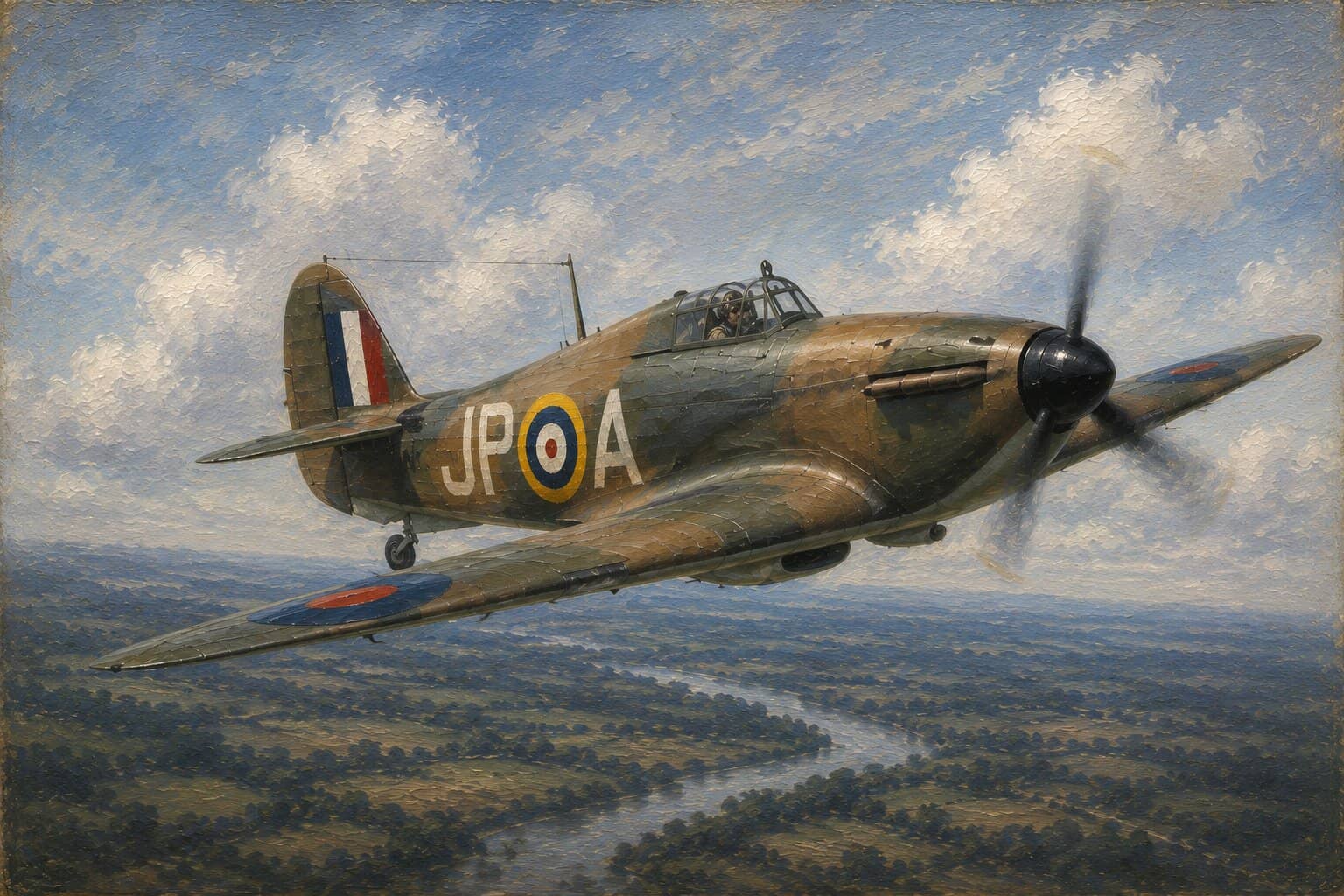
On 21 October 1939, Hurricanes of No. 46 Squadron were directed from North Coates to intercept German Heinkel He 115 floatplanes over the North Sea. The German formation had already encountered Spitfires of No. 72 Squadron when the Hurricanes joined the action. Several Heinkels were destroyed in an engagement that marked the Hawker Hurricane’s first combat action in RAF service.
The interception brought together two of Fighter Command’s modern fighters during the opening weeks of the Second World War. It also placed the protection of Britain’s coastal waters at the centre of an early air battle, as German maritime aircraft and British defensive patrols came into contact offshore.
Hurricanes from the Lincolnshire coast
No. 46 Squadron had converted to the Hurricane in February 1939 and was based at RAF Digby when war began. Its duties included providing air cover for shipping along the east coast. On 21 October, the Hurricanes involved in the interception operated from North Coates, a satellite airfield on the Lincolnshire coast.
That distinction connects the squadron’s established home station with the airfield used for this particular action. Coastal flying grounds gave its fighters a departure point close to the waters they patrolled. The squadron’s work combined the readiness required for an interception with the continuing demands of convoy protection.
The Heinkel He 115 was a twin-engined floatplane employed in maritime operations. The formation encountered that day was searching the North Sea for shipping to attack. Its presence brought German offensive activity into the area covered by Fighter Command’s coastal defences.
The interception over the North Sea
The Heinkels were flying low over the sea when British fighters engaged them. Spitfires of No. 72 Squadron attacked first, damaging aircraft in the formation. Ground direction then brought the Hurricanes into contact with the same enemy force, allowing No. 46 Squadron to make its first attacks of the war.
The Hurricanes attacked the floatplanes and broke up their formation. For the pilots, an operational routine of patrols and readiness had become a direct encounter with enemy aircraft. The action demonstrated the Hurricane’s ability to overtake and engage maritime aircraft operating near the British coast.
Both British squadrons submitted victory claims. Their combined claims exceeded the number of German aircraft actually lost, making the distinction between reported successes and confirmed destruction important. The secure outcome was the loss of several Heinkels, while the British claims exceeded the number of German aircraft actually destroyed. The engagement established an early combat success for No. 46 Squadron and a significant operational milestone for its fighter.
An early home-defence success
The autumn of 1939 brought Fighter Command a mixture of defensive patrols, convoy-cover duties and intermittent encounters with German aircraft. The North Sea action showed how maritime threats could draw successive British fighter units into the same engagement. Ground direction helped turn a defensive deployment into an interception at sea.
For No. 46 Squadron, coastal protection remained the main task in the months that followed. Its Hurricanes continued to cover shipping along the east coast, linking the defence of British airspace with the security of the sea routes beside it. The fighting on 21 October gave that continuing duty a tangible result: enemy maritime aircraft destroyed and the Hurricane committed to combat.