On This Day, 1954: Canberra Aries IV flew over the North Pole on 14–15 October 1954, demonstrating RAF jet navigation on a…
Read the entry →Airspeed Horsa
Airspeed Ltd
The Airspeed Horsa gave RAF airborne forces a practical assault glider for Normandy, Arnhem and the Rhine crossing, carrying troops, guns and vehicles.
The Airspeed Horsa was the aircraft that made large-scale British airborne assault practical. Built as a troop-carrying glider rather than a powered transport, it gave planners a way to put men, guns and light vehicles down in tight landing zones close to the objective. For the Royal Air Force, that meant more than simply hauling another airframe through the sky. It meant building a whole system of tug crews, training, assembly, maintenance and operational planning that could deliver airborne forces into battle at the decisive moment.
Built for Britain’s airborne expansion
The Horsa emerged from the British response to the early wartime success of German airborne forces. Airspeed designed it as a large wooden assault glider that could be produced quickly by a network of contractors and then assembled by RAF Maintenance Units before issue to operational formations. That production method mattered. Britain needed numbers, not handcrafted curiosities, and the Horsa was intended from the start to be a practical weapon of mass employment.
Its size made it far more useful than the smaller gliders that had come before. A Horsa could carry a substantial body of troops or bulky loads that airborne troops needed immediately after landing, including light vehicles, anti-tank guns and stores. The AS.58 Horsa II improved loading arrangements further with a hinged nose, helping crews get equipment in and out faster once on the ground.
How the RAF used the Horsa
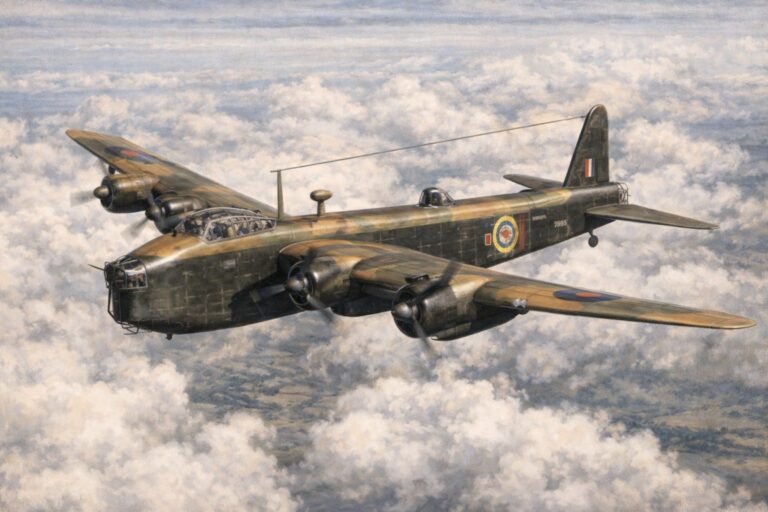
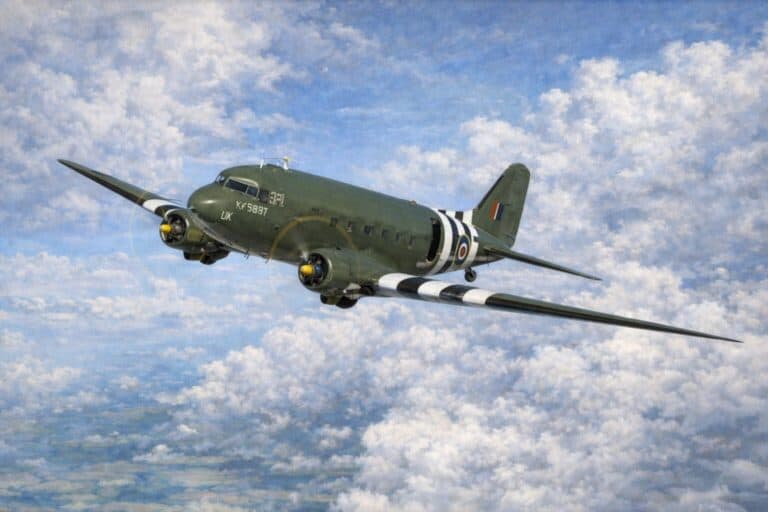
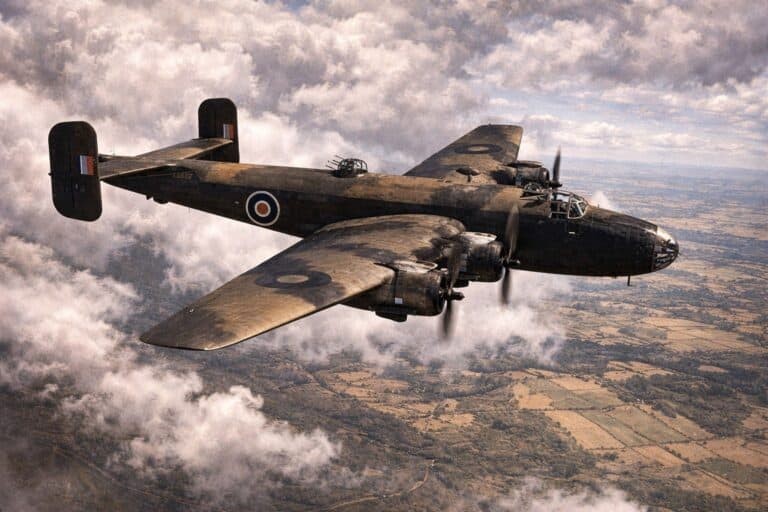
The Horsa depended on powered tug aircraft and a coordinated system of RAF transport units, ground crews and airborne formations. Armstrong Whitworth Albemarles, Short Stirlings, Handley Page Halifaxes and other suitable aircraft towed Horsas towards their objectives. The glider pilots were principally members of the Army’s Glider Pilot Regiment, while the RAF supplied much of the towing, training, maintenance and operational infrastructure. No. 38 Group RAF played a central part in developing and conducting airborne operations, with No. 46 Group also contributing transport and glider-towing support during major assaults. Accurate navigation, formation flying and release timing were essential because a glider had no engine with which to correct a major approach error after release.
The Horsa’s operational debut came during Operation Freshman on the night of 19–20 November 1942. Two Horsas, each carrying 15 Royal Engineers and two pilots, were towed towards Norway by Halifax bombers from RAF Skitten. Their objective was the heavy-water production plant at Vemork, near Rjukan. Severe weather and navigational difficulties prevented the gliders reaching their landing zone. Both gliders crashed, as did one Halifax tug. Surviving glider personnel were subsequently executed by German forces. The operation demonstrated the considerable risks of long-distance glider assault in difficult conditions.
The Horsa’s first major operational employment followed during Operation Husky, the Allied invasion of Sicily in July 1943. Thirty Horsas had been flown from Britain towards North Africa, of which 27 reached the Mediterranean theatre. They joined the wider airborne assault on Sicily, where navigation, release-point errors and sea landings caused serious losses among Allied glider forces.
In June 1944, Horsas played an important role in Operation Overlord. During the opening hours of D-Day, six Horsas delivered the coup-de-main force that seized the bridges over the Caen Canal and River Orne, including the crossing later named Pegasus Bridge. Further glider landings reinforced the British airborne division east of the River Orne.
During Operation Market Garden in September 1944, Horsas transported British airborne troops, equipment and supplies into landing zones around Arnhem and other objectives in the Netherlands. The operation demonstrated both the carrying capacity of assault gliders and the vulnerability of airborne forces when ground relief was delayed. The Horsa returned in strength for Operation Varsity on 24 March 1945, supporting the Allied crossing of the Rhine. Both Horsa I and Horsa II aircraft took part, with the later mark providing improved access for vehicles and equipment through its hinged nose.
RAF glider operations and their legacy
The Horsa required the RAF to develop specialist capabilities extending well beyond conventional air transport. Tug crews, maintenance units, glider assembly facilities and airborne planners had to work together to deliver soldiers and equipment to landing zones that could not be reached by powered transport aircraft.
Its large cabin allowed airborne formations to arrive with equipment that parachute troops could not readily carry, including anti-tank guns and light vehicles. The type was consequently central to several of the British Army’s largest airborne operations.
Following the Second World War, the Horsa was withdrawn from operational service. Its wartime record nevertheless demonstrated how RAF transport and support units could enable large-scale combined operations. From the unsuccessful Norwegian mission of 1942 to the Rhine crossing of 1945, the Horsa formed an important part of the RAF’s contribution to airborne warfare.
| Dimensions | |
| Wingspan | 88 ft 0 in (26.82 m) |
| Length | 67 ft 0 in (20.42 m) |
| Height | 19 ft 6 in (5.94 m) |
| Wing area | 1,104 sq ft (102.6 m²) |
| Weights | |
| Empty weight | 8,370 lb (3,797 kg) |
| Max takeoff weight | 15,500 lb (7,031 kg) |
| Performance | |
| Cruise speed | 100 mph (161 km/h), gliding speed |
| Service ceiling | N/A |
Operation Overlord
How the RAF helped shape Operation Overlord through strategic bombing, airborne delivery, air cover and sustained support in Normandy.
Operation Market Garden
How the RAF supported Operation Market Garden through transport aircraft, glider towing, fighter control and resupply in September 1944.
The RAF and D-Day Air Power in Operation Overlord
How the RAF helped make D-Day possible through air superiority, transport missions, tactical support and the…
29 April 2026 · 4 minMosquito Enters Bomber Command Service with No. 105 Squadron
On 1 June 1942, No. 105 Squadron flew the Mosquito’s first operational bombing mission for Bomber…
1 June 2026 · 3 minTwo RAF Lancasters Collide Over the Netherlands
On 8 February 1945, two RAF Lancaster bombers collided over the Netherlands after a Dortmund–Ems Canal…
8 February 2026 · 5 min