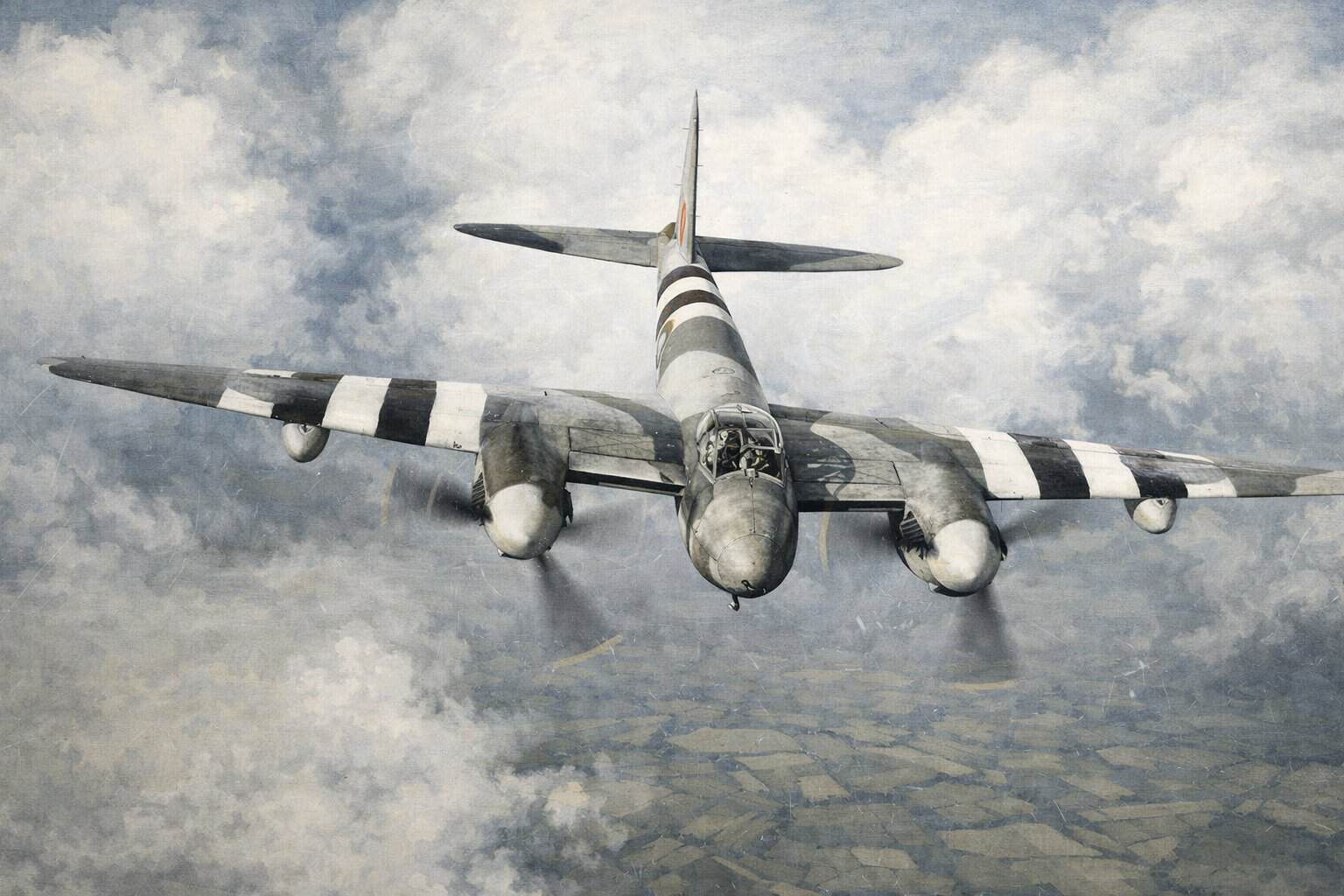
D-Day is often remembered first for the landings on the Normandy beaches, yet the success of Operation Overlord depended heavily on Allied control of the air. For the Royal Air Force, the campaign was not confined to one dramatic day of action but, it formed part of a larger effort to isolate the battlefield, protect the invasion fleet, support airborne forces and maintain pressure on German movement after the landings began. The RAF's role in D-Day air power was therefore extensive, varied and central to the operation’s success.
What makes the RAF contribution especially important is its breadth. Bomber forces, tactical aircraft, transport aircraft, fighters and reconnaissance assets all had roles to perform. The invasion succeeded not because one branch of air power dominated, but because different forms of air activity were integrated into a single operational framework. In this sense, D-Day was a major demonstration of mature Allied air-ground cooperation.
Air power before the invasion
The air dimension of D-Day began long before 6 June 1944. Allied planners knew that the invasion could not be attempted unless the Luftwaffe had been weakened and the battle area isolated from rapid reinforcement. This meant a prolonged preparatory campaign against transport systems, radar sites, communications and coastal defences.
The RAF played a major part in that process. Bomber aircraft attacked railway centres, marshalling yards and coastal targets, while fighters and fighter-bombers maintained offensive sweeps and pressure over occupied Europe. The purpose was not simply destruction for its own sake, but the systematic disruption of Germany’s ability to respond once the landings began.
Fighter cover and air superiority
By June 1944, the Luftwaffe in the west had been weakened to the point where it could no longer challenge Allied air superiority effectively. This mattered enormously. It gave the invasion fleet and assault forces a degree of freedom from large-scale air attack that had not existed in earlier amphibious operations such as Dieppe.
RAF fighters helped secure and maintain this superiority. Their role was not just defensive. Offensive patrols, sweeps, and standing cover over the beachhead all formed part of the system that kept German aircraft from seriously interfering with the landings. The broader air campaign had made this possible, but the continuing fighter presence ensured it was maintained.
Airborne forces and transport support
Transport aircraft were also central to the invasion. RAF and Allied air transport forces carried airborne troops and towed gliders in support of the assault. These missions were demanding and hazardous, requiring precise navigation at night and coordination under operational pressure.
The RAF's contribution here underscores a broader truth about D-Day air power: it was not only about fighters and bombers. Air mobility, navigation and controlled delivery of troops and equipment all mattered. In that respect, the invasion anticipated many later ideas about integrated air and land operations.
Tactical air power over Normandy
Once the landings were underway, RAF tactical air power became critical in containing German attempts to counter-attack. Fighter-bombers and other tactical aircraft attacked roads, columns, bridges and concentrations of enemy movement. Their work was especially important because it slowed the pace of reinforcement and helped keep German forces under constant pressure as the Allies secured and expanded the bridgehead.
This was one of the clearest wartime demonstrations of how air superiority, interdiction and battlefield support could work together. The RAF’s role in north-west Europe after the landings formed part of a much wider operational system rather than a simple series of isolated sorties.
Historical significance
The RAF's role in D-Day air power matters because it shows how far British and Allied air operations had developed by 1944. This was no longer the improvised or limited air warfare of the early war years. It was coordinated, strategic and closely connected to ground and naval objectives.
Operation Overlord succeeded for many reasons, but one of the most important was that Allied air control had been achieved and exploited effectively. The RAF contribution to that achievement ran from bombing and fighter cover to transport and tactical support. D-Day stands as one of the clearest examples of the RAF operating as part of a mature and integrated coalition air-power system at the decisive stage of the war in Western Europe.