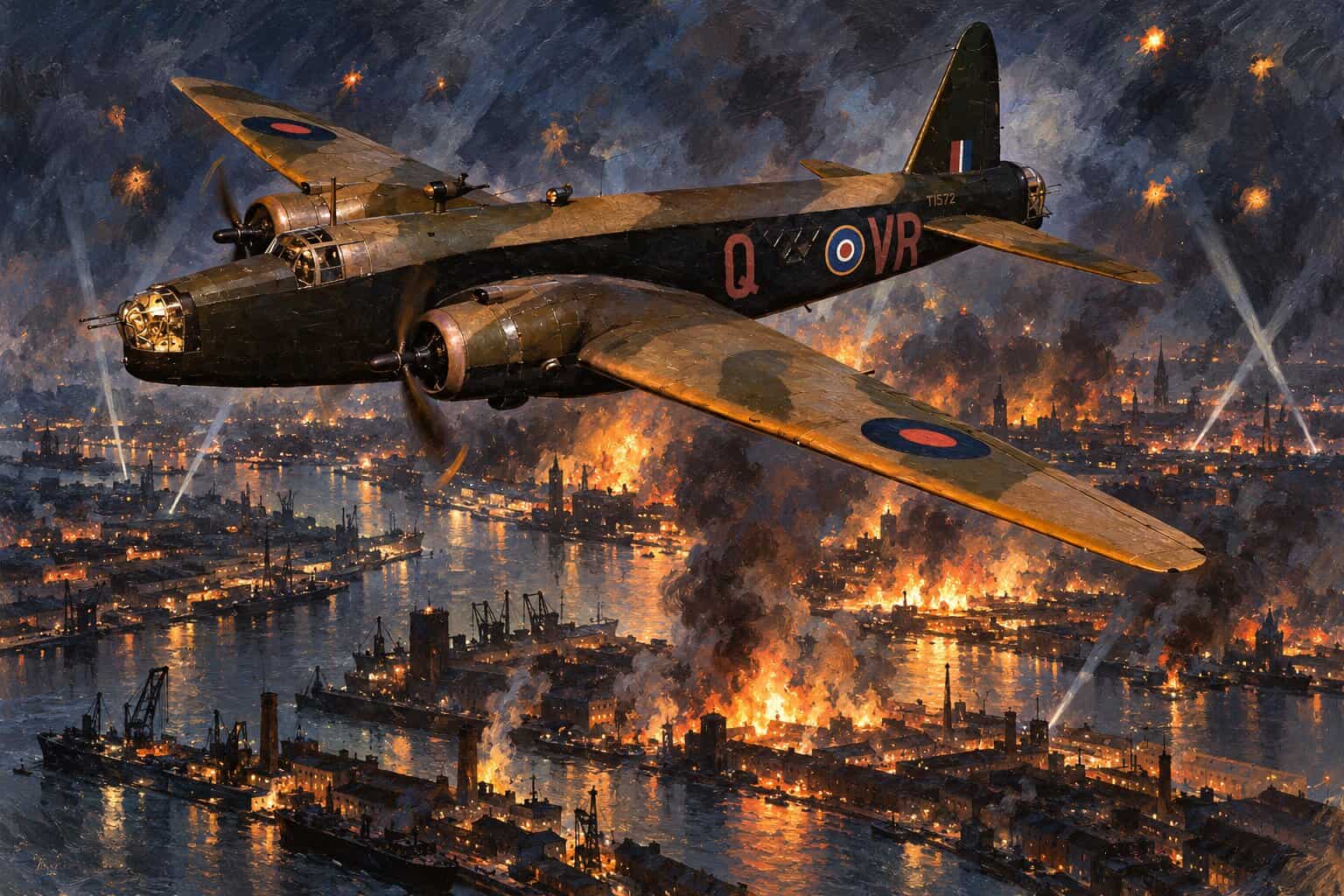
On the night of 15–16 November 1940, RAF Bomber Command attacked Hamburg, one of Germany's principal ports and industrial centres. Forty-nine aircraft were recorded as attacking the city during an operation that exposed the difficulties of navigating and identifying targets after dark. The raid formed part of Britain's developing night offensive against German industry and maritime infrastructure.
Hamburg combined maritime trade, shipbuilding and industry within a large urban area. Those features made it a recurring objective for British bombing operations. In November 1940, however, the RAF did not yet possess the electronic navigation aids, specialist target-marking force or mass heavy-bomber strength associated with the later campaign.
Hamburg under attack
The operation formed part of a continuing series of RAF attacks against German ports and industrial objectives. Forty-nine bombers were recorded as attacking Hamburg, although the number dispatched may have been higher.
Aircraft sent on an operation did not necessarily reach or bomb their assigned targets. Weather, navigation difficulties and enemy defences could prevent crews from completing their missions. This distinction is important when assessing the scale of the Hamburg attack.
The city presented numerous potential objectives, including its docks, shipyards and industrial installations. The Blohm & Voss shipyard was among Hamburg's important industrial installations. Although damage to the shipyard has been associated with the November bombing operations, it cannot be confidently assigned to the attack of 15–16 November rather than the following night's raid.
Finding industrial targets at night
For RAF Bomber Command, reaching a distant city was only part of the problem. Crews also had to navigate in darkness, identify the target area and locate particular objectives under blackout conditions, cloud and the pressure of enemy defences.
These limitations were central to Bomber Command's operations in 1940. Individual factories, docks and shipyards could be difficult to identify from the air at night, and bombs could fall across a much wider area than intended. The challenge was therefore not simply putting aircraft over Hamburg, but converting their arrival into concentrated bombing of the selected objectives.
The following night's return to Hamburg underlines the continuing nature of the effort. Successive operations against the same city could produce very different reported results depending on weather, navigation, target identification and the number of crews able to attack.
A port within the expanding air war
The Hamburg raid came immediately after the Luftwaffe's devastating attack on Coventry on the night of 14–15 November. The RAF operation was part of Britain's existing bombing offensive rather than a single retaliatory action created by the Coventry raid, but the proximity of the two events illustrates how rapidly the air war was intensifying over both countries.
Hamburg would remain a major Bomber Command target throughout the war, culminating in operations on a vastly different scale in 1943. The attack of 15 November 1940 belonged to an earlier phase. Bomber Command could send significant forces deep into Germany, but navigation, target identification and bombing concentration remained formidable problems.
The November raid demonstrated both the reach and the limitations of Bomber Command's early night offensive. Hamburg's docks, shipyards and factories offered important military and economic targets, but reaching the city did not guarantee accurate bombing. The problems encountered in 1940 would shape the development of RAF navigation, target marking and bombing methods throughout the following years.