On 4 November 1940, RAF Coningsby opened in Lincolnshire under No. 5 Group, Bomber Command. Its establishment brought another station into the RAF’s expanding wartime airfield network. The first resident flying squadron arrived in February 1941, with operational flying following in March, as the new station developed into a working bomber base.
Coningsby’s opening began a period of rapid adaptation. Within two years, the demands of heavier aircraft would require a substantial rebuilding programme. Its early history linked pre-war expansion plans, the arrival of operational squadrons and the construction work needed to sustain the bomber offensive.
From expansion plans to a wartime station
Plans for an airfield at Coningsby dated from the RAF expansion programme of 1937. Slow progress with compulsory land purchase and associated difficulties delayed work for two years. The development therefore crossed the boundary between peacetime preparation and wartime construction.
The original scheme envisaged a permanent station with Type C hangars. During development, these were replaced in the plans by two more utilitarian Type J hangars. Much of the camp had been constructed before the war began, while the airfield itself retained a grass surface when it opened late in 1940.
These arrangements provided the starting point for Coningsby’s service with No. 5 Group. The November opening established the station within Bomber Command’s organisation; the arrival of its flying units would give that establishment an operational role during the following spring.
Hampdens and Manchesters arrive
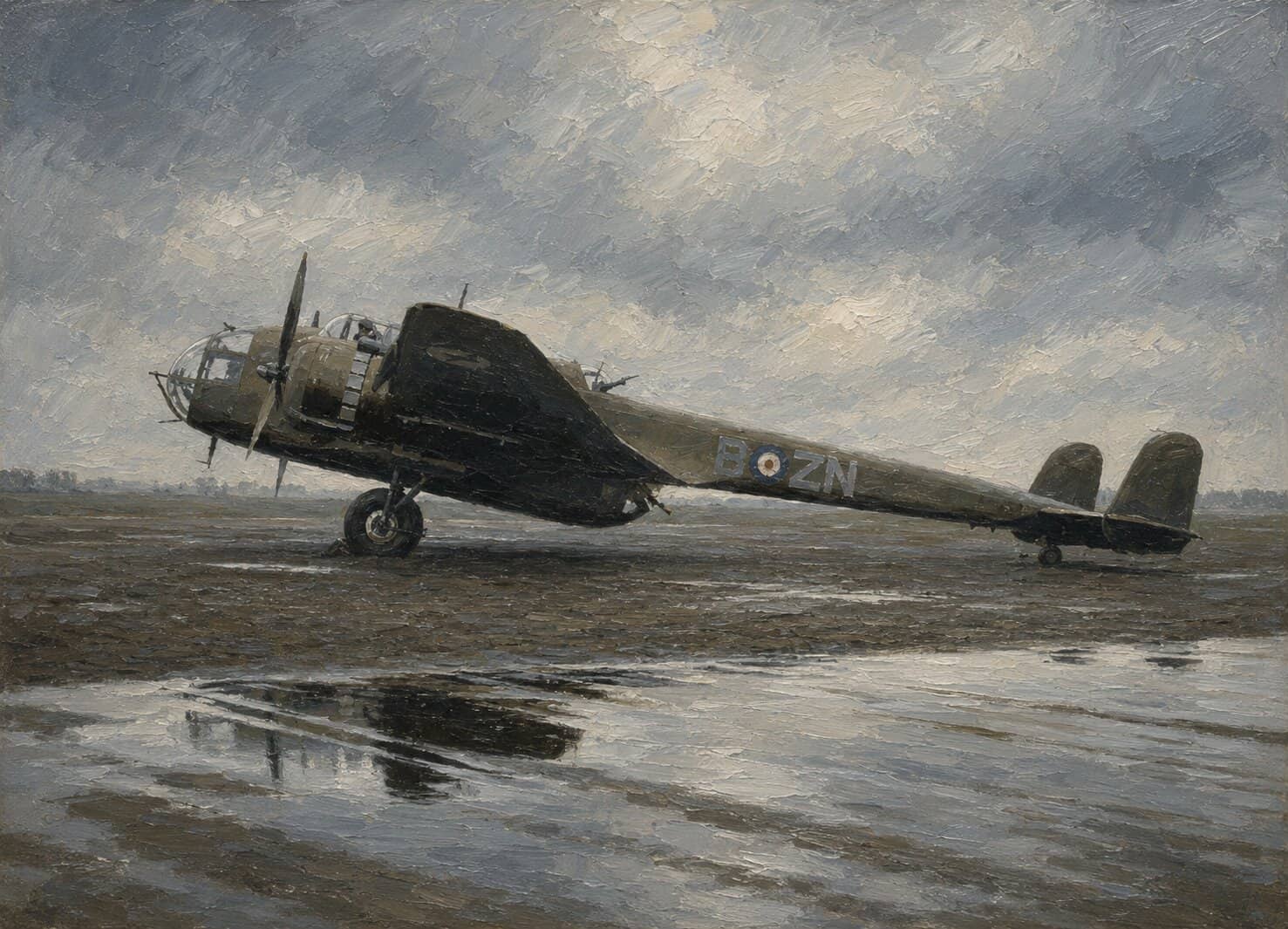
No. 106 Squadron moved from RAF Finningley to Coningsby in February 1941 with Handley Page Hampden bombers. Its arrival brought the station its first resident flying unit. Operational flying began in March 1941, when four Hampdens of No. 106 Squadron attacked Cologne. The sortie marked Coningsby’s entry into Bomber Command’s offensive operations, four months after the station had opened.
No. 97 Squadron followed during the spring with Avro Manchester bombers. The Manchester’s engine difficulties restricted its employment, and during periods when the type was grounded its crews used Hampdens borrowed from No. 106 Squadron. Coningsby’s early operational experience consequently involved adapting to aircraft availability as well as establishing a new base.
The introduction of the Avro Lancaster increased the demands on the airfield. No. 97 Squadron began receiving Lancasters in early 1942, although the conversion developed over the following months. The heavier aircraft exposed the limitations of Coningsby’s grass surface, and the squadron moved away from the station in March. No. 106 Squadron also received Lancasters during 1942 and remained at Coningsby through the summer before moving to Syerston in September.
Rebuilding for heavy bombers
Coningsby closed for reconstruction in September 1942. Three concrete runways were laid, bringing Coningsby to Class A airfield standard, together with a perimeter track and revised aircraft dispersal arrangements. Additional hangars formed part of the station’s development. This work gave the airfield the harder surfaces and supporting infrastructure required for sustained heavy-bomber use.
The station reopened in August 1943, when 617 Squadron arrived from Scampton with Lancasters. Its return to operational use completed a major transformation of the grass airfield opened less than three years earlier.
The significance of 4 November 1940 lies in the beginning of that development. Coningsby added a new establishment to No. 5 Group’s network, then acquired squadrons and adapted its facilities to successive aircraft types. By August 1943, concrete runways had turned its initial wartime provision into a base equipped for the heavier bombers central to Bomber Command’s expanding offensive.