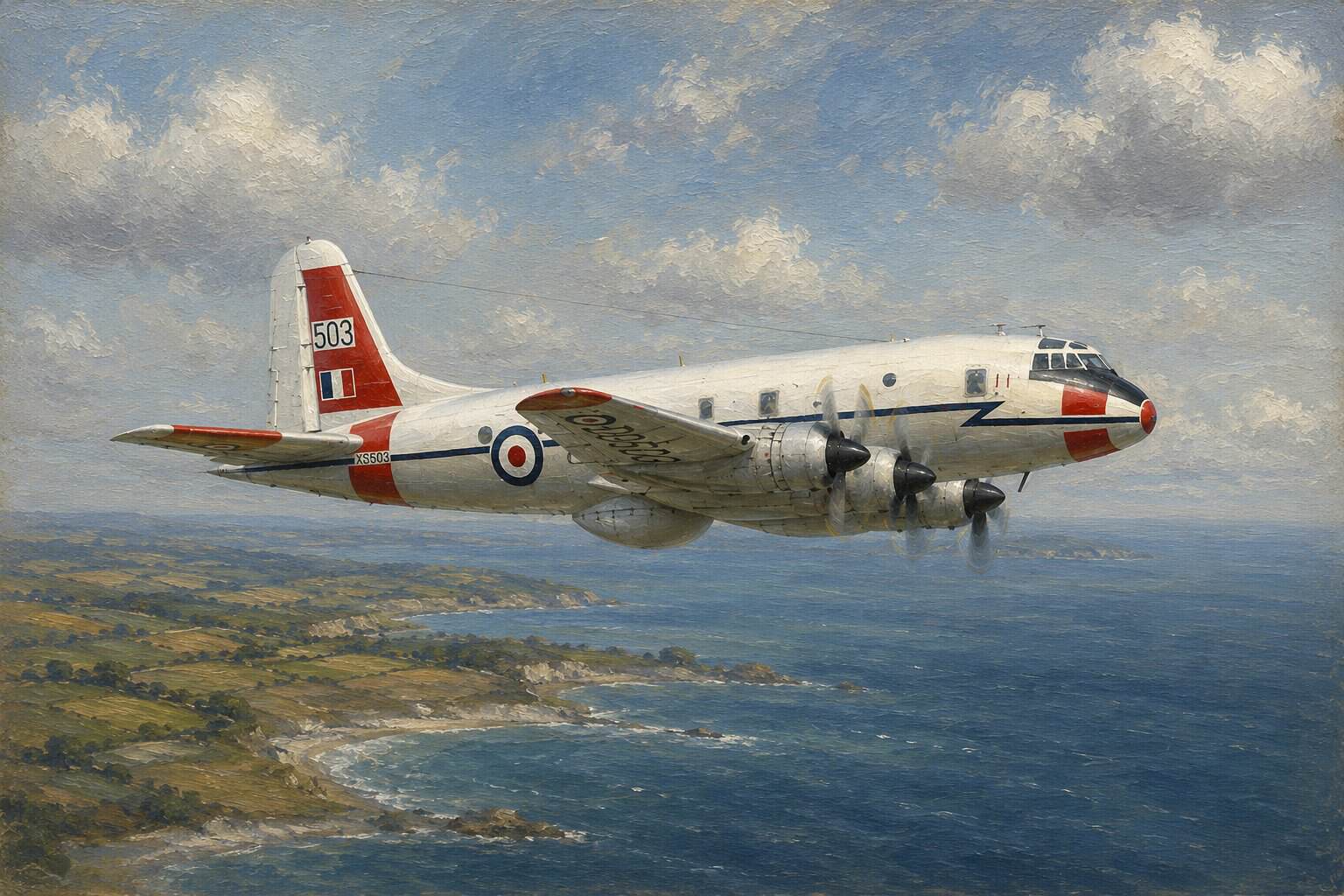
The Berlin crisis of 1948–1949 is often remembered through one dominant image: transport aircraft descending one after another into a blockaded city while the Soviet Union tried to force the Western powers out of Berlin. That image has endured for good reason. The airlift was dramatic, visible and morally legible in a way that many early Cold War confrontations were not. Yet the familiar story can also flatten what the crisis meant, especially from an RAF perspective. The British contribution was not simply a supporting share of a humanitarian operation. It was a test of whether a war-weary air force, operating under the pressures of demobilisation and austerity, could turn air transport into an instrument of strategy, alliance politics and sustained political resolve.
For the RAF, the Berlin crisis lay at the intersection of several transitions. It came after the vast expansion of wartime air power but before the structures of the later Cold War had fully settled into place. It demanded practical transport capacity, administrative discipline, diplomatic steadiness, and the ability to sustain operations in public view month after month. It also placed Britain’s air arm inside a greater Western effort in which prestige, credibility and endurance mattered as much as tonnage. Operation Plainfare was therefore more than a supply effort to a threatened city. It showed how the RAF could still exercise influence in a new strategic environment, even when Britain’s wider resources were plainly under strain.
From Wartime Alliance To Cold War Confrontation
The crisis in Berlin emerged from the unresolved settlement at the end of the Second World War. Germany had been divided into occupation zones, and Berlin, though deep inside the Soviet zone, was itself divided among the four victorious powers. That arrangement could function only while some minimum level of Allied cooperation survived. By 1948, that cooperation was breaking down rapidly. The wartime alliance had given way to growing mistrust over Germany’s future, European recovery and the political direction of the continent.
For Britain, Berlin mattered well beyond the city’s municipal boundaries. It was a symbol of four-power rights, but also a point where British influence in occupied Germany remained tangible. To yield under Soviet pressure would have meant more than accepting inconvenience in communications. It would have damaged British authority in Germany, weakened confidence among European partners and suggested that Western commitments in the face of pressure might prove temporary. In the atmosphere of 1948, such a retreat would have been read everywhere, not only in Berlin.
The immediate crisis centred on currency reform and the broader contest for political control in Germany. When the Western powers moved towards economic stabilisation in their zones, the Soviet response was to squeeze West Berlin by cutting road, rail and canal access. The blockade, imposed in June 1948, was intended to turn the city’s exposed position into political leverage. West Berlin could not be abandoned casually, but it was difficult to sustain by surface routes once those links were closed. The Soviet leadership believed it had found a pressure point that would either break Western resolve or force a renegotiation on Soviet terms.
The Western reply depended upon rights that had not been closed off so easily: access by air. Three air corridors linked the Western zones to Berlin. In legal terms, those corridors provided a basis for continued access. In practical terms, however, legal rights meant little unless they could be turned into a working system capable of feeding, heating and maintaining a large urban population. That was the central problem of the Berlin airlift. It was not enough to make a gesture. The operation had to work at an industrial scale, in all seasons, under political scrutiny, without sliding into military escalation.
A Crisis Of Access, Resolve And Prestige
The importance of the airlift lay in more than the physical movement of goods. Berlin became a contest over who could impose facts without crossing the threshold into open war. The Soviets applied pressure below that threshold. The Western powers answered in kind, sustaining their position without forcing a direct armed clash on the ground. In that sense, the airlift was one of the first great operational expressions of the Cold War: a sustained demonstration that political firmness could be carried by logistics, procedure and endurance rather than by battlefield action.
For the RAF, this was a particularly revealing form of conflict. The service had been shaped in public memory by fighters and bombers, by defensive battle in 1940 and strategic bombing later in the war. Transport aircraft had never carried the same glamour, yet in Berlin they became instruments of national policy. A transport fleet moving flour, coal, medical stores and machine parts could embody deterrent value just as surely as an armed force, provided it kept flying and showed no sign of collapse. The political message came not from dramatic combat but from repetition, regularity and calm refusal to yield.
British participation also had a prestige dimension that should not be underestimated. Post-war Britain remained a major power, but one coping with debt, material shortages and the burdens of imperial retrenchment. The RAF itself had shrunk sharply from wartime strength. To continue operating as one of the principal Western air forces meant proving that it could still mount disciplined and sustained action in an international crisis. Berlin offered precisely that test. If the airlift failed, the damage would have fallen on alliance’s credibility as a whole. If it succeeded, Britain would show that reduced means did not necessarily imply political passivity.
This was why the crisis cannot be reduced to a humanitarian tale alone. Feeding West Berlin was essential, but the operation was also a signal of political staying power. Each successful day weakened the Soviet assumption that pressure would quickly produce concessions. Each week of continued access made the blockade less a display of Soviet strength and more an advertisement of Western persistence. The RAF’s share in that process lay not only in tonnage figures but in the steadiness of its contribution at a moment when Britain needed to show both capability and will.
Transport Command Under Austerity
Operation Plainfare did not begin with an air force perfectly prepared for such a burden. The RAF of 1948 was living through the difficult aftermath of total war. Demobilisation had stripped away the enormous manpower reserves of the wartime years. Equipment was still abundant on paper, but not every aircraft was suitable, available or economical for intensive transport work. Britain’s wider finances imposed limits on training, maintenance and expansion. In those conditions, the Berlin crisis arrived as a severe operational demand rather than a convenient mission for a service at ease.
RAF Transport Command was nevertheless one of the institutions that connected wartime experience with post-war necessity. Formed during the war from the old Ferry Command, it had developed habits of long-range movement, route organisation and administrative control that now became indispensable. Yet Berlin exposed the difference between moving people and stores in peacetime patterns and sustaining an urban lifeline under near-continuous pressure. Aircraft availability, turn-round speed, loading methods, servicing discipline and meteorological support all became decisive. A transport command that had often stood outside the public imagination suddenly found itself at the centre of a major international emergency.
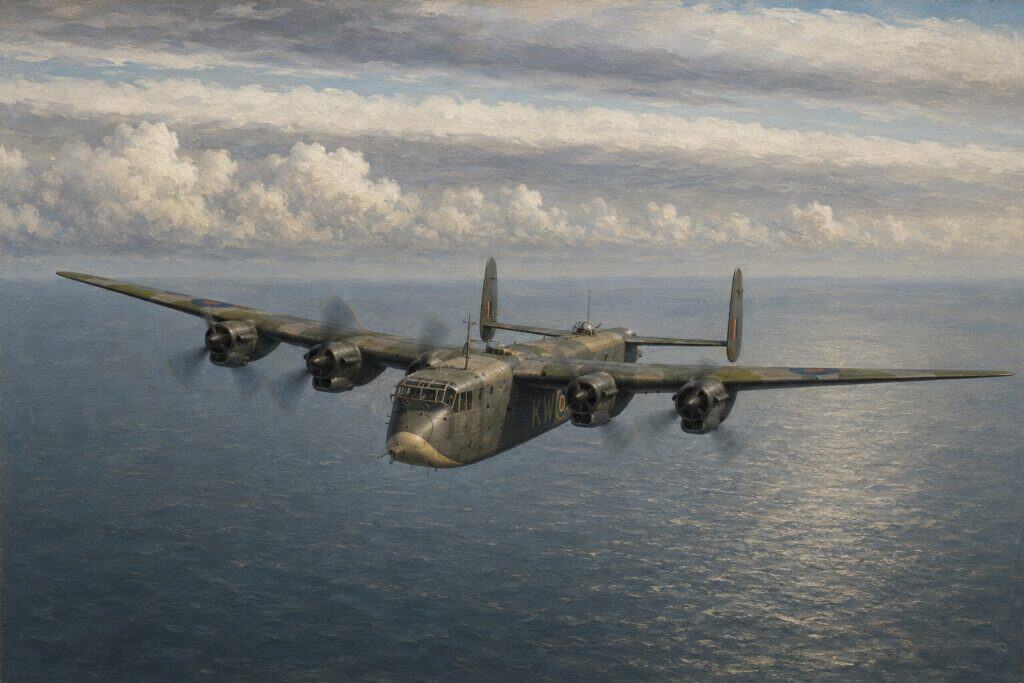
The first British aircraft used in the airlift were Dakotas, the dependable wartime transports known across Allied service. They were reliable and familiar, but their carrying capacity was too limited for the scale of the crisis. They could begin the operation, but they could not solve it on their own. The RAF had to move quickly towards heavier-lift aircraft, above all the Avro York. The York, a transport derived from the Lancaster, was not a glamorous symbol of a new age. In many ways, it was a practical wartime inheritance pressed into post-war service. That was exactly why it mattered. Berlin became a demonstration of how the RAF was using existing strength, however imperfect, to meet a new strategic challenge.
The arrival of the Handley Page Hastings later in 1948 added another layer to the story. Here was a new, large transport entering service at a moment of genuine need. The Hastings improved the RAF’s payload and represented more than a technical adjustment. It suggested that Britain was not merely surviving on wartime leftovers but shaping a more credible transport capability for the years ahead. The transition from Dakota to York and then increasingly to Hastings reflected the wider transformation of post-war air logistics: scale, efficiency and aircraft suitability mattered as much as bravery in the cockpit.

Building Operation Plainfare
The success of the British effort depended on converting access rights into a disciplined operating system. RAF Gatow, in the British sector of Berlin, became a central node in that system. Aircraft had to be loaded in the western zones, routed through the air corridors, landed, unloaded, serviced and turned round with relentless regularity. Any delay on the ground or disruption in the corridors threatened the efficiency of the entire undertaking. The problem was never simply to fly to Berlin. It was to keep hundreds of flights moving in an orderly rhythm over many months.
This required an organisational style closer to industrial management than to the older image of air operations shaped chiefly by tactical improvisation. Schedules had to be tightened, loads standardised, crews briefed with exactitude and maintenance made dependable under continuous strain. Weather forecasting became critical, especially as autumn turned to winter. Air traffic procedures had to reduce the margin for confusion inside crowded corridors, where any serious interruption could ripple across the whole system. The airlift’s discipline was therefore one of its greatest achievements. Efficiency itself became a strategic weapon.
British aircraft carried a wide range of essential goods, but coal quickly became one of the hardest items to transport. West Berlin required fuel for heat, power and industry, and coal was a heavy, dirty and demanding cargo. The airlift could not rely on symbolic deliveries of selected high-value items. It had to move the bulky and unfashionable materials on which urban life depended. The ability of Yorks and, later, Hastings to lift heavier loads than Dakotas did was central to that challenge. Increased payload meant that the RAF contribution could become materially significant rather than merely demonstrative.
Operation Plainfare also revealed the flexibility of British air transport. One of the most distinctive episodes involved the use of Short Sunderland flying boats to carry salt into Berlin by water. Salt posed a corrosion problem for conventional transport aircraft, but the flying boats offered a practical solution. Their employment has often been remembered as an unusual detail, yet it expressed something larger about the RAF response: the operation succeeded because Britain used every suitable means available, from standard land-based transports to less obvious specialised aircraft, whenever they could solve a real logistical problem.
None of this removed the human burden. Crews flew in poor weather, through icing conditions and under an unforgiving timetable. Ground personnel had to sustain aircraft that were flying far more intensively than routine peacetime patterns would have demanded. Accidents were an ever-present risk in a dense and highly regulated air system. The airlift depended upon a culture of stamina and professional steadiness rather than heroic display. That, too, was characteristic of the RAF role in Berlin. The operation was won less by isolated moments of drama than by thousands of competent actions performed to standard.
Winter, Throughput And The Mature Airlift
The real test of the airlift came when it ceased to be an emergency improvisation and became a long campaign. Summer flying alone could not settle the matter. The Soviet leadership could wait for fatigue, weather and diminishing political patience to do their work. The Western answer was to improve throughput to the point where the airlift looked not temporary and desperate, but sustainable. That change in perception was crucial. Once the operation began to appear durable, the political balance of the crisis shifted.
For the RAF, this mature phase of the airlift showed the value of organisational learning. Procedures were refined, loading became more efficient, and aircraft utilisation improved. Heavier transports increased the economic value of each sortie. The British contribution remained smaller than the American effort, particularly once large numbers of Skymasters were committed by the United States, but relative scale is not the same as strategic insignificance. The RAF held one of the indispensable sectors of the operation, maintained a steady flow through Gatow and helped ensure that the airlift rested on an Anglo-American base rather than an American one alone.
That mattered politically. A crisis of this kind could easily have turned into a story of Britain standing by while the United States carried the practical burden. Instead, British participation was visible, continuous and credible. Operation Plainfare gave substance to Britain’s claim to remain a principal actor in European security, even at a time of economic fragility. It also helped shape the emerging habit of close operational cooperation between the RAF and the United States Air Force in the early Cold War. Berlin was not the first point of Anglo-American air cooperation, but it was one of the first major peacetime crises in which such cooperation became strategically decisive.
The winter of 1948–1949 brought the operation into even sharper relief. Flying conditions worsened just as the need for fuel and regular supply remained acute. Yet the airlift did not break. On the contrary, it became more systematic and, in aggregate terms, more effective. As output rose and confidence in the system deepened, the blockade began to lose its political force. The Soviet Union had intended to make Western rights in Berlin seem impractical. The airlift gradually proved the opposite: difficult, certainly, but not impractical enough to compel withdrawal.
By the spring of 1949, the Western powers were not merely surviving in Berlin. They were demonstrating that sustained air access could defeat a coercive move without a corresponding resort to force. This was a profound lesson for the early Cold War. It suggested that a disciplined, technologically enabled and politically controlled air operation could preserve strategic positions that might once have seemed indefensible short of war. For the RAF, that lesson would resonate far beyond Germany.

The RAF’s Wider Cold War Meaning
The Berlin crisis carried consequences that reached well beyond the city’s immediate survival. In strategic terms, it helped harden the division of Europe and accelerated the movement towards a formal Western alliance system. NATO was founded in 1949 while the airlift was still underway. The crisis did not create that alliance on its own, but it exposed the urgency of collective security on a divided continent. British air participation had significance at two levels: it supported the defence of West Berlin, and it reinforced the idea that Britain remained a central military and political partner in the Western camp.
For the RAF specifically, Berlin strengthened the case for transport power as a permanent element of post-war strategy. The service could no longer think only in terms of wartime bombing or home defence. A global Britain with shrinking resources still needed mobility, reinforcement, and the ability to support distant commitments quickly. The airlift illustrated those requirements in concentrated form. Aircraft designed to move cargo and personnel were no longer merely auxiliaries to combat formations. In certain crises, they were the front line of policy.
There was also an institutional effect inside the RAF. Berlin rewarded careful planning, route discipline, maintenance culture and close integration with civil and allied authorities. It was a reminder that modern air power rested as much on systems as on aircraft. The airlift required meteorology, engineering, traffic control, loading expertise and command arrangements capable of handling constant pressure without disintegration. Those were not glamorous lessons, but they were enduring ones. The Cold War would repeatedly demand precisely that combination of technical competence and political restraint.
The crisis also preserved a British military presence in Berlin that outlasted the blockade itself. Once the blockade was lifted in May 1949, the airlift continued for months longer in order to build reserves and guard against renewed pressure. That continuation was important. It showed that the Western response was not based on sentimental relief alone, but on sober calculation. The RAF had helped demonstrate that access to Berlin would not depend upon Soviet indulgence. In the years that followed, the city remained one of the clearest exposed points of the Cold War, and the memory of 1948–1949 shaped how that exposure was understood.
Beyond The Familiar Airlift Narrative
The best-known public memory of Berlin tends to emphasise drama, ingenuity and moral clarity. Those elements were real, but they can narrow the RAF story if taken alone. The British role was not defined simply by gallant flying into a beleaguered city. It was equally about what that flying represented in a hard strategic setting. Britain was defending legal rights, supporting a political position in Germany, proving reliability to allies and showing the Soviet Union that pressure short of war could still fail.
That is why the airlift should be seen as a moment in which air power operated as a form of organised political persistence. Bombers and fighters remain the most familiar symbols of military aviation because they produce visible coercion. In Berlin, transport aircraft did something subtler. They denied coercion, its expected result. By keeping a city alive, they prevented diplomatic surrender. By flying predictable routes to a predictable schedule, they turned routine into resistance.
The RAF’s contribution was especially revealing because it came from a service in transition. It did not possess limitless resources, and it could not dominate the operation numerically. Yet it brought enough weight, competence and adaptability to make the Anglo-American effort genuinely combined. British Yorks and Hastings, supported by Dakotas, crews, engineers and the whole administrative structure behind them, helped turn an exposed legal right into an operational reality. The use of flying boats for awkward cargo, the development of disciplined turn-round procedures and the ability to keep Gatow functioning under strain all showed a service learning how post-war power would often be exercised.
Berlin deserves to be remembered in RAF history not simply as an episode of relief flying, but as a formative Cold War operation. It demonstrated that air transport could serve strategic purposes, that logistical order could have political force, and that Britain’s air arm retained influence even in an age of austerity and adjustment. The crisis did not solve the German question, nor did it remove the danger of confrontation in Europe. What it did show was that the RAF could help hold a critical position through endurance, coordination and disciplined air access when other routes had been cut away.
Conclusion
The Berlin crisis of 1948–1949 was a confrontation over access, credibility and the political future of Europe. For the RAF, its significance lay in more than the undoubted achievement of sustaining part of the airlift. Operation Plainfare revealed how a reduced post-war air force could still exercise real strategic weight when transport, organisation and resolve were aligned. In Berlin, the RAF did not win attention through spectacle alone. It helped prove that the Western position could be maintained by air, that Soviet pressure could be resisted without immediate war, and that British air power still mattered in the emerging Cold War.
Seen in that light, the crisis goes well beyond the familiar airlift narrative. It marks a moment when transport aircraft, ground crews, planners and commanders carried a political burden usually associated with combat forces. The result was not only the survival of West Berlin. It was a demonstration that disciplined air logistics could become an instrument of strategy in its own right, and that the RAF had an essential place in that new kind of contest.