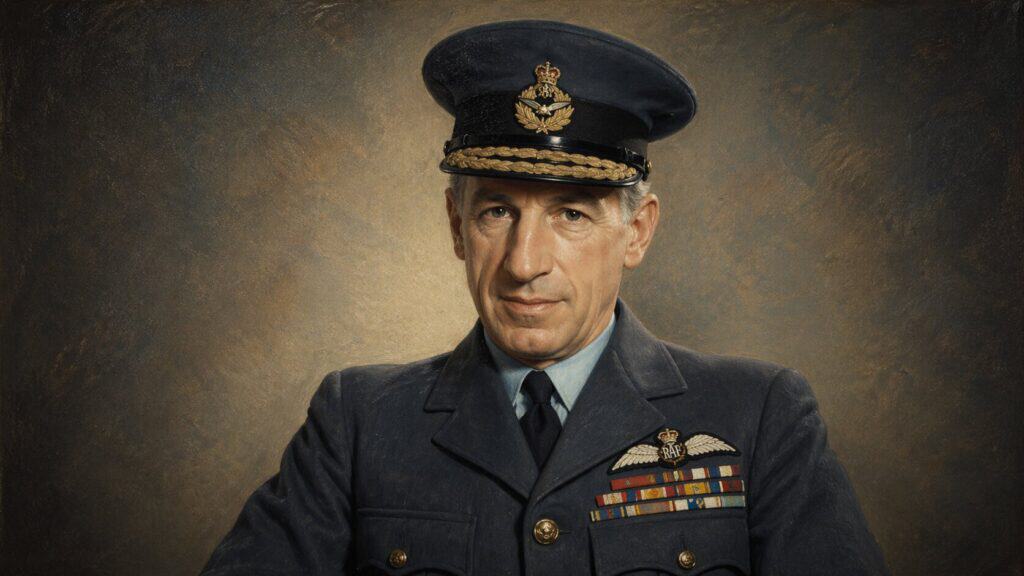
Hugh Dowding became the first Commander-in-Chief of RAF Fighter Command on 14 July 1936 and led it through the Battle of Britain in 1940. During those years, he helped turn radar warning, ground observation, communications and modern fighter aircraft into a coordinated defensive organisation. His central contribution lay in preparing the command to make effective use of limited squadrons when Britain faced sustained air attack.
That preparation depended on a wider national effort. Air Ministry officials, scientists, aircraft manufacturers, station personnel and operational commanders supplied the equipment and expertise on which the defence rested. Dowding gave this work a clear operational purpose: detecting approaching attacks early enough to direct fighters towards them while retaining the strength to meet subsequent raids.
An Inherited Defence Problem
Britain’s experience of air attack during the First World War had already produced methods of centralised reporting and control. Work associated with Edward Ashmore established an important precedent for assembling information from scattered observation posts into a usable picture of hostile aircraft movements. The interwar defence organisation and Observer Corps preserved experience that Fighter Command could develop.
The creation of RAF Fighter Command in 1936 gave fighter defence a distinct command structure during the RAF’s expansion. Its headquarters at Bentley Priory became the centre of an organisation whose effectiveness depended on the relationship between national oversight and local action. Group headquarters and sector stations connected the commander’s assessment of the battle with the squadrons required to fight it.
For Hugh Dowding, the central administrative challenge was to develop these elements together. Additional fighters increased the available force, but their employment also required warning, communications, trained controllers and serviceable airfields. Preparation consequently extended across the ground organisation as well as the flying units.
Giving Radar An Operational Purpose
Radar offered a substantial improvement in the time available to respond to an approaching raid. The development of Chain Home’s early-warning network brought coastal detection into Britain’s air-defence arrangements. Dowding supported the application of this technology to fighter defence and its integration with the command’s reporting and control structure.
The scientific and engineering achievement belonged to the teams that developed and operated the equipment. Dowding’s responsibility was to make their warning useful to an operational command. Radar reports reached the central Filter Room at Bentley Priory, where information from different stations was assessed and combined before being passed to the appropriate operations rooms. This organisation enabled commanders to work from a coordinated picture of approaching attacks rather than isolated observations.
Radar also had limitations. Estimates depended on the judgement of operators, and the early coastal network supplied an incomplete picture of aircraft movements inland. The Observer Corps contributed visual reports that helped sustain the picture as raids crossed the coast. Combining these sources required personnel who could assess reports, reconcile discrepancies and maintain information that commanders could use.
Building A Command That Could Respond
The expansion of operations rooms and communications gave early warning practical value. Fighter Command needed a structure capable of handling information quickly while distributing responsibility across the country. Groups controlled broad geographical areas; sector stations provided the operational link to their fighter squadrons.
The Dowding System’s reporting and control arrangements connected the assessment of raids at headquarters with the direction of fighters by sector controllers. This division of work allowed the command to maintain an overall view while officers closer to the fighting handled immediate decisions. Telephone communications, plotting staff and radio contact with pilots were essential to that relationship.
Airfields formed another part of the preparation. A sector station combined a flying base with a control function, making its operations room and communications important to the defence of a wider area. The command’s ability to continue fighting therefore rested on ground infrastructure, maintenance and the personnel who kept aircraft and control facilities working. The demands of readiness reached well beyond the number of fighters held on strength.
Anti-aircraft guns, searchlights and barrage balloons formed part of the wider defensive environment. Their contribution involved other organisations and different methods of engagement. Britain’s air defence required coordination across these elements, with Fighter Command providing the fighter organisation within that broader effort.
Modern Fighters And Sustained Readiness
The Hawker Hurricane and Supermarine Spitfire gave Fighter Command modern aircraft with which to oppose the Luftwaffe in 1940. Their development and introduction reflected the work of designers, manufacturers, procurement authorities and RAF personnel. Dowding’s leadership connected the requirement for effective fighters with the organisation needed to employ them.
Aircraft performance and control arrangements were complementary. Early warning gave squadrons time to prepare and gain position; modern fighters supplied the speed and armament needed once contact was made. Training, maintenance and the availability of pilots determined how much of this potential could be used repeatedly.
Conserving strength was consequently an operational requirement. Fighters committed to prolonged patrols consumed fuel and imposed demands on pilots and ground crews. A functioning warning network allowed commanders to direct effort towards identified threats and retain aircraft for further attacks. It improved the use of the available force while leaving commanders responsible for difficult judgements about when and where to commit it.
Dowding applied this concern to the wider question of Britain’s fighter strength. During the Battle of France in May 1940, he opposed further commitments that threatened to deplete the fighter force needed for Britain’s defence. His intervention reflected the importance he placed on preserving sufficient squadrons to meet the anticipated air offensive against Britain.
Preparation Tested In 1940
The fall of France brought the Luftwaffe within reach of southern England from bases across the Channel. During the Battle of Britain, Dowding’s command had to sustain its resistance through repeated attacks. The system assembled before the battle allowed the RAF to identify approaching threats and bring squadrons into action selectively.
Air Vice-Marshal Keith Park‘s 11 Group carried much of the fighting over London and south-east England. Its work demonstrated the importance of the relationship between Dowding’s command-wide oversight and the operational decisions made within the groups and sectors. The defence depended on those successive levels functioning together under pressure.
Warning and control improved the chances of interception, while pilots still faced the uncertainties and losses of combat. Ground crews serviced damaged and heavily used aircraft; controllers and communications personnel maintained the flow of information. Dowding’s preparation made their separate tasks part of a common operational organisation.
The resulting influence on RAF defensive doctrine lay in the demonstrated value of integrating detection, assessment and the controlled employment of fighters. The system’s performance during the Battle of Britain demonstrated the operational value of combining early warning, centralised assessment and the controlled employment of fighters. Dowding’s contribution lay in preparing Fighter Command to use those capabilities together, allowing its squadrons to respond repeatedly to Luftwaffe attacks while retaining the strength required to sustain Britain’s air defence.