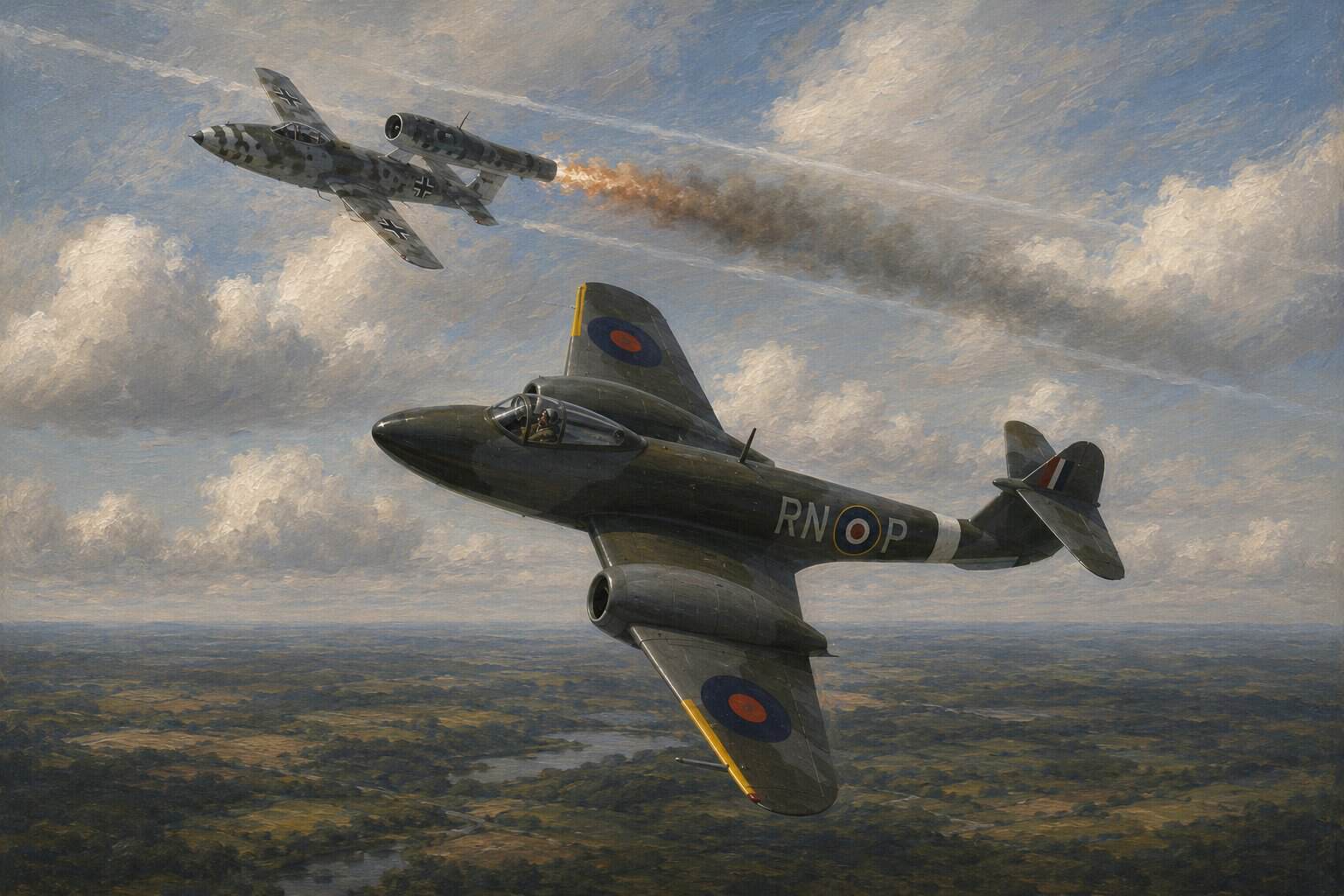
On 27 July 1944, a Gloster Meteor of No. 616 Squadron flew the type’s first operational patrol for the Royal Air Force against V1 flying bombs. The sortie did not instantly revolutionise the campaign against the flying bomb, but it marked the moment at which British jet propulsion passed from test and development into active service. In RAF history, that transition matters enormously. It signalled that a new age of military aviation had arrived while the Second World War was still being fought.
From experimental promise to operational service
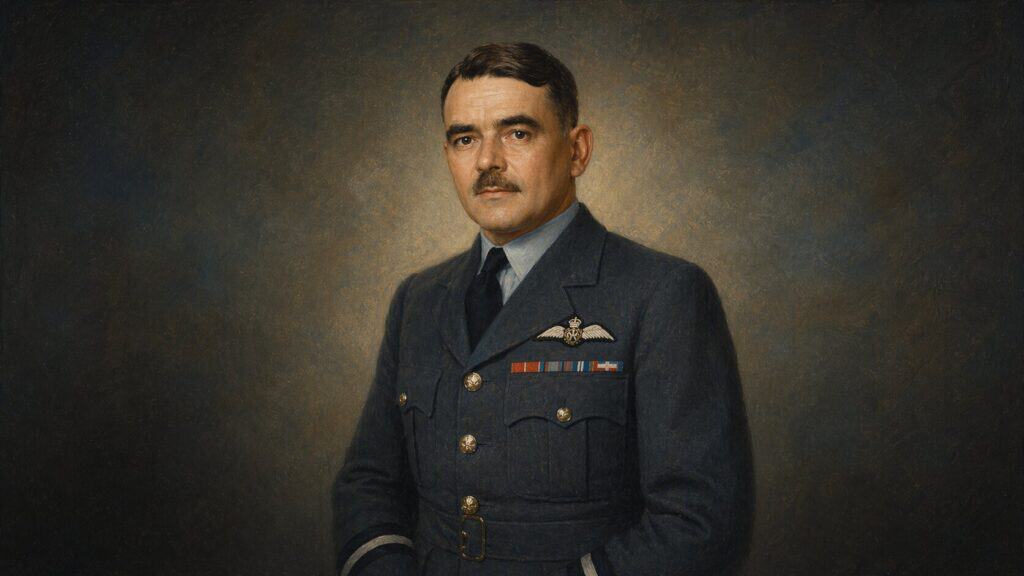
The Meteor had emerged from years of work on jet propulsion, associated above all with the pioneering efforts of Frank Whittle and the engineers who turned theory into flyable machinery. By mid-1944, the RAF was ready to use the aircraft in combat conditions, albeit cautiously and in a limited initial role. The choice of mission was logical. V1 flying bombs were fast, difficult targets, and conventional piston-engined fighters could only intercept them with effort and positional advantage. A jet fighter offered something different: sustained speed that pointed directly towards the future. Sending a Meteor on operational patrol was therefore both a practical response to a pressing threat and a historic proof that a new propulsion system could be trusted in front-line conditions.
The first mission and its immediate meaning
No. 616 Squadron’s first operational jet patrol was aimed at the V1 menace rather than at piloted German aircraft. That in itself is revealing. The RAF introduced the Meteor in a carefully controlled way, using it where its speed could be particularly valuable while avoiding unnecessary risk to a still-new machine and concept. The immediate results of the first sortie were less important than the fact of the sortie itself. An RAF jet had gone on operations. That simple statement marked a change in the Service’s identity. For the first time, the RAF possessed a combat unit equipped with aircraft powered not by propellers and pistons, but by turbojets.
The wider significance of the Meteor
The Meteor did not replace existing fighter forces overnight, nor did it make every earlier aircraft obsolete at once. Wartime services rarely change so cleanly. Yet the operational debut of the type carried enormous symbolic and technical importance. It demonstrated that jet power had moved beyond experiment, and it prepared the RAF for the post-war transformation of fighter aviation. The V1 campaign provided an unusual bridge between eras. The RAF was fighting a highly modern threat with a highly modern answer, even while much of the wider war was still being contested by aircraft whose basic design philosophy belonged to the previous decade. In that sense, the first jet sortie compressed the future into the middle of the present conflict.
A landmark in RAF history
27 July 1944, deserves to stand out because it marks an operational first of lasting consequence. Many aircraft have made maiden flights and many units have received new equipment, but comparatively few dates announce the arrival of an entirely new kind of propulsion in combat service. In wider air-war terms, the first RAF jet sortie showed that the technology shaping the second half of the twentieth century was already entering battle before the war ended. The Meteor’s patrol against the V1 did more than chase flying bombs. It opened the operational career of the jet age in British service, and with it a new chapter in the history of air power.