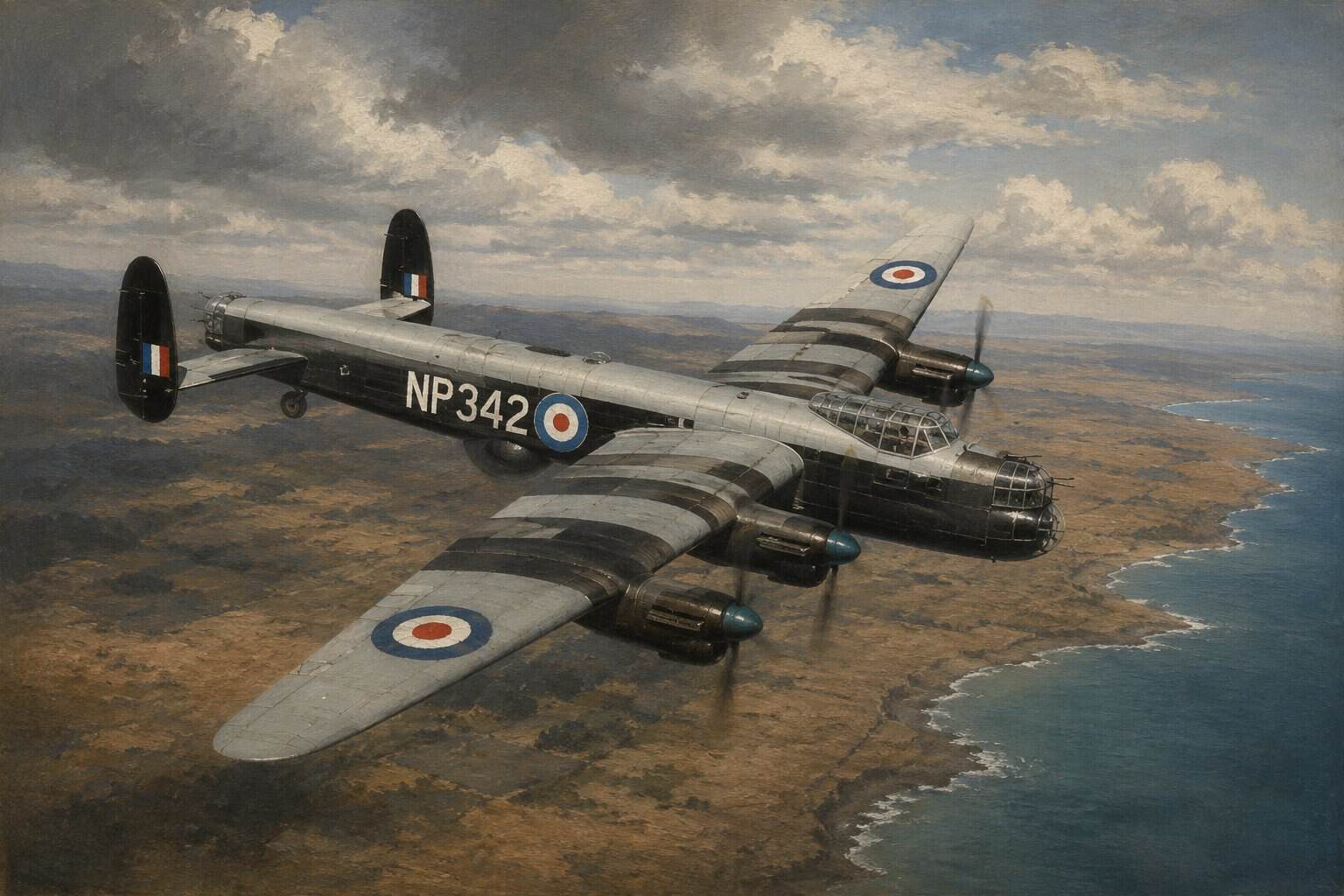
On 28 July 1955, the No. 49 Squadron detachment flying Avro Lincolns returned home, bringing the bomber phase of RAF operations in Kenya to an end. The departure did not conclude British security activity in East Africa, but it did mark the close of a particular form of air effort associated with the Kenya Emergency. For the RAF, the moment illustrated how wartime bomber types were being adapted to post-war colonial and counter-insurgency conditions before gradually giving way to other methods and other aircraft.
Bomber force in an emergency theatre
The Lincoln was a heavy bomber descended from the Lancaster, designed for long-range war rather than limited emergency operations. Yet in the early 1950s, the RAF still used such aircraft in theatres where endurance, payload and availability made them useful. In Kenya, Lincoln detachments formed part of the British attempt to pressure Mau Mau insurgents and support wider security operations.
This was a very different environment from the strategic bombing campaigns for which heavy bombers had first been conceived. Targets were harder to define, political sensitivities were greater, and military results were less straightforward to measure. The employment of Lincolns in Kenya says much about the improvisations of the early Cold War RAF.
Why the departure mattered
When the final Lincoln detachment of No. 49 Squadron left Kenya, it signalled more than the end of one deployment. It pointed to the declining place of classic piston-engined bombers in this sort of campaign. Aircraft designed for high-intensity war against industrial states were becoming less central to the RAF’s future, especially as jet aircraft and more specialised approaches gained prominence.
The return home also reflected the changing rhythm of the emergency itself. Air power remained relevant, but the specific bomber contribution of the Lincoln force had run its course. Its withdrawal showed that RAF commitments overseas were constantly being adjusted in line with operational need, political judgement and the evolution of available equipment.
The limits of heavy air power in colonial conflict
Kenya demonstrated both the utility and the limitations of bomber aircraft in internal security operations. Lincolns could deliver force over remote terrain and provide visible support to ground operations, but bombing alone could not settle the underlying political conflict. Like many post-war air campaigns, this one revealed that the relationship between aerial action and strategic success was often indirect.
That is one reason the date deserves attention. It reminds us that RAF history after 1945 was not simply a story of jets in Europe or nuclear planning. It also included demanding and sometimes uncomfortable operations in imperial and post-imperial settings, where inherited aircraft were used in unfamiliar roles.
An end of one RAF era in East Africa
The last Lincoln leaving Kenya stands as a small but revealing marker of transition. It closed a chapter in which the RAF still relied on the final generation of wartime heavy bombers for overseas security tasks, even as the Service was moving towards a new technological and strategic age.
In wider air-war terms, 28 July 1955 shows how long older aircraft could remain useful after their original war had ended, but also how clearly their limitations emerged in changed circumstances. The Lincoln detachment’s departure was therefore both an operational conclusion and a historical signpost: the end of bomber-phase operations in Kenya, and the fading of a wartime type from one more corner of active RAF service.