On This Day, 1916: Major Lanoe Hawker VC was killed fighting Manfred von Richthofen on 23 November 1916, as newer German fighters…
Read the entry →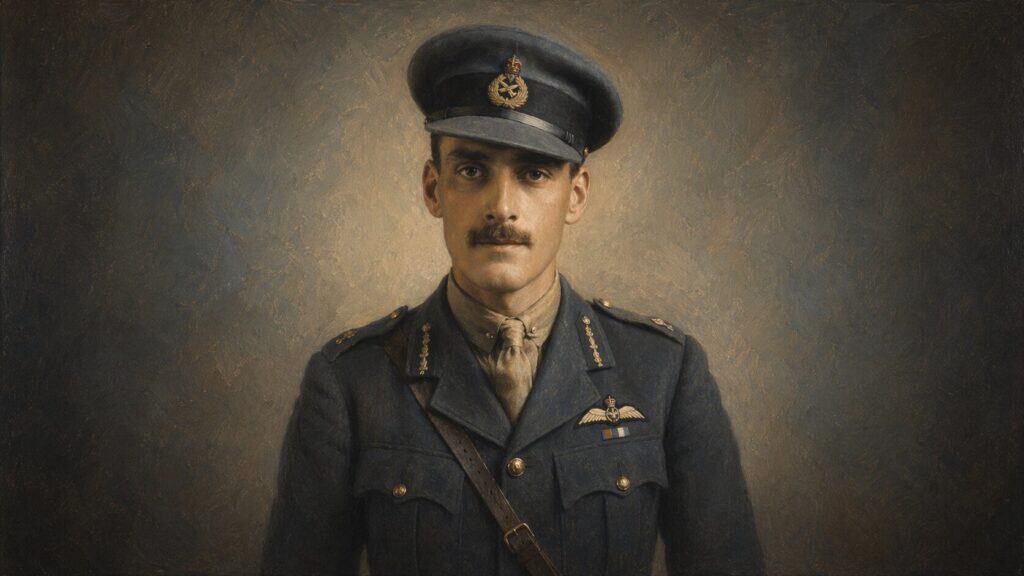
Air Vice Marshal
Charles Longcroft
Discover how Charles Longcroft helped shape the Royal Flying Corps and early RAF, from squadron command in the First World War to founding RAF Cranwell.
Air Vice-Marshal Sir Charles Alexander Holcombe Longcroft KCB, CMG, DSO, AFC (13 May 1883 to 20 February 1958) was a pioneer of British military aviation who held senior commands in the Royal Flying Corps and the early Royal Air Force. As the first Commandant of RAF College Cranwell, he helped establish the professional officer-training system of the newly independent service.
Who was Charles Longcroft?
Sir Charles Longcroft was a Welsh-born Army officer, born at Llanarth in Cardiganshire on 13 May 1883, who learned to fly in 1912, commanded squadrons, wings and brigades of the Royal Flying Corps and became the first Commandant of RAF College Cranwell in 1919. He retired as an Air Vice-Marshal in 1929 (Air of Authority).
Charles Alexander Holcombe Longcroft was born at Llanarth in Cardiganshire on 13 May 1883, into a family with military and landed connections in Wales. Educated at Charterhouse and then at the Royal Military College, Sandhurst, he entered the Welch Regiment in 1903. His early career was therefore conventional for an officer of his generation, shaped by army service rather than by any established air arm. Military flying in Britain was still experimental, and when Longcroft first turned towards aviation, it remained a specialist pursuit with uncertain prospects.
That changed in 1912. After gaining Royal Aero Club Certificate No. 192 in March of that year, Longcroft volunteered for duty with the Air Battalion of the Royal Engineers. Within weeks, the Royal Flying Corps had been created, and he transferred into the new organisation. He was among the small group of officers whose careers bridged the period between improvised pre-war flying and the beginnings of a permanent British air service. On 22 November 1913, he flew a Royal Aircraft Factory B.E.2 on a demanding journey of approximately 445 miles between Montrose, Portsmouth and Farnborough, completed in about seven hours and twenty minutes. The achievement won him the Britannia Challenge Trophy (This Day in Aviation) and demonstrated both his endurance and the increasing range of early military aircraft. It also established his reputation as a capable pilot in an era when long-distance flying remained hazardous.
When did Charles Longcroft join the Royal Flying Corps?
Longcroft gained Royal Aero Club certificate No. 192 in March 1912, volunteered for the Air Battalion of the Royal Engineers and transferred into the Royal Flying Corps when it formed that spring. By May 1914 he was commanding No. 1 Squadron, one of the earliest British flying units.
Longcroft’s move into military aviation came before war gave the aircraft an agreed role. He served first as a flying officer and then as a flight commander in the Royal Flying Corps, including service with No. 2 Squadron. By May 1914, he had become Officer Commanding No. 1 Squadron RFC, one of the earliest operational flying units in British service. The appointment placed him at the centre of the Corps’ rapid expansion on the eve of the First World War.
When war began, the Royal Flying Corps was still defining how aircraft would be used in reconnaissance, artillery observation, communications and command. Longcroft belonged to the generation of officers who had to improvise doctrine while also keeping fragile aircraft and inexperienced organisations in the air. He later commanded No. 4 Squadron RFC before progressing into higher appointments involving operational formations and training. These roles required different skills: directing flying units in wartime and building the organisation capable of supplying them with trained personnel.
What did Charles Longcroft do in the First World War?
Longcroft commanded No. 4 Squadron and then No. 2 Wing and V Brigade of the Royal Flying Corps, and from November 1917 led the RFC Training Division, responsible for producing aircrew on an unprecedented scale. In 1918 he commanded III Brigade of the new RAF.
During the First World War, Longcroft held a series of increasingly senior posts. From squadron command, he advanced through a training-wing appointment to command No. 2 Wing and later V Brigade of the Royal Flying Corps. In November 1917 he became General Officer Commanding the RFC Training Division, overseeing an organisation required to produce trained aircrew and units on an unprecedented scale. In 1918, following the formation of the Royal Air Force, he went on to command III Brigade. His progression illustrates the distinction between leading operational formations and managing the training system on which those formations depended.
His wartime service combined front-line command with organisational responsibility. That balance helps explain his later importance. Longcroft is remembered for helping to turn military flying into a functioning service arm. His honours reflected that broader contribution. He was mentioned in despatches, appointed a Companion of the Distinguished Service Order, and later received the Air Force Cross. He also received foreign recognition, including the Order of Saint Stanislaus and the Legion of Honour.
Was Charles Longcroft the first Commandant of Cranwell?
Yes: Hugh Trenchard chose Longcroft as the first Commandant of RAF College Cranwell, appointed in November 1919, and the first cadets began training on 5 February 1920. Cranwell gave the new service its own permanent officer training and is often called the world’s first military air academy.
Longcroft’s most enduring appointment began on 1 November 1919, the administrative date recorded for his appointment as the first Commandant of RAF College Cranwell. Selected by Hugh Trenchard to establish the college, Longcroft oversaw the development of an institution designed to train permanent officers for the independent air service. Its first cadets began training on 5 February 1920. Cranwell became a defining part of the RAF’s professional identity and has often been described as the world’s first military air academy. The new Royal Air Force, only recently formed from the merger of the Royal Flying Corps and the Royal Naval Air Service, needed institutions that would give it permanence, professional standards and its own officer culture. Longcroft was one of the officers entrusted with that work.
What did Charles Longcroft do after Cranwell?
Longcroft became Director of Personal Services in 1923, was promoted Air Vice-Marshal in 1925 and commanded Inland Area from 1926 until he retired in 1929. He was knighted in 1938 and served as Gentleman Usher of the Scarlet Rod.
His later appointments confirmed his place in the RAF’s senior leadership. He became Director of Personal Services on 10 December 1923 and was promoted to Air Vice-Marshal on 1 July 1925. On 1 November 1926 he assumed command of Inland Area, an important administrative and operational responsibility within a service still securing its identity and independence. He retired at his own request on 2 November 1929.
His public service continued beyond the RAF. Appointed a Companion of the Order of the Bath in 1923, he was advanced to Knight Commander in 1938. He served as Gentleman Usher of the Scarlet Rod from 1932 and became Registrar and Secretary of the Order of the Bath in 1948. In 1953 he presented No. 1 Squadron’s Standard, linking his pre-war squadron command to a later generation of RAF personnel.
When did Charles Longcroft die?
Charles Longcroft died on 20 February 1958, aged 74, after spending his later years in ceremonial service with the Order of the Bath. He had married the widowed Marjory Hepburn in 1921, and they had a son.
Outside formal command, he continued to occupy positions of public trust after leaving the RAF. His long later association with the Order of the Bath reflected the standing he had achieved within Britain’s military establishment.
He died in Paddington, London, on 20 February 1958. By then, the Royal Air Force had become a mature, independent service, and many of the structures that defined its officer training and professional identity had their roots in the years when Longcroft held senior command.
Why is Charles Longcroft important in RAF history?
Longcroft’s career linked pre-war experimental flying, the wartime growth of the Royal Flying Corps and the founding of the RAF’s permanent institutions. As Cranwell’s first Commandant he shaped how the service trained its officers for generations.
Charles Longcroft occupies an important place in RAF history because his career linked three formative stages: the experimental flying world before 1914, the rapid wartime expansion of the Royal Flying Corps, and the institutional consolidation of the Royal Air Force after 1918. He was one of the comparatively small number of officers who held senior command in both the RFC and the early RAF, and his work at Cranwell gave him a lasting role in shaping how the new service trained its officers.
He is less widely remembered than figures such as Hugh Trenchard, partly because his contribution was structural rather than doctrinal and because it was expressed through command, training and administration rather than public controversy. Longcroft helped turn pioneering military aviation into a permanent profession. His leadership of wartime training and his work at Cranwell shaped the structures through which the RAF prepared successive generations of officers. His career demonstrates that the service’s early development depended as much on effective institutions and training as on advances in aircraft and combat tactics.
| Dates | Role | Unit | Aircraft |
|---|---|---|---|
| 1903–1912 | Officer | Welch Regiment | |
| 1912–1914 | Flying officer and flight commander | Air Battalion, Royal Engineers; No. 2 Squadron RFC | |
| 1914–1915 | Officer Commanding | No. 1 Squadron RFC | |
| 1915 | Officer Commanding | No. 4 Squadron RFC | |
| 1915–1918 | Senior wing, brigade and training commands | Training Wing, 2nd Wing, V Brigade and Training Division, RFC | |
| 1918 | General Officer Commanding | III Brigade RAF | |
| 1919–1923 | First Commandant and Air Officer Commanding | RAF College Cranwell | |
| 1923–1926 | Director of Personal Services | Air Ministry | |
| 1926–1929 | Air Officer Commanding | Inland Area |
Longcroft is remembered less for a single famous wartime episode than for the institutional part he played in the making of British air power. His reputation rests on early flying service, senior RFC command and, above all, his role in establishing RAF College Cranwell as the new service's officer academy. In RAF history he stands as one of the organisers who helped convert experimental military aviation into a permanent professional arm.
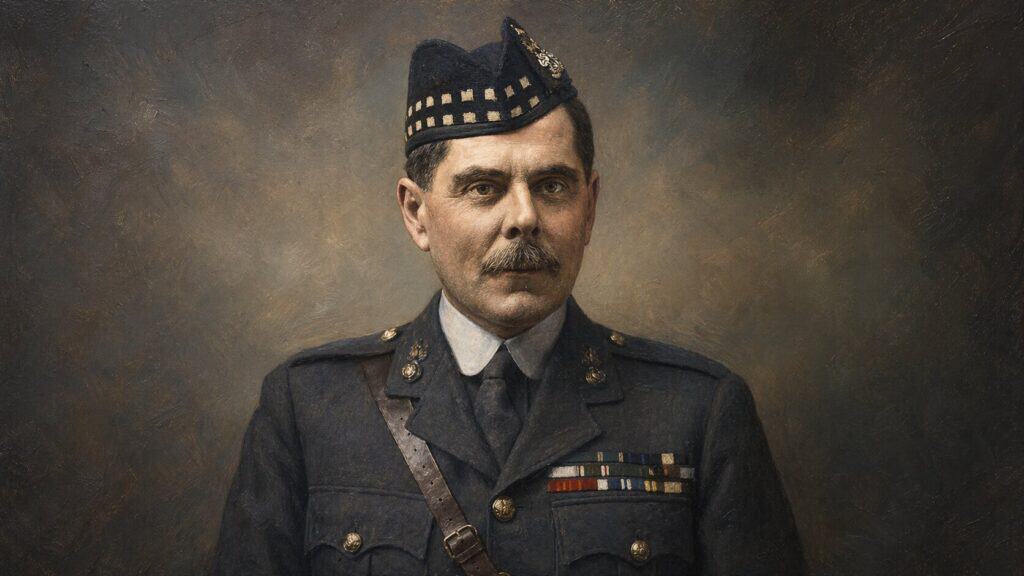
Royal Air Force College Opens at Cranwell
On 5 February 1920, the RAF College at Cranwell opened to its first 52 cadets under…
5 February 2026 · 5 minRAF Intervention in North Russia Sanctioned by Allies
On 2 June 1918, Allied leaders approved intervention in North Russia, with RAF units intended to…
2 June 2026 · 3 minAllied Air Power Helps Breach the Hindenburg Line in 1918
By 30 September 1918, Allied air power was helping breach the Hindenburg Line through reconnaissance, artillery…
30 September 2026 · 3 min