The Battle of Britain was the first major campaign fought entirely in the air and remains one of the defining operations in RAF history. Fought between July and October 1940, it was the contest in which RAF Fighter Command resisted the Luftwaffe’s attempt to destroy Britain’s air defences and secure the conditions for invasion. Its significance rests not simply on its fame, but on the fact that it preserved Britain as an active belligerent and prevented Germany from obtaining control of the air over southern England.
For the Royal Air Force, the campaign was both a test of organisation and a test of endurance. Victory depended not on any single aircraft or squadron alone, but on the integration of radar, command and control, airfields, maintenance, intelligence and front-line fighter pilots. The Battle of Britain demonstrated how a modern air defence system could function under extreme pressure.
Strategic context
After the defeat of France in June 1940, Britain stood in immediate danger of isolation and possible invasion. German planners recognised that any cross-Channel operation required the Luftwaffe to gain air superiority over southern England and the invasion routes. Destroying RAF Fighter Command became a strategic necessity for Germany rather than merely an operational objective.
The RAF entered the campaign under severe strain, but not without advantages. Hugh Dowding’s Fighter Command possessed an integrated air-defence system combining the Chain Home radar network, observer reporting, sector control and fighter squadrons operating from a structured command network. That system allowed Britain to use its limited fighter strength more efficiently than would otherwise have been possible.
The course of the battle
The campaign developed in stages. Early fighting focused on shipping and Channel convoys in what is often described as the Kanalkampf. German attacks then shifted towards airfields, sector stations and the supporting structure of Fighter Command. This was the most dangerous phase for the RAF, because the successful destruction of control centres and air infrastructure might have crippled the British defensive system even if fighters remained in being.
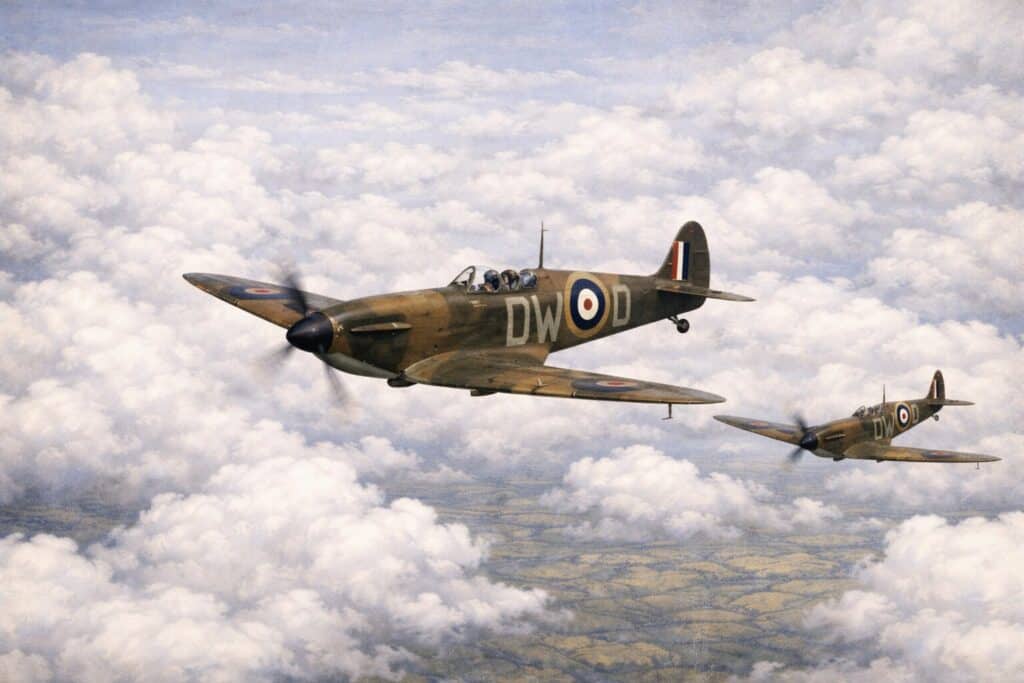
Despite heavy pressure, Fighter Command survived. Squadrons flying the Supermarine Spitfire and Hawker Hurricane bore the visible burden of combat, but their work was sustained by a larger defensive network. Pilots were repeatedly scrambled, often exhausted and frequently inexperienced as losses mounted and replacements arrived from the training system. Yet the command system continued to function.
A crucial change came when German attacks shifted increasingly towards London and other cities. The reasons remain debated, but the effect was clear enough: Fighter Command gained breathing space. Airfields and control centres remained under threat, yet the immediate concentration on the most vulnerable elements of the defensive network eased. This helped the RAF recover some of the balance during a period when it had been under profound pressure.
Why the RAF prevailed
The Battle of Britain was not won by a single factor. Radar mattered, but so did the command system behind it. Aircraft quality mattered, but so did maintenance, repair and industrial replacement. Pilot courage mattered, but so did the ability to direct squadrons efficiently and avoid wasting effort. In that respect, the battle was a victory of system as well as of individual combat.
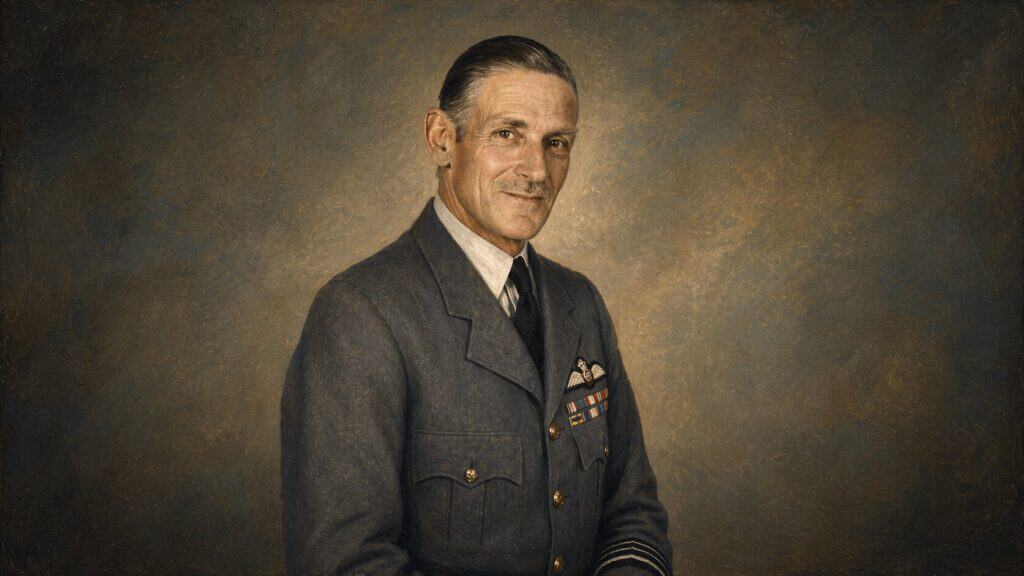
Leadership also played a major role. Hugh Dowding and Keith Park are particularly associated with the conduct of the battle because they understood the need to preserve strength, fight economically and resist pressure for wasteful grand gestures. Their contribution belongs at the centre of the RAF story of 1940.
Outcome and historical significance
The Battle of Britain ended without the Luftwaffe destroying Fighter Command or gaining the air superiority required for invasion. That made it a British defensive success and one of the most consequential operational results in the entire war. Germany failed to remove Britain from the conflict, while the RAF demonstrated that an integrated air-defence force could defeat a numerically formidable opponent.
The Battle of Britain established Fighter Command at the heart of national survival, embedded the Spitfire and Hurricane in public memory and created one of the service’s defining narratives. Yet beyond symbolism, its real significance lies in the operational fact that Britain remained at war and therefore continued to serve as a base for later Allied recovery and the eventual liberation of Western Europe.