On This Day, 1939: On 21 October 1939, 46 Squadron Hurricanes intercepted Heinkel He 115 floatplanes over the North Sea in the…
Read the entry →Hawker Siddeley Nimrod
Hawker Siddeley
The Hawker Siddeley Nimrod was the RAF’s principal long-range maritime patrol aircraft of the later Cold War and a major platform for anti-submarine warfare, reconnaissance and signals intelligence.
The RAF’s long-range maritime aircraft
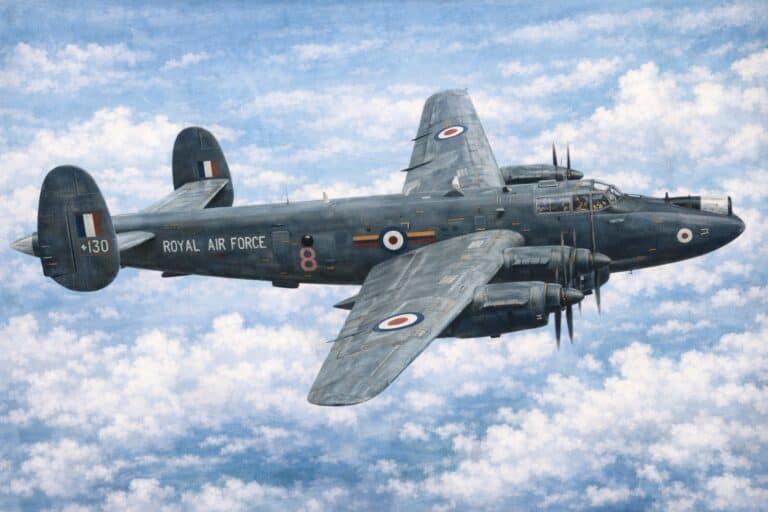
The Hawker Siddeley Nimrod served the Royal Air Force from 1969 to 2011, first as a maritime patrol and anti-submarine aircraft and then, in its final years, as a specialist signals-intelligence platform. Developed from the de Havilland Comet airliner, it replaced the piston-engined Avro Shackleton in maritime reconnaissance and became a major part of Britain’s contribution to NATO surveillance of the North Atlantic. The aircraft’s long career included Cold War submarine tracking, search and rescue, operations during the Falklands War, surveillance over the Gulf, and support to operations in Afghanistan. Its history also includes two unsuccessful replacement or derivative programmes and the 2006 loss of XV230, which exposed profound failures in military airworthiness management.
From Comet airliner to Nimrod
The Nimrod was based on the Comet 4 airframe but incorporated extensive changes for low-level, long-endurance maritime operations. Four Rolls-Royce Spey turbofan engines replaced the Comet’s Ghost engines. A distinctive extended lower fuselage housed the weapons bay, while the aircraft received maritime radar, navigation equipment, acoustic-processing systems and positions for a specialist mission crew. Its airliner ancestry offered a pressurised cabin and high transit speed, but the maritime role demanded lengthy patrols at varied altitudes and the ability to locate targets far beyond the coast. The first prototype flew on 23 May 1967. The type entered RAF service in 1969, with the first aircraft delivered for training before frontline squadrons began their transition from the Shackleton.
The MR.1 and Cold War maritime patrol
The initial Nimrod MR.1 combined surface search with anti-submarine warfare. Its crews used radar and visual observation to investigate shipping and acoustic equipment to process signals from sonobuoys deployed into the sea. Sonobuoys could help locate and track submarines, but useful results depended on skilled interpretation, environmental conditions and cooperation with ships and other aircraft. Maritime reconnaissance also required crews to identify vessels, report movements and maintain contact over long distances. In the North Atlantic, these missions formed part of NATO’s effort to monitor Soviet naval forces and protect reinforcement and supply routes. The aircraft was equally useful for peacetime search and rescue, where its endurance, communications and ability to cover large areas could help coordinate a response. Nimrod patrols were demanding exercises in navigation, crew coordination and fuel management, not simply flights along a coastline.
Bases, squadrons and the maritime organisation
RAF Kinloss in Scotland and RAF St Mawgan in Cornwall became the principal bases of the maritime Nimrod force. Nos. 42, 120, 201, 203 and 206 Squadrons formed part of its operational history at different periods, while No. 236 Operational Conversion Unit provided specialist conversion training during the early years. The force’s composition changed as squadrons were re-equipped, disbanded or reorganised. The maritime squadron structure changed as the MR.2 replaced the MR.1 and defence requirements evolved. Aircrew included pilots and flight engineers as well as navigators, tactical coordinators and specialist sensor operators. Their work was integrated with the Royal Navy and NATO maritime command arrangements. A useful history of the Nimrod must therefore include the mission system and people behind it, rather than treating the aircraft as a conventional transport carrying sensors.
MR.2: a major mission-system upgrade
A major modernisation programme began converting MR.1 aircraft to the MR.2 standard in 1979; 35 airframes received the upgrade. The first MR.2 was delivered in 1979, and the upgraded aircraft entered squadron service as conversions proceeded. Improved navigation, communications and detection equipment included the Searchwater surface-search radar, increasing the effectiveness of maritime surveillance and anti-submarine operations. The modernisation changed what crews could find and report as much as how the aircraft flew. Later operational modifications added air-to-air refuelling and other equipment, enabling the aircraft to perform missions beyond those envisaged for the original MR.1. The MR.2 remained the RAF’s principal maritime patrol variant until its withdrawal in March 2010.
The Falklands War, 1982
The Nimrod’s expeditionary value became particularly clear during the Falklands War. On 5–6 April 1982 two MR.1s from No. 42 Squadron flew from RAF St Mawgan to Wideawake Airfield on Ascension Island to begin patrols in support of the deploying British task force. MR.2 aircraft from Nos. 120, 201 and 206 Squadrons subsequently reinforced the detachment. Nimrods searched for surface vessels and submarines, provided communications and supported search-and-rescue and long-range navigation requirements. They also helped coordinate aircraft and tanker rendezvous over immense stretches of the South Atlantic. The aircraft were operating at the limits of practical reach from Ascension, which made refuelling capability especially valuable.
Rapid adaptation for long-range operations
Air-to-air refuelling equipment was installed urgently during Operation Corporate. The first modified MR.2 test flight took place on 30 April 1982, and a refuelling-capable MR.2 deployed south in early May. Tanker support enabled extended surveillance missions closer to the Falklands and the Argentine mainland. Some aircraft also received provision for AIM-9 Sidewinder air-to-air missiles for self-defence, giving rise to the contemporary description of the Nimrod as the RAF’s largest fighter. That nickname should not obscure its actual role: the aircraft remained a maritime reconnaissance platform, not an air-superiority fighter. The wartime modifications illustrated both the adaptability of the airframe and the engineering effort required to expand its operational envelope in a crisis.
Gulf surveillance and Operation Granby
RAF Nimrods were already conducting maritime surveillance in the Gulf region before the 1990–91 war. During the 1980s, RAF Nimrods undertook deployments and maritime surveillance in the Gulf region. After Iraq invaded Kuwait in August 1990, Nimrods supported Operation Granby through maritime reconnaissance and surveillance. The aircraft contributed maritime surveillance and reconnaissance to the coalition effort, monitoring shipping and providing information to commanders. This was an extension of established maritime skills to a different environment, rather than a sudden transformation of the Nimrod into a strike bomber.
Other overseas operations and search and rescue
After the Cold War the Nimrod continued to support British and allied operations, including surveillance connected with Iraq and later deployments in support of forces in Afghanistan. Its long endurance, communications equipment and specialist crew made it useful for overland reconnaissance and coordination as well as maritime tasks. At home and around Britain’s maritime approaches, Nimrods remained associated with searches for missing vessels and aircraft, supporting rescue coordination across large sea areas. The work was less conspicuous than combat sorties but was an important part of the RAF’s contribution to maritime safety and national security.
The R.1 electronic-intelligence aircraft
The Nimrod R.1 was a specialist electronic reconnaissance and signals-intelligence variant operated by No. 51 Squadron. Three original R.1 aircraft were produced; the type entered RAF service in the early 1970s. Unlike the MR.1 and MR.2, the R.1 was equipped to collect and analyse electronic emissions rather than conduct routine anti-submarine patrols. Its mission systems and the precise nature of its intelligence work were necessarily less public than those of the maritime fleet. The loss of one original R.1 in an accident in 1995 led to the conversion of former maritime Nimrod XV249 as a replacement. No. 51 Squadron operated the type from RAF Waddington in its later years. The R.1’s service included support to operations in Afghanistan and, during its final months, Operation Ellamy over Libya. Its last withdrawal from squadron service was on 28 June 2011. The RAF subsequently moved to the RC-135W Rivet Joint for this intelligence role.
The abandoned Nimrod AEW.3
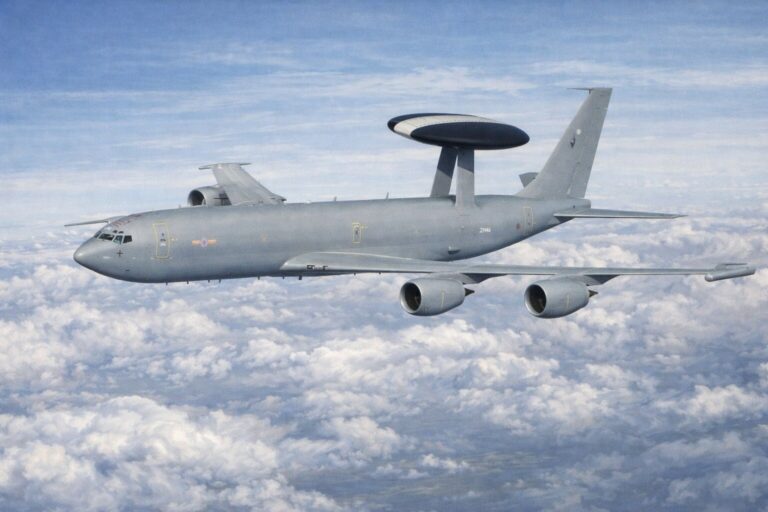
The RAF also sought to adapt the Nimrod into an airborne early-warning aircraft, intended to replace the Shackleton AEW.2. The proposed AEW.3 used a substantially different radar and avionics arrangement from the maritime variants, including prominent installations in the nose and tail. The programme encountered serious problems in developing a satisfactory integrated surveillance system. On 18 December 1986 the government announced its cancellation, after expenditure of £660 million, and instead selected Boeing’s E-3 airborne early-warning aircraft. The AEW.3 was a development programme and never entered operational RAF service. Its cancellation is central to the Nimrod story because it demonstrates the limits of adapting an existing airframe when the intended mission depends on a complex new sensor system.
The loss of XV230 in Afghanistan
On 2 September 2006 Nimrod MR.2 XV230 was destroyed over Afghanistan, killing all fourteen personnel aboard. The aircraft suffered a catastrophic in-flight fire following air-to-air refuelling. The subsequent investigations examined fuel-system hazards and the possibility of fuel coming into contact with a hot air duct. Charles Haddon-Cave’s independent Nimrod Review, published in October 2009, concluded that the loss was preventable and identified serious failures of leadership, safety culture, oversight and airworthiness management in the Ministry of Defence and industry. The review examined the aircraft’s safety case and the way risk had been assessed over many years. Its significance extended beyond the Nimrod fleet: the findings contributed to wider reform of UK military aviation safety and the creation of a new Military Aviation Authority. The deaths of the fourteen service personnel and the institutional failures that preceded the accident must remain a central, carefully documented part of any complete Nimrod history.
The MRA4 replacement programme
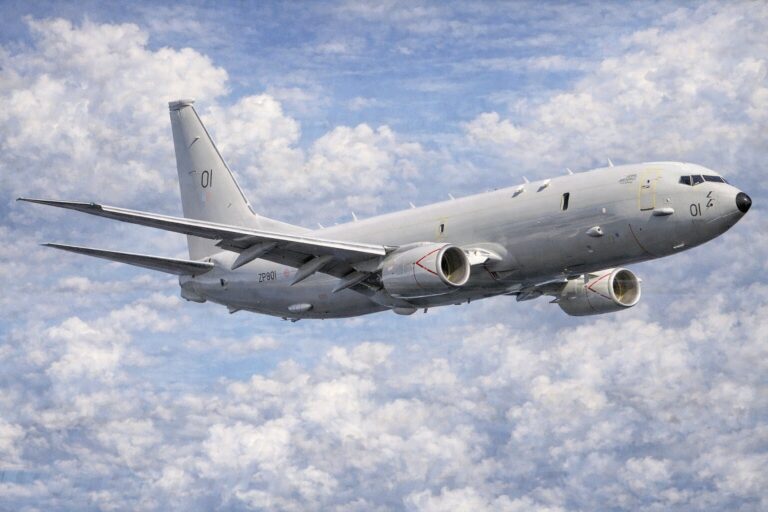
A later programme attempted to replace the ageing MR.2 fleet with the Nimrod MRA4, an extensively rebuilt aircraft with new wings, engines and modern mission systems. Although derived from existing Nimrod airframes, the proposed MRA4 represented a major redevelopment rather than a routine avionics upgrade. The programme experienced prolonged delays, technical problems and rising costs, while the planned fleet was progressively reduced. By 2010 the intended number had fallen to nine aircraft. The Strategic Defence and Security Review announced the programme’s cancellation in October 2010 before the aircraft entered operational RAF service. The decision followed the MR.2’s withdrawal earlier that year and left the United Kingdom without its own fixed-wing maritime patrol aircraft fleet for several years. The later acquisition of the Boeing P-8A Poseidon restored a dedicated RAF maritime patrol capability, but it did not make the MRA4 an operational Nimrod variant.
Retirement and the end of the Nimrod era
The Nimrod MR.2 was withdrawn from service in March 2010, ending more than four decades of RAF Nimrod maritime patrol operations. The R.1 continued for a further year. On 28 June 2011, No. 51 Squadron marked the type’s final retirement from operational service at RAF Waddington. The distinction between these dates is essential: 2010 marks the end of the maritime fleet, while 2011 marks the end of Nimrod service as a whole. The RAF’s transition away from the aircraft reflected ageing airframes, safety and airworthiness concerns, and the decisions taken over the MRA4 programme. The Nimrod’s departure removed a long-established set of specialist skills and capabilities from British military aviation.
Variants and production
The principal operational versions were the MR.1 maritime reconnaissance aircraft, the modernised MR.2 and the R.1 electronic-intelligence aircraft. The AEW.3 airborne early-warning aircraft and the MRA4 maritime patrol redevelopment were cancelled before operational service. The original production programme comprised 46 maritime MR.1 airframes and three dedicated R.1 aircraft, a total of 49 production Nimrods, in addition to two prototype conversions from Comet airframes. Of the maritime airframes, 35 were upgraded to MR.2 standard and 11 were assigned to the AEW.3 conversion programme. These conversions must not be added to the original production total as though they were new aircraft. The R.1 fleet later included a converted former maritime airframe to replace an aircraft lost in 1995. For the MR.2, BAE Systems lists a wingspan of 114 ft 10 in, maximum speed of 580 mph, cruising speed of 490 mph, maximum weight of 192,000 lb and four Spey engines each rated at 12,160 lbf thrust. Its stated range of 5,200–5,750 miles depends on configuration and operating conditions. These MR.2 specifications must not be applied indiscriminately to the R.1 or cancelled MRA4.
Historical significance
The Nimrod occupied a distinctive position in RAF history. It combined the speed and endurance of a jet airliner with sensors, weapons and trained crews dedicated to the maritime environment. For decades it helped Britain monitor Soviet and later Russian naval activity, support NATO sea operations and search large areas of ocean. It also adapted to overseas crises, most notably in the South Atlantic, and sustained an intelligence mission after its maritime counterpart had retired. Its achievements should be recorded alongside its failures: the unsuccessful AEW.3 and MRA4 programmes, and above all the preventable loss of XV230. Taken together, these episodes show the strengths and risks of maintaining a complex specialist aircraft over a long service life. The Nimrod was not merely a replacement for the Shackleton; it was a central instrument of British maritime and electronic reconnaissance across the Cold War and beyond.
| Dimensions | |
| Wingspan | 114 ft 10 in (35.0 m) |
| Length | 126 ft 9 in (38.63 m) |
| Height | 31 ft 8 in (9.65 m) |
| Wing area | 1,960 sq ft (182.1 m²) |
| Weights | |
| Empty weight | 86,700 lb (39,327 kg) |
| Max takeoff weight | 192,000 lb (87,090 kg) |
| Performance | |
| Maximum speed | 580 mph (933 km/h) |
| Cruise speed | 500 mph (805 km/h) |
| Service ceiling | 42,000 ft (12,800 m) |
| Range | 5,755 miles (9,262 km) |
| Powerplant | |
| Engines | 4 × Rolls-Royce Spey turbofan engines |
| Power | 12,140 lbf thrust each |
| Armament | |
| Guns | Internal weapons bay for torpedoes, depth charges, mines or anti-ship missiles on maritime variants |
Operation Nutcracker Begins in the Radfan, 4 January 1964
On 4 January 1964, Operation Nutcracker began in the Radfan, with British forces and RAF aircraft…
4 January 2026 · 4 minBerlin Corridor Crisis: RAF Argosy Flights Hold Firm
On 5 April 1965, Soviet pressure in the Berlin air corridors met continuing RAF Argosy flights…
5 April 2026 · 3 minCanberra Cyprus Run Showed RAF Jet Speed and Reach
On 28 February 1955, Air Vice Marshal J. R. Whitley made a record Canberra flight from…
28 February 2026 · 3 min