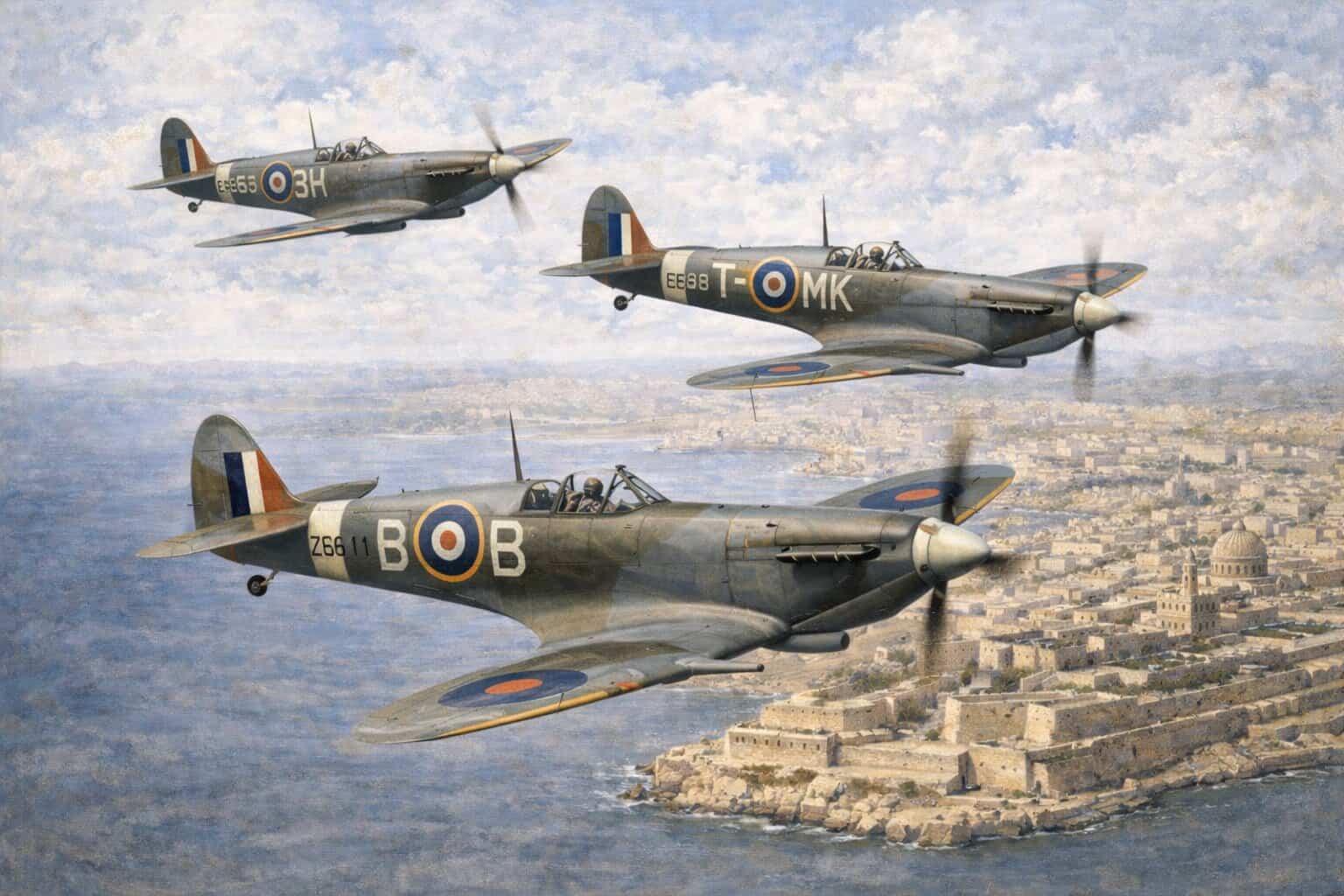
On 9 May 1942, Operation Oppidan and Operation Hansford delivered large numbers of Spitfires to Malta at a critical point in the island’s wartime ordeal. The reinforcement did not end the struggle immediately, but it strengthened Malta’s defences at a moment when the balance in the central Mediterranean had become dangerously precarious.
By the spring of 1942, Malta had endured sustained air attack and heavy pressure on its supplies, airfields and fighter force. The island’s position remained strategically important because it lay across Axis sea communications to North Africa. For that reason, Malta's ability to continue resisting had implications far beyond the island itself.
Reinforcing Malta’s Fighter Defence
The arrival of fresh Supermarine Spitfire fighters on 9 May formed part of the continuing effort to keep Malta in the fight. Earlier attempts to reinforce the island had shown both the urgency of the problem and the difficulty of the task. Aircraft had to be ferried into a besieged theatre where they were needed almost at once.
The new arrivals were therefore not intended simply as a reserve. They were expected to enter combat quickly to counter Axis air attacks and help restore a measure of defensive strength over Malta. That urgency reflected the severe strain the island had been under.
The importance of the Spitfire in this setting was obvious. The type offered a substantial improvement in fighter capability and helped the RAF meet the demands of the Mediterranean air battle more effectively. Its arrival on Malta marked another stage in the effort to prevent the island from being neutralised from the air.
Immediate Operational Value
One of the striking features of the reinforcement effort was how rapidly the fighters were committed. On Malta, there was little room for delay. Aircraft, pilots and ground crews were working under the constant threat of attack, and fresh arrivals could not remain idle for long. The reinforcement translated quickly into operational effect.
That mattered because the battle for Malta was not an isolated local contest. Control of the air over the island affected convoy routes, reconnaissance, maritime strike operations and the broader struggle over supply to Axis forces in North Africa. The defence of Malta was thus closely tied to the wider Mediterranean campaign.
Operation Oppidan and Operation Hansford should therefore be understood not merely as delivery exercises, but as part of a larger contest over air superiority, sea communications and strategic endurance. Bringing more fighters to Malta helped preserve the island as an offensive and defensive base at a time when its survival remained in question.
Significance in the Wider Air War
The events of 9 May 1942 illustrate the way reinforcement operations could carry strategic weight. The movement of aircraft from one theatre to another might appear routine in retrospect, yet in wartime, such deliveries could alter the tempo and resilience of an entire campaign.
For the RAF, Malta remained one of the most demanding theatres of the war, and its defence depended on maintaining sufficient aircraft to absorb losses and continue operations. The delivery of Spitfires under Operation Oppidan and Operation Hansford represented one of those moments when reinforcement itself became a significant operational act.
The Impact on Malta
On this day, the arrival of large numbers of Spitfires gave Malta a timely increase in defensive strength and underlined the RAF’s determination to hold the island despite sustained Axis pressure. The episode belongs to the larger story of the Siege of Malta, but it also stands on its own as an example of how air power could be sustained only through persistent reinforcement, rapid readiness and strategic resolve.
In RAF history, Operation Oppidan and Operation Hansford remain reminders that the outcome of an air campaign can depend as much on getting aircraft to the right place at the right moment as on the fighting that follows.