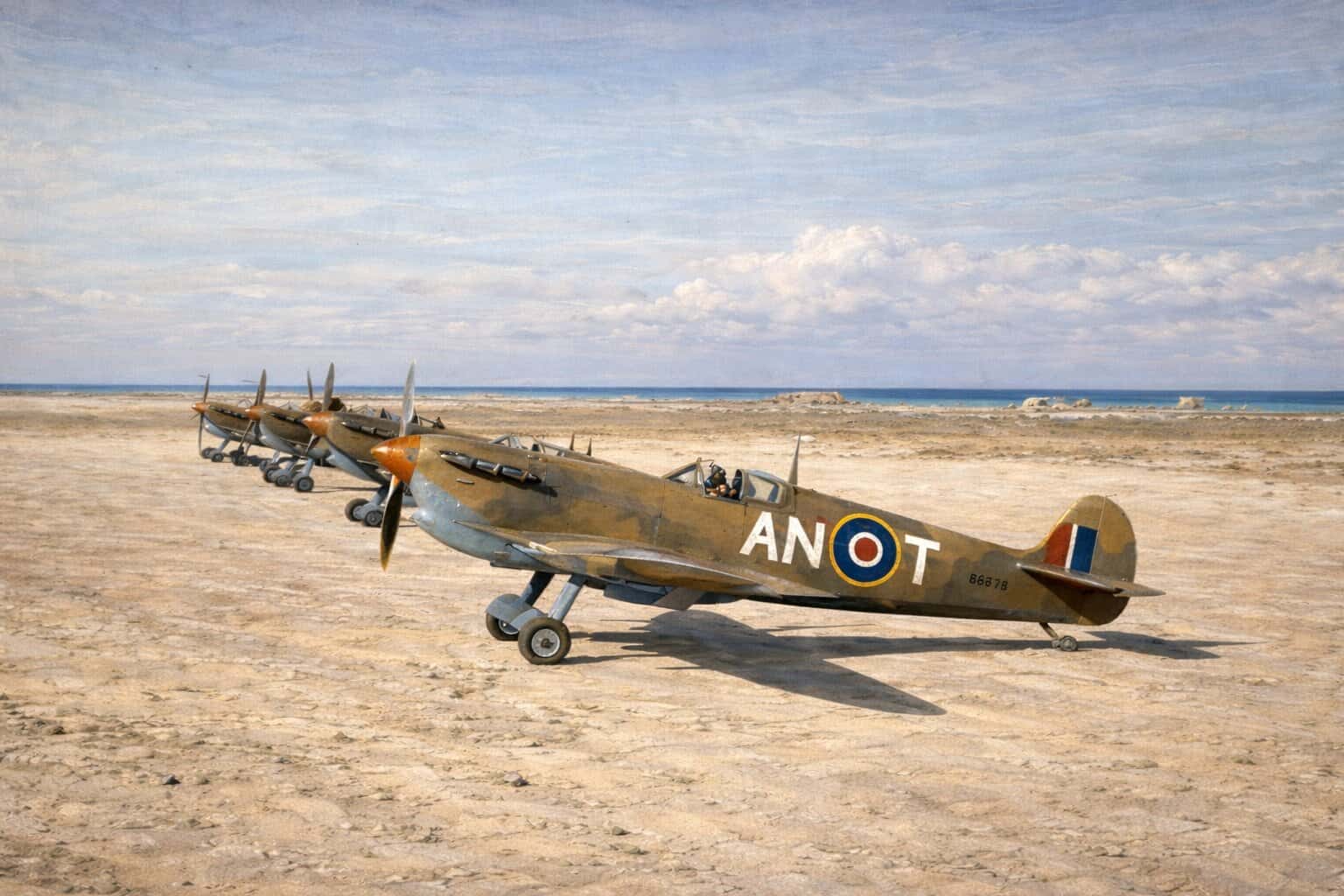
Malta occupied a central position in the Mediterranean war between 1940 and 1943, and RAF operations from the island became a major element in the wider struggle for air and sea control in the theatre. The island’s value rested on geography. Lying between Italy and North Africa, it stood close to the sea routes on which Axis supply to Libya depended and could therefore function as both a defensive outpost and an offensive striking base.
The RAF's role on Malta linked air defence of the island to attacks on Axis shipping and support for wider Mediterranean operations. This made Malta one of the most heavily contested air bases of the war. At different times, the problem was survival under sustained bombing, the preservation of fighter strength, and the restoration of offensive striking capability against Axis communications.
Strategic Importance of Malta
Malta mattered because it stood astride the main maritime routes connecting Italy with Axis forces in North Africa. Aircraft and submarines based there could threaten shipping carrying troops, fuel, ammunition and supplies to Libya. At the same time, the island’s own survival depended on sea communications and reinforcement from outside.
In RAF terms, Malta therefore represented both opportunity and vulnerability. It allowed strikes against enemy supply lines, but it also presented the Axis with a fixed and highly visible target. This dual character explains much of the campaign that followed.
Siege and Air Attack
The most intense phase of the siege came in 1942, when German and Italian air forces mounted repeated attacks against the island’s airfields, dock facilities and support infrastructure. Stations such as Luqa, Ta’Kali and Hal Far were attacked constantly, and the effect on RAF operations was severe. Aircraft were lost on the ground as well as in the air, repair and maintenance were carried out under repeated bombardment, and the strain on both service personnel and civilians became extreme.
The air battle over Malta was not simply a matter of counting raids. The operational issue was whether the RAF could keep enough fighters in service to prevent the island from being neutralised as an air base. During the hardest months, this question remained uncertain.
The award of the George Cross to Malta in April 1942 reflected the cumulative strain of this period on both the military defenders and the civilian population. In RAF history, the siege remains a major example of an air base under sustained pressure yet continuing to operate.
Fighter Reinforcement and Recovery
The survival of Malta depended in large part on fighter reinforcement. Earlier fighter types, especially the Hawker Hurricane, proved increasingly inadequate against improved Axis opposition, and the arrival of the Supermarine Spitfire became essential to restoring defensive strength.
Carrier deliveries of Spitfires brought badly needed reinforcements, though early receptions were sometimes undermined by rapid enemy attack before dispersal and protection procedures had improved. Later operations handled arrivals more effectively, and fighter strength began to recover gradually.
This improvement changed the balance in the air. Once the RAF could contest air superiority more effectively, Malta’s role as an operational base became more secure, and offensive action could be resumed with greater consistency.
Offensive Operations Against Axis Supply
With fighter defence strengthened, Malta could again be used more aggressively against Axis communications. Radar-equipped reconnaissance aircraft, torpedo bombers, and long-range strike aircraft helped attack convoys moving between Italy and North Africa. These operations formed part of the wider Allied effort to weaken Axis logistics in the desert war.
The island’s significance extended beyond survival. RAF Malta operations imposed a continuing strain on the enemy’s supply system and helped make the North African campaign more difficult for Axis forces. In this respect, Malta served as an active operational base rather than merely a besieged outpost.
Historical Significance
RAF operations on Malta are historically significant because they show how control of a single island base could influence a much wider theatre. Malta linked fighter defence, siege conditions, shipping interdiction, and the broader Mediterranean campaign into a single prolonged operational struggle.
It also offers an important example of resilience under air attack. The island’s ability to remain in use despite intense bombing meant that the RAF retained a forward base from which to challenge Axis movement at a strategically awkward point in the Mediterranean.
Conclusion
RAF Malta operations formed a central part of the Mediterranean war between 1940 and 1943. The island served as both a defended base and an offensive platform, and its value lay in the pressure it could place on Axis supply routes to North Africa.
The campaign combined siege, fighter defence and anti-shipping operations in one of the most sustained air struggles of the war. For RAF history, Malta remains one of the clearest examples of an air base whose survival and offensive use both carried strategic weight beyond its size.