The Battle of Britain was Britain’s first major defensive victory of the Second World War, and the first prolonged campaign fought entirely in the air. For the RAF, however, its significance lay in more than survival alone. The campaign acted as a practical test of pre-war assumptions about air defence, command, tactics and aircraft employment, and it forced the rapid refinement of ideas that shaped the Service for the rest of the war and beyond.
The doctrine that emerged from 1940 was not built on abstract theory alone. It was formed under direct operational pressure, as Fighter Command confronted the Luftwaffe’s sustained offensive against southern England. The result was a clearer understanding of how warning systems, command structure, tactical flexibility and aircraft employment had to work together in modern air defence.
Integrated Air Defence and the Dowding System
The most important doctrinal lesson of the Battle of Britain concerned integrated air defence. Fighter Command’s success did not rest on radar in isolation, nor on aircraft performance alone. It depended on a coordinated system linking Chain Home, the Royal Observer Corps, filter rooms, Group and Sector operations rooms, and front-line fighter squadrons.
This arrangement allowed the RAF to use scarce resources economically. Fighters did not have to be kept in wasteful continuous patrols, and squadrons could be committed only when incoming raids had been detected, assessed and passed through the command structure. In doctrinal terms, the battle confirmed that air defence required an organised network of warning, assessment and controlled response rather than simple local reaction.
This principle remained central after 1940. Later ground-controlled interception systems and early Cold War radar defence structures developed from the same underlying logic. The battle validated not merely one temporary wartime arrangement, but a wider RAF understanding of how air defence had to function.
Tactical Change in Fighter Operations
The campaign also accelerated doctrinal change in fighter tactics. Pre-war formations and assumptions proved too rigid for the conditions of 1940. Under sustained combat pressure, RAF fighters increasingly adopted looser, more flexible methods better suited to visibility, mutual support, and rapid engagement.
The battle reinforced several practical principles. Height advantage remained critical, disciplined radio communication mattered more than ever, and fighter formations had to balance cohesion with flexibility. It also became clear that radar warning and controller guidance were inseparable from tactical fighter success, because an interception begun from the right position was far more effective than one begun on guesswork or with a delayed reaction.
Debate over larger wing formations also reflected doctrinal uncertainty under combat conditions. The battle did not produce a universally accepted tactical answer, but it did make clear that operational conditions, warning time and local command judgement had to shape fighter employment more than pre-war formulae alone could.
Command Structure and Operational Management
The Battle of Britain also tested Fighter Command’s structure as an organisation. The Group and Sector system proved effective, but the campaign showed how heavily success depended on senior commanders' ability to allocate resources, rotate units, and preserve combat effectiveness over time.
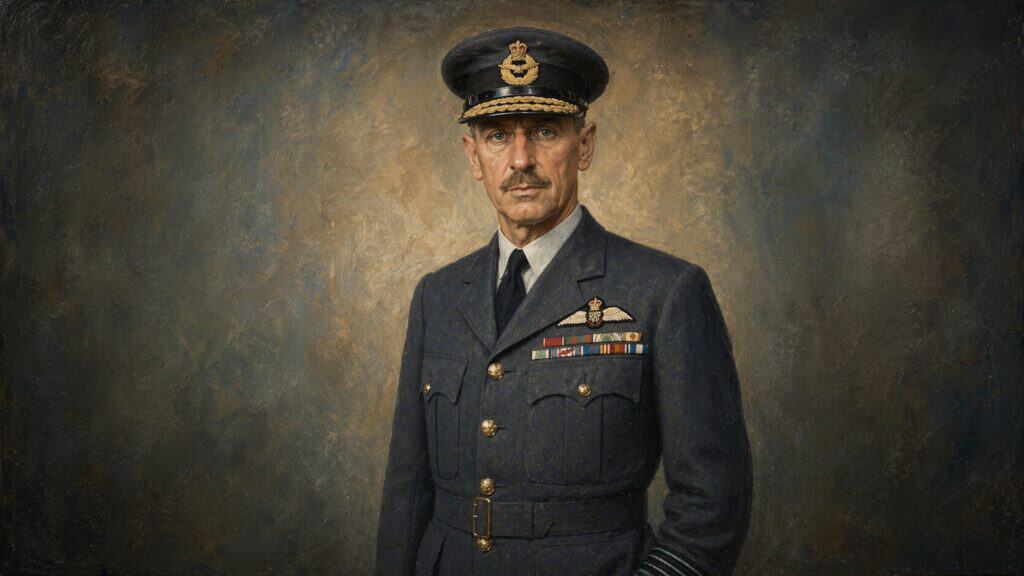
Leadership figures such as Hugh Dowding and Keith Park mattered because they combined strategic restraint with operational responsiveness. Their management of limited fighter strength demonstrated that command doctrine had to include not only interception of raids, but also husbanding of pilots, aircraft and repair capacity across a sustained campaign.
This was an important institutional lesson. Fighter Command could not afford to treat pilots and squadrons as expendable. Rotation, repair, rest and the maintenance of serviceable reserves became integral to doctrine, not merely administrative detail. The battle shaped the RAF’s understanding of sustained operational management as well as pure tactical response.
Aircraft, Technology and Industrial Response
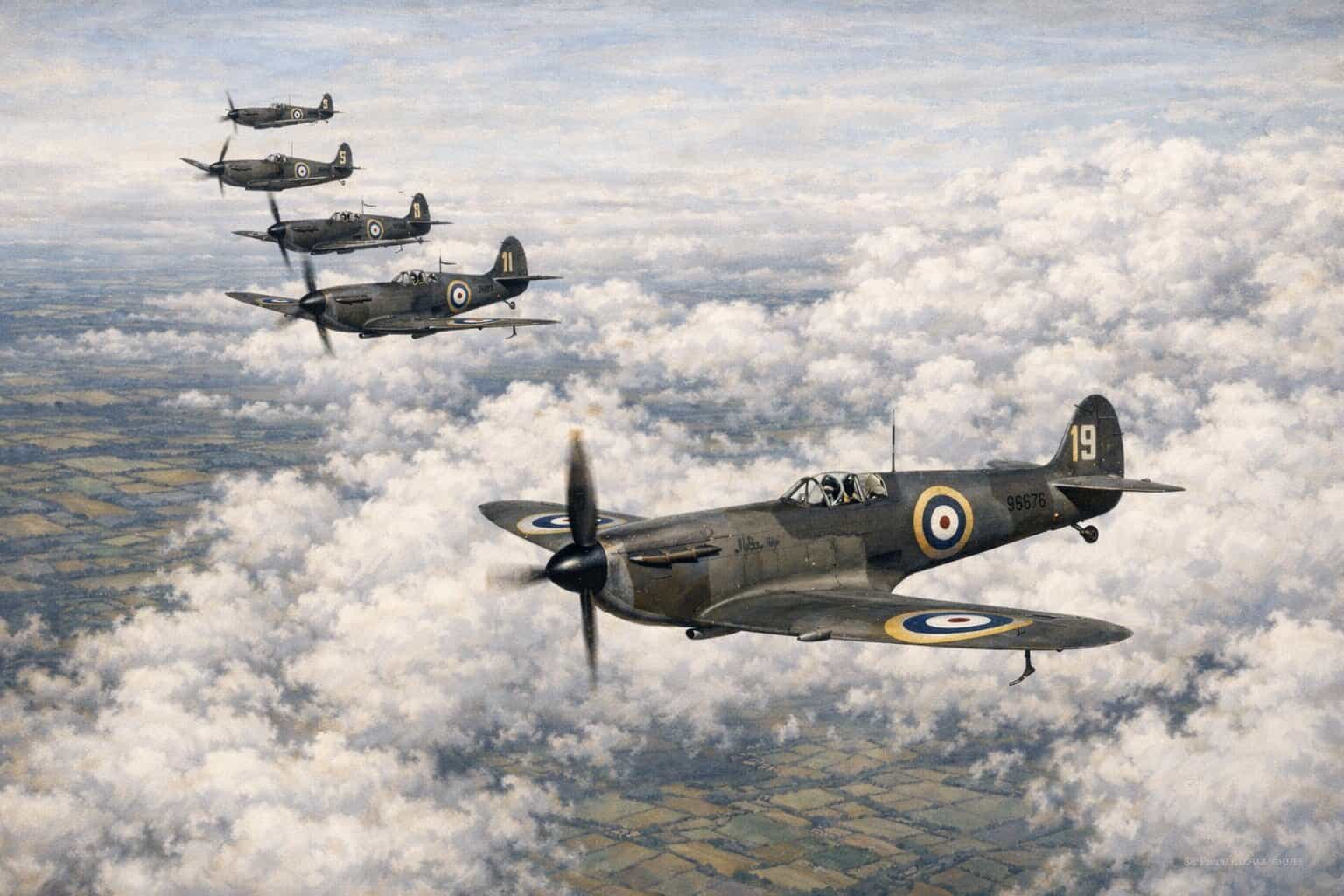
The battle also influenced RAF doctrine through lessons in aircraft and production. The Hawker Hurricane and Supermarine Spitfire together formed the core of Fighter Command’s strength, but the campaign made clear that air defence required not only front-line aircraft but also the means to sustain them through repair, recovery and replacement.
Operational feedback influenced aircraft development, pilot protection and armament thinking, while the wider wartime system increasingly linked front-line experience to industry and maintenance structures. The battle therefore reinforced a doctrinal truth that became ever more important later in the war: combat effectiveness depended on engineering, repair and production as much as on front-line flying itself.
Historical Significance
The Battle of Britain is historically significant in RAF doctrine because it transformed theory into tested practice. It confirmed the effectiveness of integrated air defence, accelerated tactical adaptation, demonstrated the importance of command judgement and reinforced the relationship between operations, technology and industrial support.
Its influence extended beyond 1940. The RAF that fought later in the war and the air-defence structures that developed during the Cold War carried with them principles demonstrated in the battle. In that sense, the campaign was not only a military victory but also a formative institutional experience.
Conclusion
The Battle of Britain shaped RAF doctrine by proving that modern air defence required integration, flexibility and disciplined command rather than aircraft performance alone. Radar, fighter tactics, command structure, and industrial support all had to function as parts of a single system.
For RAF history, the campaign remains important not only because it prevented German air superiority in 1940, but because it clarified how British air power had to be organised and employed in the face of sustained attack. Its doctrinal legacy extended far beyond the months of the battle itself.