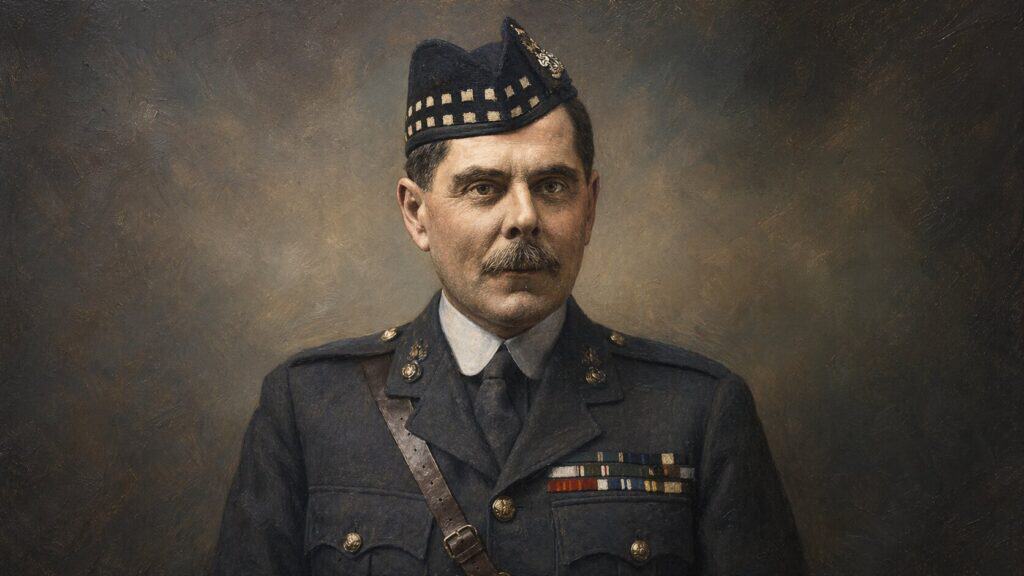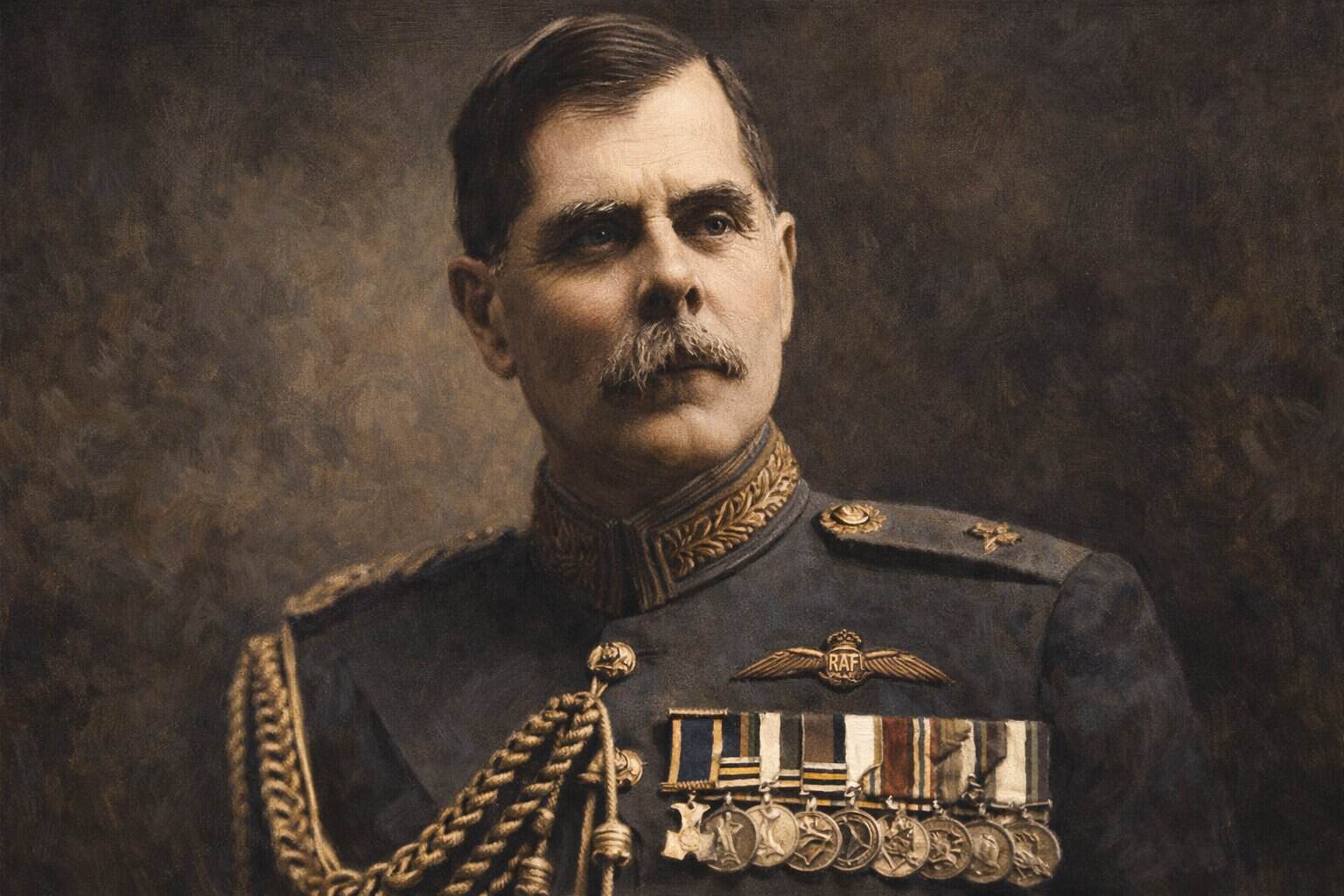
On 12 April 1918, Major General Hugh Trenchard resigned as Chief of the Air Staff after a dispute with Lord Rothermere, and Major General Sir Frederick Sykes succeeded him. The date falls within the first days of the Royal Air Force itself, which had only recently come into being. That timing gives the resignation unusual significance. It was not simply a change of office-holder, but a sign of strain within the leadership of a brand-new service still defining its authority, purpose and relationship with government.
Trenchard occupies a central place in RAF history because of his powerful views on air power, organisation and the independence of the air service. His resignation so soon after the RAF’s creation carried implications beyond personality. It raised questions about how the new institution would be directed and how far its professional leadership could resist political interference. The dispute with Lord Rothermere was thus part of a larger argument about control and confidence at a formative moment.
Why the moment mattered
The Royal Air Force emerged from wartime conditions that demanded rapid administrative change. Bringing aviation assets and personnel into a separate service was a bold step, and bold steps rarely proceed without friction. Responsibilities were new, expectations were high, and the pressure of the First World War remained intense. In such circumstances, disputes at the top could not be dismissed as routine. They affected the standing of the whole enterprise.
That is why Trenchard’s resignation deserves attention as more than a biographical episode. Chiefs shape doctrine, tone and institutional identity. When one resigns in conflict with a senior political figure, the event tells us something about the unsettled nature of civil-military relations. It also reveals how fragile new organisations can be before their procedures and conventions harden into accepted practice.
Trenchard and Sykes
The succession by Sir Frederick Sykes is itself revealing. Leadership continuity had to be maintained even amid dispute, because wartime administration could not pause. The change at the top illustrates both instability and resilience. The RAF was young enough to be shaken by such a resignation, yet established enough to continue functioning through replacement.
Trenchard and Sykes represented different personalities and approaches in military aviation, but the essential point for this date is that the office changed hands during a foundational period. The consequences of those early leadership struggles echoed through later debates about the RAF’s independence, strategic role and internal culture. In that sense, the resignation belongs to institutional history as much as to personal history.
A formative episode in RAF leadership
Looking back, it is easy to see Trenchard primarily through his later stature, but 12 April 1918 reminds us that his path was not straightforward. Even figures later treated as architects of institutions could be caught up in sharp political disagreement. The RAF was still proving itself, and its leaders were operating within a government system under wartime strain.
This episode matters because it reveals how the service’s early identity was contested rather than inevitable. Independence had to be defended, leadership had to be negotiated, and authority had to be exercised amid urgency. On this day, the resignation of Hugh Trenchard and the appointment of Frederick Sykes marked one of the first major crises in RAF high command. It was a reminder that the creation of an air force involved not only aircraft and operations, but also difficult arguments about who would lead it and on what terms.