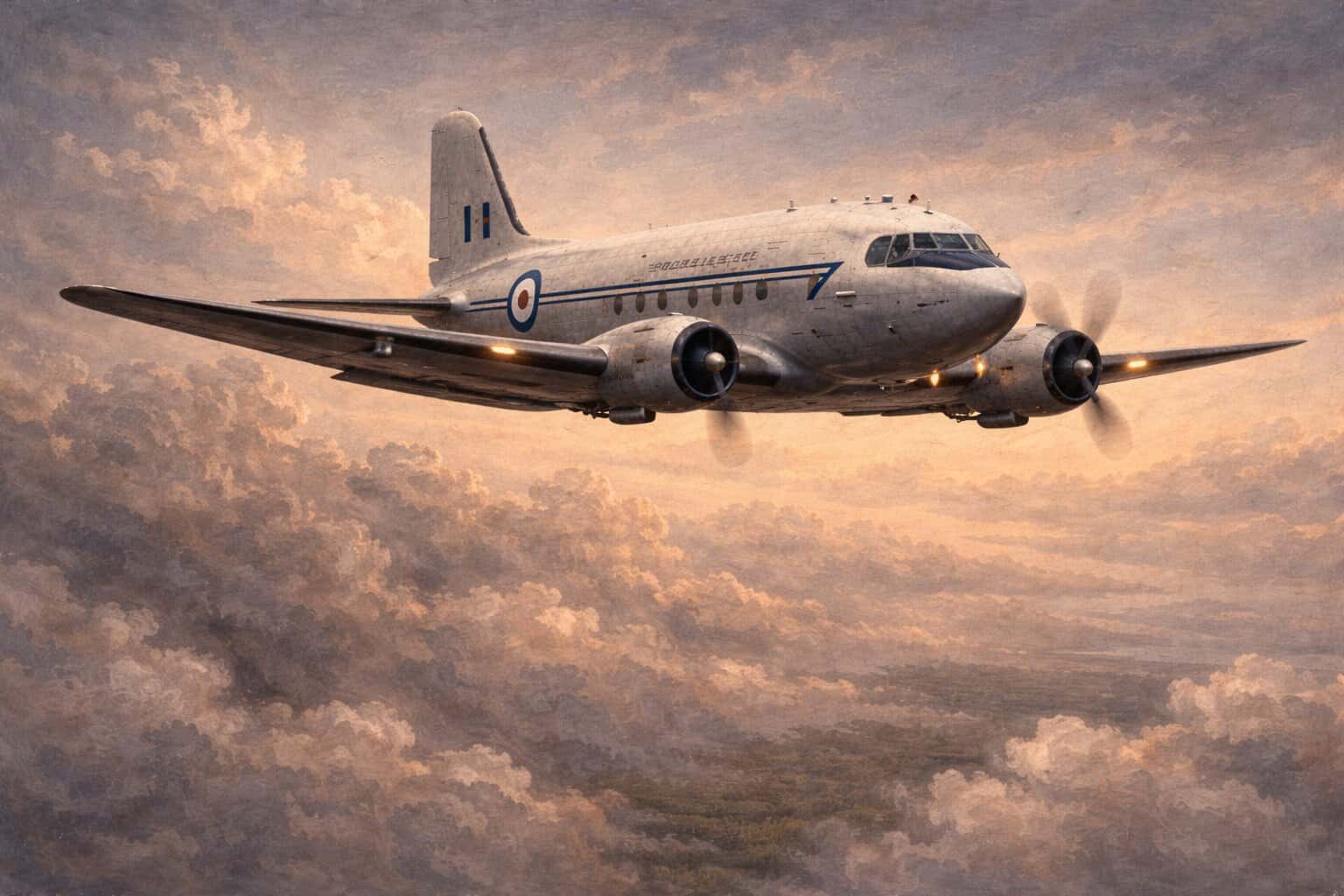
On 25 March 1943, the Royal Air Force created Transport Command, giving air transport a single organisation at a moment when global war demanded speed, range and reliability on an unprecedented scale. The new command brought together responsibilities that had grown rapidly since the outbreak of war and absorbed the work of the former Ferry Command. Its formation recognised a simple truth: air transport was no longer a supporting convenience at the margins of operations, but a central instrument of strategy.
Why a Dedicated Transport Command Was Needed
By 1943, Britain was fighting a war that stretched far beyond the United Kingdom. Aircraft, personnel, equipment, urgent correspondence and specialist cargo all had to move between theatres with far greater efficiency than earlier arrangements could comfortably provide.
Ferrying aircraft from factories and assembly points to operational units had already become a major task in itself, especially as Britain received large numbers of aircraft from North America and needed them delivered onward for service. At the same time, the RAF and the wider British war effort required dependable air routes overseas for passengers, mail and high-priority stores.
Before Transport Command, these duties had evolved through overlapping organisations, each responding to immediate wartime need. That approach had achieved much, but wartime experience showed the value of unity of command. Bringing long-distance transport and aircraft ferrying under a single headquarters promised clearer control, better planning, and more efficient use of aircraft and crews. In a conflict measured increasingly by mobility, administrative reform could have operational consequences.
The Inheritance of Ferry Command
The incorporation of the Ferry Command was particularly significant. Ferry Command had been established to solve one of the most practical and important wartime problems: how to move aircraft, especially those built in North America, across long oceanic and intercontinental routes into British hands. That demanded flying skill, navigation over vast distances and a carefully organised chain of staging points. The work was not glamorous in the popular sense, but it was indispensable. Every aircraft successfully delivered strengthened front-line units somewhere in the wider Allied effort.
By absorbing this function, Transport Command inherited both a proven operational responsibility and a global outlook. It was not simply a matter of moving aeroplanes from one place to another. It involved route management, maintenance support, weather judgement, crew endurance and the careful timing required to keep wartime air communications functioning across continents.
A Global Lifeline in the Air
Transport Command soon became one of the RAF’s essential connective systems. It linked Britain with overseas commands, supported the movement of key personnel and ensured that urgent cargo could bypass the delays and dangers of sea transport when necessary. In wartime, speed could be decisive. A specialist part, a senior officer, diplomatic papers or medical supplies might all justify immediate air movement. So too could the transfer of crews, reinforcements and administrative staff between distant stations.
This was a form of air power less dramatic than the bomber offensive or fighter combat, yet no less important to the conduct of modern war. It sustained decision-making, shortened distances across the empire and alliance, and helped Britain operate as part of a truly global coalition. The creation of Transport Command formalised that role and gave it institutional weight within the RAF.
Lasting Importance
The establishment of Transport Command on 25 March 1943 marked an important moment in the RAF’s wartime maturation. It showed how the service had adapted to the logistical realities of a world war fought across oceans and multiple theatres. Air transport had become a strategic necessity, not an afterthought.
In later years, the RAF’s transport forces would become associated with humanitarian relief, airborne operations, evacuation missions and support to British interests around the world. Those later achievements rested in part on wartime lessons. The creation of Transport Command stands as one of the clearest signs that the RAF understood mobility, organisation and sustainment to be as vital as combat itself.