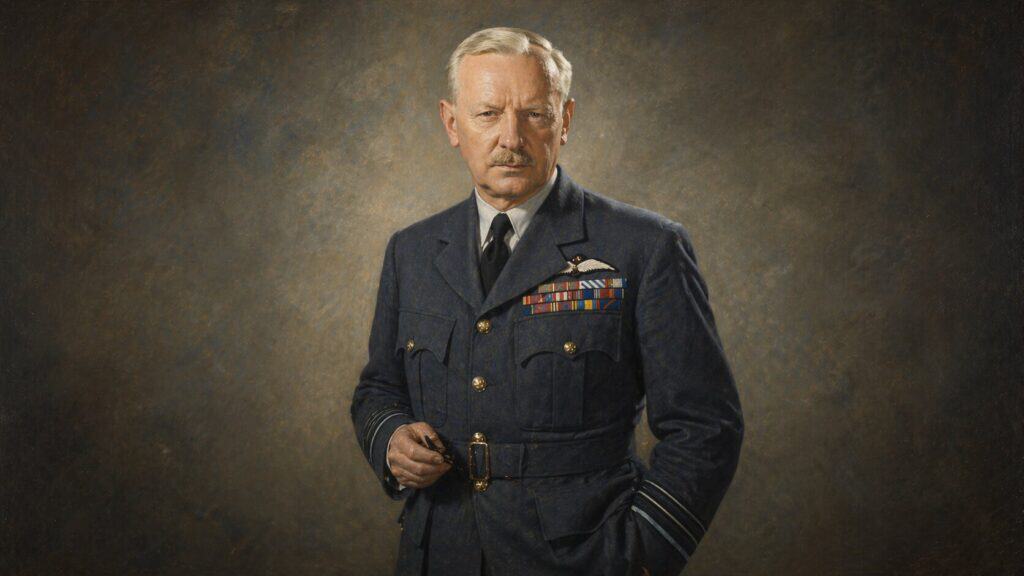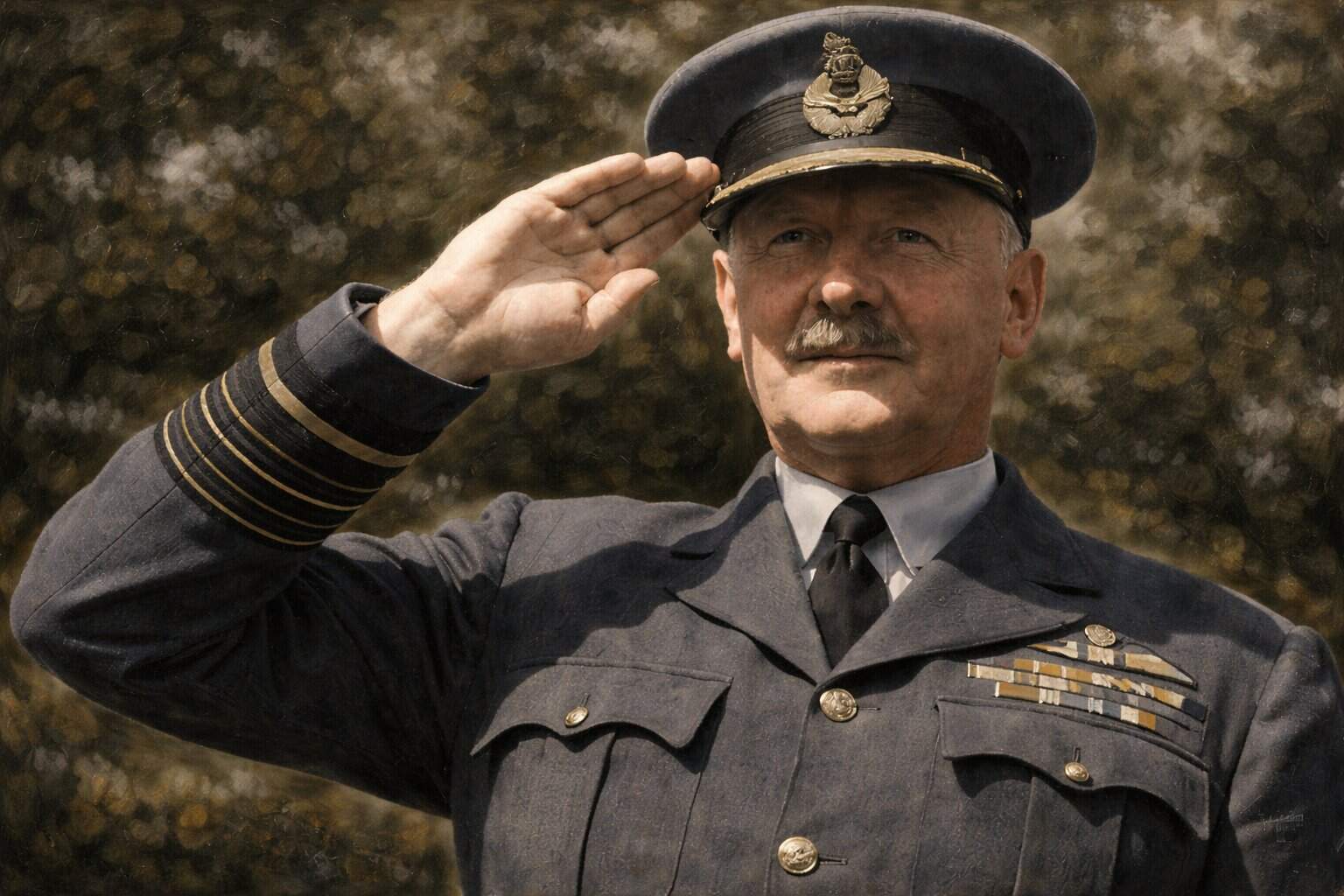
On 22 February 1942, Air Marshal Sir Arthur Harris assumed command of RAF Bomber Command, taking charge of Britain’s main strategic bombing force at a critical stage of the Second World War. The appointment did not create the bomber offensive, which was already underway, but it marked a decisive moment in its development. Under Harris, Bomber Command would be driven with far greater energy and with a clearer determination to strike directly at Germany on a sustained scale.
Harris arrived in post at a time when Britain was still largely fighting Germany, with no prospect of an immediate return to the continent. The Royal Navy remained heavily engaged, the Army was recovering from earlier defeats, and Fighter Command had already secured its place in national memory. Bomber Command, by contrast, was under pressure to prove that it could make a decisive contribution to the war. Aircraft production, navigation, training and operational methods were all improving, but the strategic bombing campaign still lacked the weight and consistency that its advocates believed necessary.
A command at a turning point
The significance of Harris’s appointment lay in the way it aligned leadership, policy and resources. He had long been an advocate of the offensive use of air power and was well known for his belief that a heavy bomber force could strike at the enemy’s industrial and urban centres with strategic effect. Taking over Bomber Command in February 1942, he inherited an organisation that had already endured losses, mixed results and continuing debate over accuracy and effectiveness. What he brought was a forceful sense of direction.
That mattered because the air war was entering a new phase. Britain needed to maintain pressure on Germany while the wider Allied coalition gathered strength. For political leaders and service planners alike, the bomber offensive offered one of the few means by which Britain could carry the war directly to the enemy heartland on a regular basis. Harris’s assumption of command had significance beyond personnel matters. It signalled that Bomber Command would be expected to play an even larger role in Britain’s war strategy.
Harris and the offensive
In practical terms, Harris’s leadership became associated with a more aggressive bombing policy and a stronger commitment to large-scale attacks by night. He did not act in isolation, nor was every development solely the product of one man, but his command gave the campaign a distinct momentum and identity. Over the months that followed, Bomber Command expanded its effort and became one of the central instruments of Britain’s long war against Germany.
This was also the period in which debates about the purpose and morality of strategic bombing became sharper. Those arguments belong to the history of Harris’s tenure as a whole rather than to the single day on which he took command, but they form part of the wider significance of the moment. His appointment was not merely administrative. It helped shape a campaign that would become one of the most consequential, destructive and contested elements of the air war in Europe.
Significance in the wider air war
Seen in the context of 22 February 1942, the immediate result was simple: Bomber Command had a new commander whose outlook matched the growing emphasis on sustained offensive action. For the RAF, this mattered because it strengthened the service’s strategic role at a time when Britain needed sustained pressure against Germany. For the wider war, it marked the beginning of the period most closely associated with Harris’s name.
The date stands as an important point in RAF history. It was the moment when Arthur Harris took over the command with which he would become permanently linked, and when Bomber Command entered a more relentless phase of the bomber offensive. Whatever judgement is made of that campaign in retrospect, 22 February 1942 remains a clear turning point in the evolution of Britain’s air war against Germany.