On This Day, 1956: On 11 October 1956, a Valiant of No. 49 Squadron dropped a live Blue Danube atomic bomb at…
Read the entry →
56 Squadron
“Firebirds; Punjab (wartime adopted title from 1941)”
Quid si coelum ruat — What if heaven falls?
Explore 56 Squadron RAF from Western Front S.E.5 fighters and Battle of Britain Hurricanes to Cold War jets and modern ISTAR testing.
Originally a single-seat fighter squadron, later a fighter-interceptor and conversion unit, now an operational test and evaluation squadron for RAF Air C2ISR and ISTAR capabilities.
56 Squadron is one of the Royal Air Force’s oldest surviving squadron identities, with a history that runs from the Royal Flying Corps to modern operational test and evaluation work. Formed in 1916, it first became famous on the Western Front as a fighter squadron of exceptional quality, then returned to prominence in 1940 over southern England and later in the anti-V-1 campaign. In the jet age, it remained a recognised fighter name, and in the twenty-first century, its number plate moved again, this time into the Air C2ISR world at RAF Waddington.
Formation and the Western Front
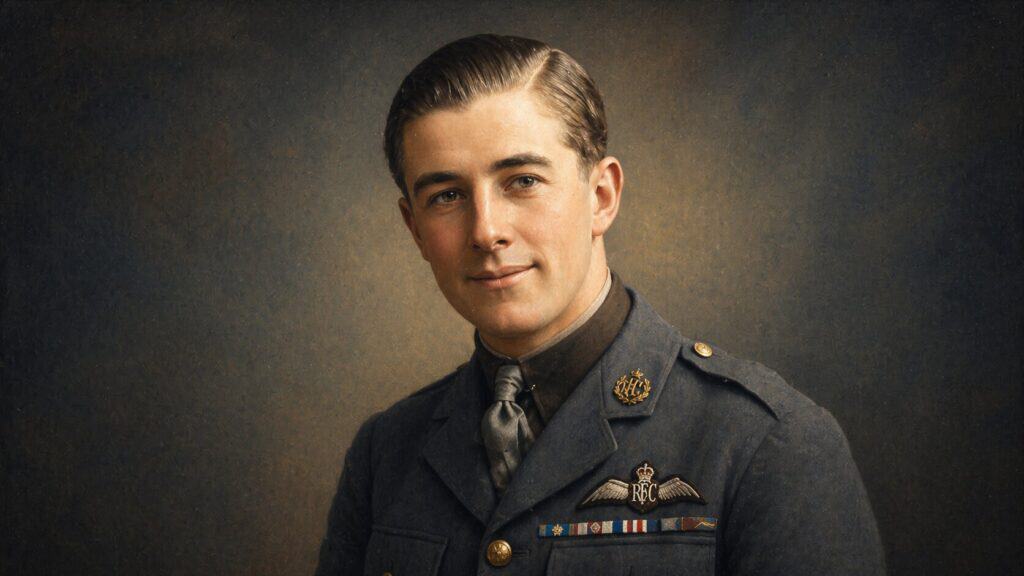
The squadron was formed on 8 June 1916 at Fort Rowner, Gosport, drawing personnel from No. 28 Squadron of the Royal Flying Corps. After work-up in Britain, it crossed to France in April 1917 and quickly became one of the most distinguished single-seat fighter units on the Western Front. It was the first RFC squadron to receive the Royal Aircraft Factory S.E.5, later operating the improved S.E.5a, aircraft that helped define its early reputation.
During 1917 and 1918, the unit fought through the major air battles over Arras, Ypres, Cambrai, and the Somme, and in the advance to the Hindenburg Line. Its ranks included Albert Ball, James McCudden and Arthur Rhys-Davids, three names closely associated with the highest level of British air fighting in the Great War. The squadron’s most famous combat episode came on 23 September 1917, when Rhys-Davids was credited with bringing down Werner Voss after one of the war’s best-known dogfights. By the end of the conflict, 56 Squadron had acquired a standing out of all proportion to its short life, combining tactical success with an unusual concentration of notable pilots.
Re-formations, home defence and another war
Like many RAF units, 56 Squadron did not enjoy a simple continuous existence after 1918. It disbanded on 22 January 1920, re-formed in Egypt on 1 February through the renumbering of No. 80 Squadron, disbanded again on 23 September 1922, and re-formed at RAF Hawkinge on 1 November 1922. Its phoenix badge and motto, Quid si coelum ruat, became enduring symbols of the Firebirds’ identity; the badge should not, however, be read as a direct record of those administrative changes.
In the inter-war years, it served as a fighter squadron at stations including Hawkinge, Biggin Hill and North Weald, moving through the standard RAF fighter line from the Snipe and Siskin to the Bulldog, Gauntlet and Gladiator. When the Second World War began, it was equipped with the Hawker Hurricane. From North Weald, it took part in the Battle of France, covered the Dunkirk evacuation, and then fought through the Battle of Britain as part of the defence of south-east England.
The squadron began converting to the Hawker Typhoon in September 1941 for offensive work over occupied Europe. After Typhoon service it operated Supermarine Spitfire IXs briefly between April and June 1944, before converting to the Hawker Tempest V. In that form, it was heavily engaged against the V-1 flying bomb offensive and in operations over north-west Europe after the Normandy landings. During the war, it also carried the adopted title 56 (Punjab) Squadron, part of the broader wartime practice of gift squadron naming.
Firebirds in the jet age
The wartime squadron’s identity was transferred to No. 16 Squadron on 31 March 1946. No. 56 Squadron was subsequently re-formed through the renumbering of No. 124 Squadron and entered the jet era. It operated the Gloster Meteor and became the only RAF squadron to fly the Supermarine Swift F.1 and F.2, before continuing with the Hawker Hunter, English Electric Lightning and McDonnell Douglas Phantom. Its Lightning aerobatic team became Fighter Command‘s official demonstration team in 1963. The squadron converted from Lightning to Phantom at RAF Wattisham in 1976, maintaining its place in British air defence during the Cold War. Its Firebirds nickname became particularly associated with that post-war fighter identity, reinforced by the phoenix imagery of the badge.
In later years, the squadron flew the Panavia Tornado F.3 and became closely associated with fighter conversion training after the transfer of the number plate to No. 65 Squadron at RAF Coningsby in 1992. That fighter-training chapter ended with a disbandment ceremony at RAF Leuchars on 18 April 2008, concluding the squadron’s Tornado F.3 operational conversion role.
Yet 56 Squadron did not disappear. On 22 April 2008, its number plate and standard were transferred to the Air C2ISR Operational Evaluation Unit at RAF Waddington. In that modern form, the squadron’s purpose changed from fighter conversion training to operational test and evaluation of air command, control, intelligence, surveillance and reconnaissance capabilities. Its work has involved systems associated with aircraft such as the Sentry, Sentinel and Airseeker; these examples do not mean that each type was permanently assigned to the squadron. The continuity was institutional rather than technical, but it preserved one of the RAF’s most resonant squadron identities.
Legacy
The significance of 56 Squadron lies in both excellence and persistence. It was one of the classic RFC fighting squadrons of 1917, a Battle of Britain unit in 1940, an effective Tempest formation in the anti-V-1 struggle, and later a familiar name in the RAF’s Cold War interceptor force. Its history is not a straight line, but a sequence of reappearances in new forms. That is why the phoenix remains such an apt emblem for the squadron: few RAF units better illustrate how a number plate can carry institutional memory across entirely different eras of air warfare.
Western Front 1917–1918
Ypres 1917
Arras 1917
Cambrai 1917
Somme 1918
Amiens 1918
Hindenburg Line 1918
France and Low Countries 1940
Dunkirk 1940
Battle of Britain 1940
Dieppe 1942
Fortress Europe 1942–1944
Home Defence 1942–1945
Normandy 1944
Arnhem 1944
France and Germany 1944–1945
Battle of Arras
Battle of Cambrai
Dogfight with Werner Voss, 23 September 1917
Battle of France
Dunkirk evacuation air cover
Battle of Britain
Dieppe Raid support
Normandy campaign
Arnhem support
Anti-V-1 campaign
The squadron had Victoria Cross recipients among its officers. Captain Albert Ball served with 56 Squadron in 1917 and was posthumously awarded the Victoria Cross. Major James McCudden, the squadron’s leading ace, received the Victoria Cross in 1918 after his service with the unit.
| Period | Station | Notes |
|---|---|---|
| 1916 | Fort Rowner | Formation and work-up. |
| 1916–1917 | London Colney | Home training before overseas service. |
| 1917–1918 | Western Front aerodromes including Vert Galant, La Bellevue, Laviéville and Béthencourt | Front-line fighter operations. |
| 1922–1939 | RAF Hawkinge, Biggin Hill and North Weald | Inter-war fighter service. |
| 1939–1941 | RAF North Weald | Battle of France, Dunkirk and Battle of Britain period. |
| 1941–1944 | RAF Boscombe Down and RAF Duxford | Fighter and fighter-bomber development. |
| 1944–1946 | B.152 Fassberg | Tempest and occupation period. |
| 1946–1992 | RAF Bentwaters, RAF Boxted, RAF Wattisham, RAF Waterbeach and RAF Akrotiri | Jet and interceptor era. |
| 1992–2008 | RAF Coningsby and RAF Leuchars | Tornado F.3 conversion role. |
| 2008–present | RAF Waddington | Air C2ISR operational test and evaluation. |
| Name | Dates | Notes |
|---|---|---|
| E. L. Gossage | 1916 | First commanding officer on formation. |
| R. G. Blomfield | 1917 | Commanded during the squadron’s rise to prominence in the First World War. |
| Philip Babington | 1920 | Associated with the post-war re-formation period. |
| Hugh Dundas | 1941 | Wartime commander in the fighter phase of the Second World War. |
Battle of Britain
How the Battle of Britain saw RAF Fighter Command defeat the Luftwaffe’s attempt to gain the air superiority…
Battle of France
An RAF-centred history of the Battle of France, from the opening German offensive to Dunkirk, losses in the…


Allied Air Power Helps Breach the Hindenburg Line in 1918
By 30 September 1918, Allied air power was helping breach the Hindenburg Line through reconnaissance, artillery…
30 September 2026 · 3 minGerman Airship Raid Fails as Zeppelin L70 Is Destroyed
On 5 August 1918, a Zeppelin raid failed and RAF aircraft destroyed L70, killing German naval…
5 August 2026 · 3 minMilitary Aircraft in 1914: Reconnaissance Before Air Power
Why military aircraft in 1914 were valued first for reconnaissance and artillery observation rather than later…
29 September 2026 · 2 min