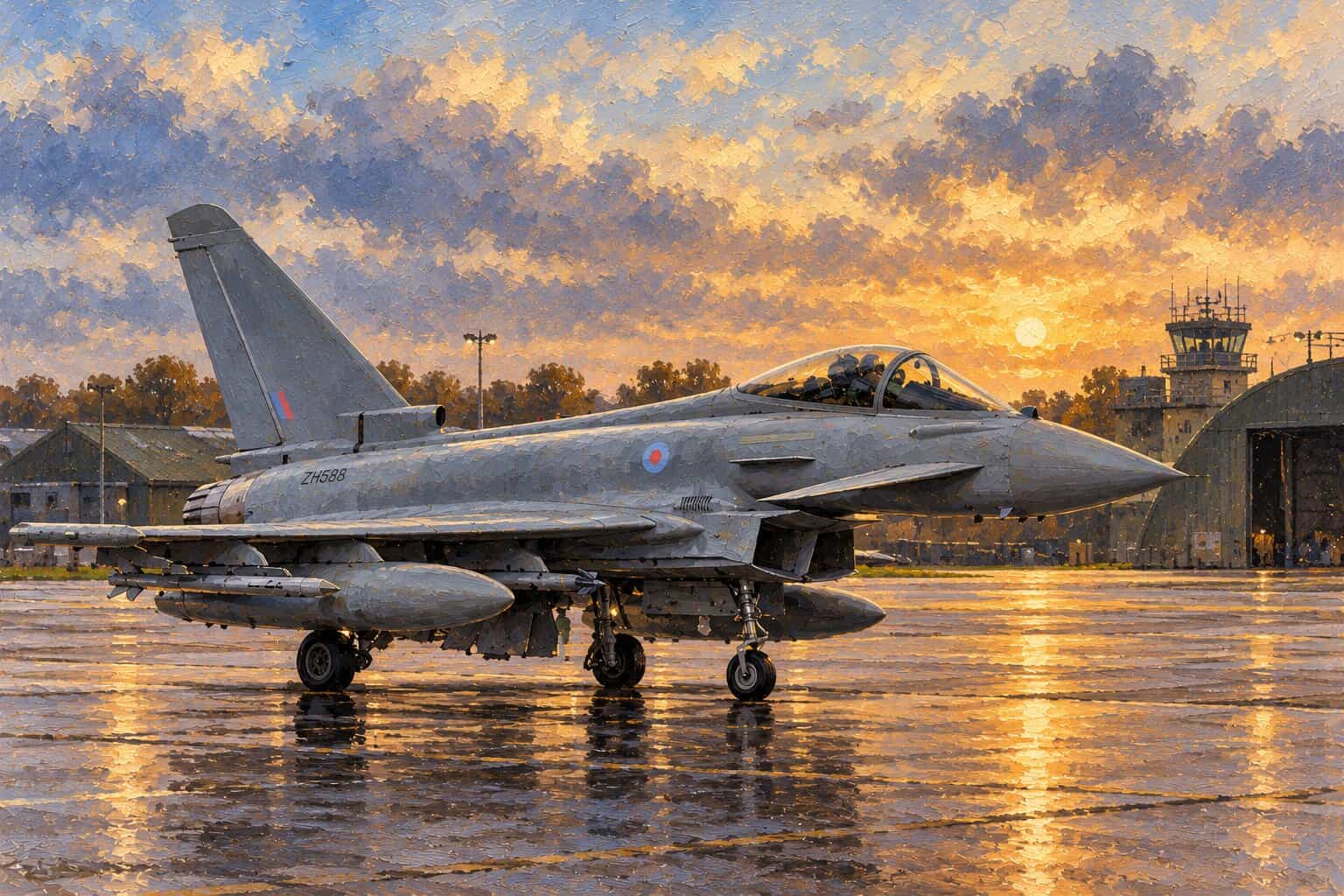
On 20 November 2000, European Union defence ministers met in Brussels to identify national forces and capabilities for future EU-led crisis-management operations. The Capabilities Commitment Conference gave practical shape to the Helsinki Headline Goal, agreed the previous December. Britain identified a potential contribution that included up to 72 combat aircraft, placing British air power within a developing European framework for multinational operations.
The conference was a defence-planning milestone. Its immediate business was to establish what participating countries could provide, under what conditions, and with what supporting capabilities. Each subsequent British deployment would remain subject to a decision by the United Kingdom Government.
From Helsinki to national commitments
At Helsinki in December 1999, EU governments had agreed a goal of being able, by 2003, to deploy a corps-level force of up to 60,000 troops and sustain it for at least a year. Air, maritime and other supporting elements would be required alongside the ground force.
The intended missions covered the Petersberg tasks: humanitarian and rescue work, peacekeeping, and combat forces employed in crisis management, including peacemaking. The framework envisaged EU-led action in circumstances where NATO as a whole remained outside the operation.
During the months before the Brussels conference, military experts from EU member states, assisted by NATO planners, assessed the forces and capabilities required. The November meeting translated that assessment into national offers. Governments identified a pool of potentially available forces, retaining responsibility for deciding their participation in particular circumstances.
Britain's offer and the air component
Britain's contribution identified on 20 November included a ground component of around 12,500 personnel for the maximum-scale operation envisaged at Helsinki. Up to 18 warships and 72 combat aircraft could be available in addition.
The air component was not confined to the RAF and explicitly included Royal Navy Sea Harriers. Associated support aircraft, including strategic transport, also formed part of Britain's potential contribution. The proposed scale therefore combined combat power with the means to move and support a deployed force.
The parliamentary statement also defined the duration of the largest air contribution. Up to 72 combat aircraft would be available for six months to cover initial entry into a theatre; a longer commitment would involve a reduced total. That distinction reflected the practical demands of sustaining operations over time.
Britain's pool of forces allowed a choice of contributions according to operational, political and geographical circumstances. The figures described the potential scale of an agreed deployment, with the final composition and decision to participate resting with the British Government.
RAF planning within a multinational framework
For the RAF, the announcement concerned the circumstances in which its capabilities might be called upon. Combat aircraft, transport and supporting aviation would have to operate within a force assembled from national contributions, with political decisions determining the mission and its scale.
Recent experience in Operation Allied Force during the Kosovo crisis had already placed RAF strike and support aircraft within a substantial NATO air campaign. The Brussels commitments addressed another possible framework for European crisis-management action. In both settings, effective air operations depended on coordination and the ability to sustain deployed forces.
The relationship with NATO remained central to the British Government's explanation. Ministers presented improved European capabilities as strengthening the European contribution to the Alliance, while parliamentary debate examined the proposed arrangements for planning and control.
The immediate outcome on 20 November was a clearer account of the national resources potentially available for EU-led operations. For British air-power planning, the offer connected aircraft availability, supporting capacity and deployment duration to an explicit multinational commitment. Its practical value would depend on turning those identified capabilities into forces that governments could authorise, deploy and sustain.