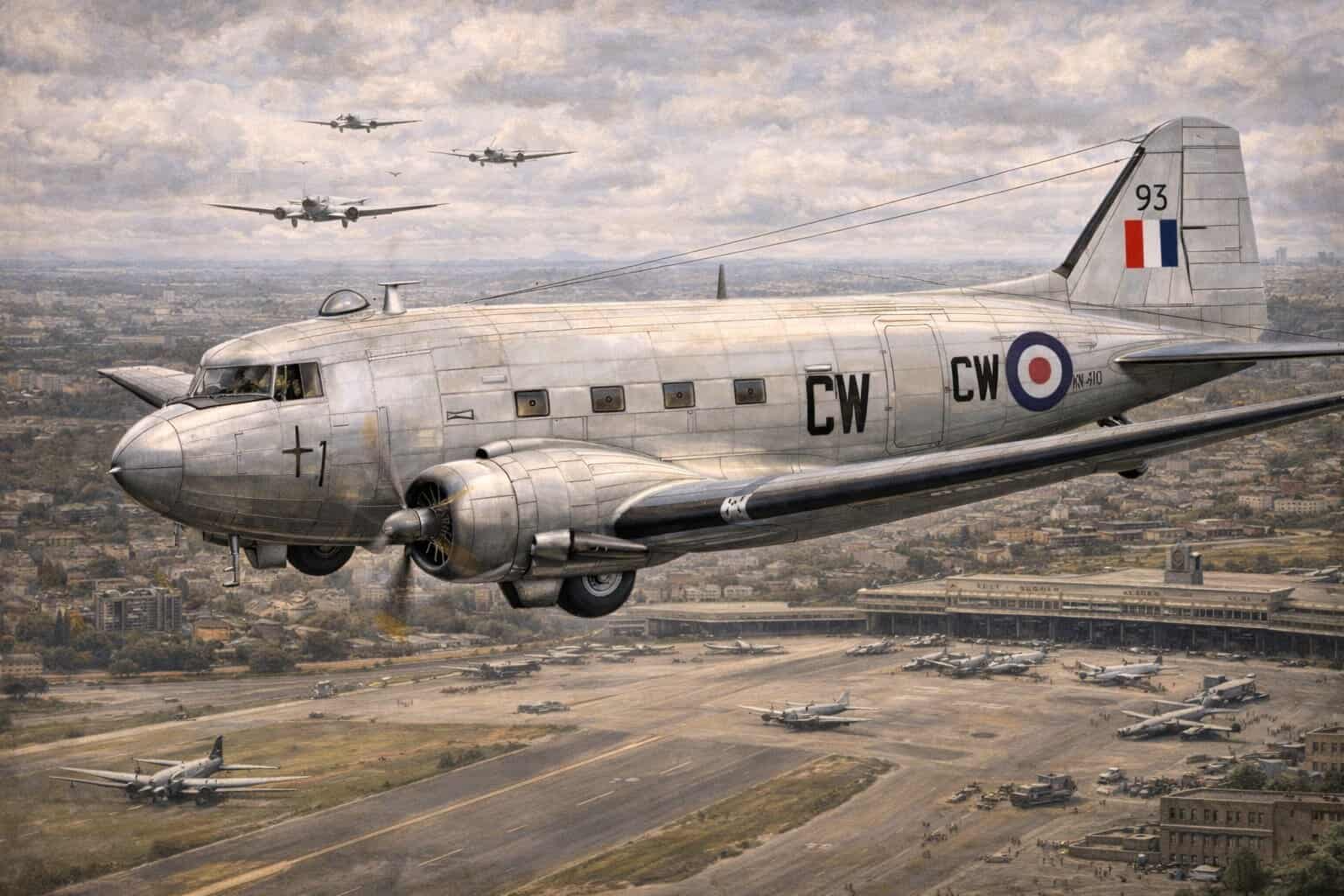
On 5 April 1965, a moment of Cold War strain played out in the skies linked to Berlin. The surviving record shows Soviet overflights challenging access while RAF Argosies, the Armstrong Whitworth Argosy transports, continued probing flights through the corridor system. That combination of pressure and persistence captures the central reality of Berlin in the decades after the Second World War: access was never merely technical. It was political, symbolic and strategically charged.
Berlin’s special status made every movement to and from the city unusually sensitive. Air corridors were not just routes on a map. They were the practical expression of rights and understandings that the Western powers regarded as essential. Any challenge to their use could therefore carry significance far beyond the immediate incident. Aircraft in the corridors were not simply travelling from one point to another; they were demonstrating that a contested settlement still held.
Why RAF Argosies mattered
The Argosy was a transport aircraft, and that fact is important. Cold War crises are often remembered through fighters, bombers and missiles, yet transport flying could be politically just as consequential. Aircraft engaged in corridor operations upheld access in a visible and regular way. Their flights affirmed continuity, normality and resolve. To continue operating under pressure was to show that the challenge had not altered Western practice.
The word “probing” in the summary suggests deliberate testing of the situation rather than routine indifference. Such flights would have been watched closely, because they touched the boundaries between legal claim, military caution and political nerve. In a divided Europe, those boundaries mattered enormously. The RAF’s role was therefore not dramatic in the cinematic sense, but it was serious. Calm, disciplined flying in a tense diplomatic environment could itself be an instrument of policy.
A crisis of signals
Soviet overflights were significant because they challenged more than a physical route. They challenged the continued exercise of Western rights in a city whose status remained unresolved and dangerous. In that setting, every flight became part of a contest of signals. One side pressed, tested and intimidated; the other answered by continuing to operate.
Significance
The Berlin corridor crisis of April 1965 illustrates how the RAF’s Cold War role often involved firmness without theatricality. The Argosy crews were not engaged in spectacular combat, but their flights belonged to the practical defence of a political position that Britain considered non-negotiable. Transport aircraft, by simply continuing to use the corridors, helped sustain the credibility of that position.
For RAF history, that is precisely what makes the episode important. It reminds us that air power in the Cold War was not expressed only through bombers, fighters and deterrent patrols. It was also expressed through steady, disciplined flying in contested spaces where access itself had become a strategic issue.