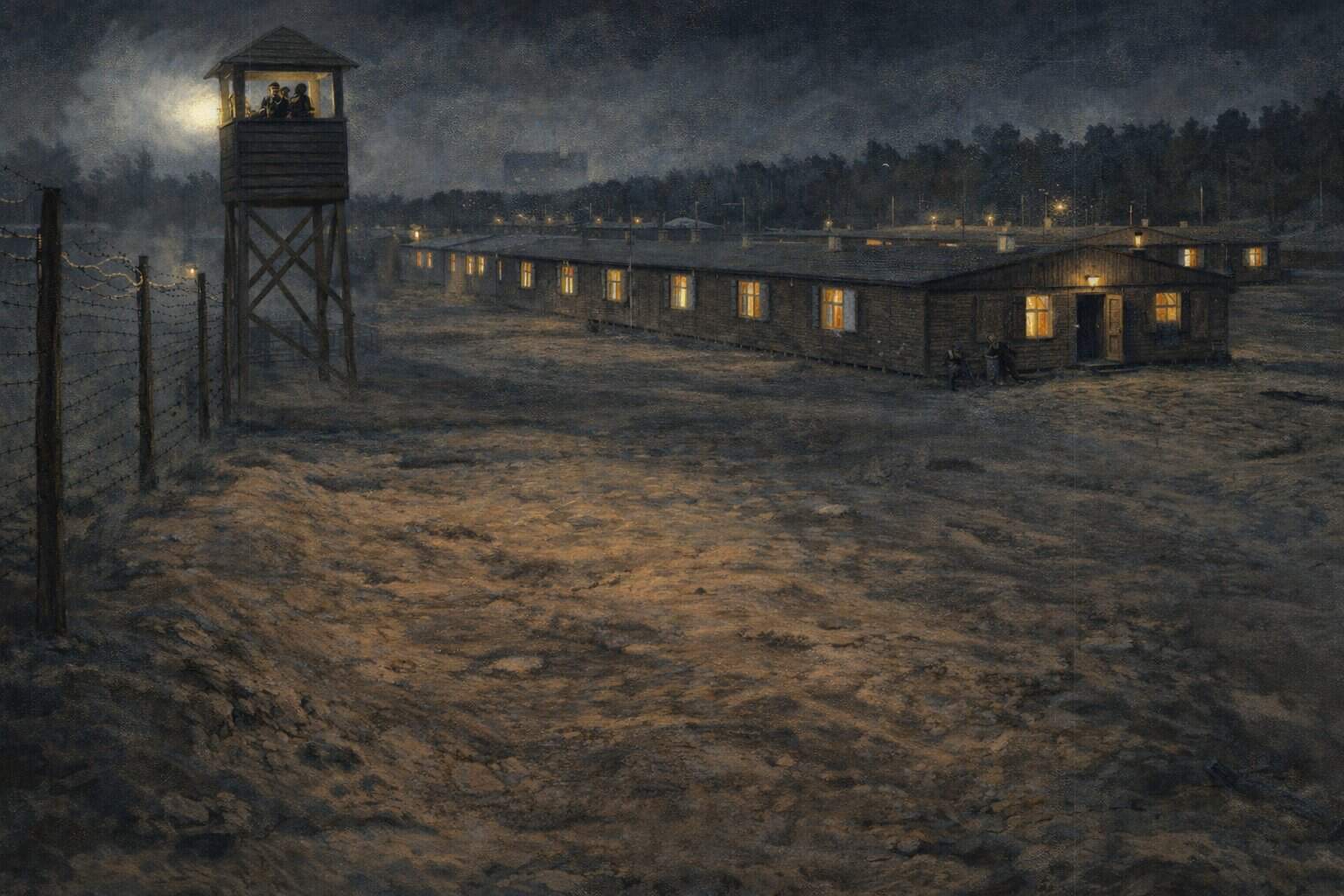
On the night of 24 March 1944, seventy-six prisoners escaped from Stalag Luft III, the German prisoner-of-war camp that held many captured Allied airmen. The event has passed into history as the Great Escape, but the familiar title can sometimes soften the grimness of what followed. Most of the escapers were recaptured, and the Gestapo murdered fifty on Adolf Hitler’s orders. For the RAF story, the episode is remembered not only for its daring but for the discipline, ingenuity and sacrifice of men who resisted captivity under the harshest conditions. Stalag Luft III had been designed specifically to make tunnelling difficult.
The camp’s layout, soil conditions and security measures reflected a determined effort to prevent escape. Yet prisoners persisted in treating escape as both a duty and a form of resistance. For captured airmen, the struggle did not necessarily end with being shot down. Planning, deceiving guards, gathering materials, and sustaining morale became ways to continue the contest with the enemy. The Great Escape emerged from that culture of organised resistance, led in large part by figures such as Roger Bushell, while men including Eric Williams helped shape the wider escape tradition from which it drew.
Planning, patience and collective effort
What made the breakout so extraordinary was the scale of preparation behind it. Escape was never the work of one adventurous individual alone. It required forgery, tailoring, concealment, lookout systems, intelligence gathering and the strict management of scarce resources. Inside a prison camp, ordinary objects had to be adapted to extraordinary purposes. Every task carried risk, and any mistake could expose the whole effort.
That seventy-six men succeeded in getting out at all remains a remarkable feat of organisation. It testifies to leadership, cooperation and steady nerve under pressure. The operation also reflected a wider RAF ethos found across the wartime generation: initiative, persistence and trust in collective effort. In captivity, those qualities took a different form from aerial combat, but they remained recognisably the same virtues.
Murder and outrage
The aftermath gives the Great Escape its true historical weight. Most of the escapers were caught, and the Gestapo murdered fifty in a grave breach of the laws and customs of war. These killings transformed an already dramatic escape into an enduring symbol of Nazi brutality. They also left a deep mark on the RAF and on the wider Allied community, for the victims were not simply men attempting to regain freedom, but uniformed prisoners entitled to protection.
The murders were not forgotten at the war’s end. They became the subject of investigation, evidence gathering and post-war justice. That process mattered greatly because remembrance without accountability would have been incomplete. The response helped affirm a principle for which many airmen had fought: that even in war, there were standards whose violation demanded reckoning.
Why the story endures
The Great Escape has often been retold in books and films, sometimes with emphasis on ingenuity and adventure. Those elements are real, but they should never eclipse the darker conclusion. The story endures because it combines courage with tragedy, hope with ruthless reprisal. It reveals the determination of Allied prisoners to resist, as well as the character of the regime that confronted them.
24 March 1944 is a date of admiration and mourning. The escape from Stalag Luft III stands as one of the most famous acts of resistance by imprisoned airmen. Yet, its legacy is inseparable from the murder of fifty recaptured men. Remembering the day properly means holding both truths together: the brilliance of the escape itself, and the solemn cost that followed.