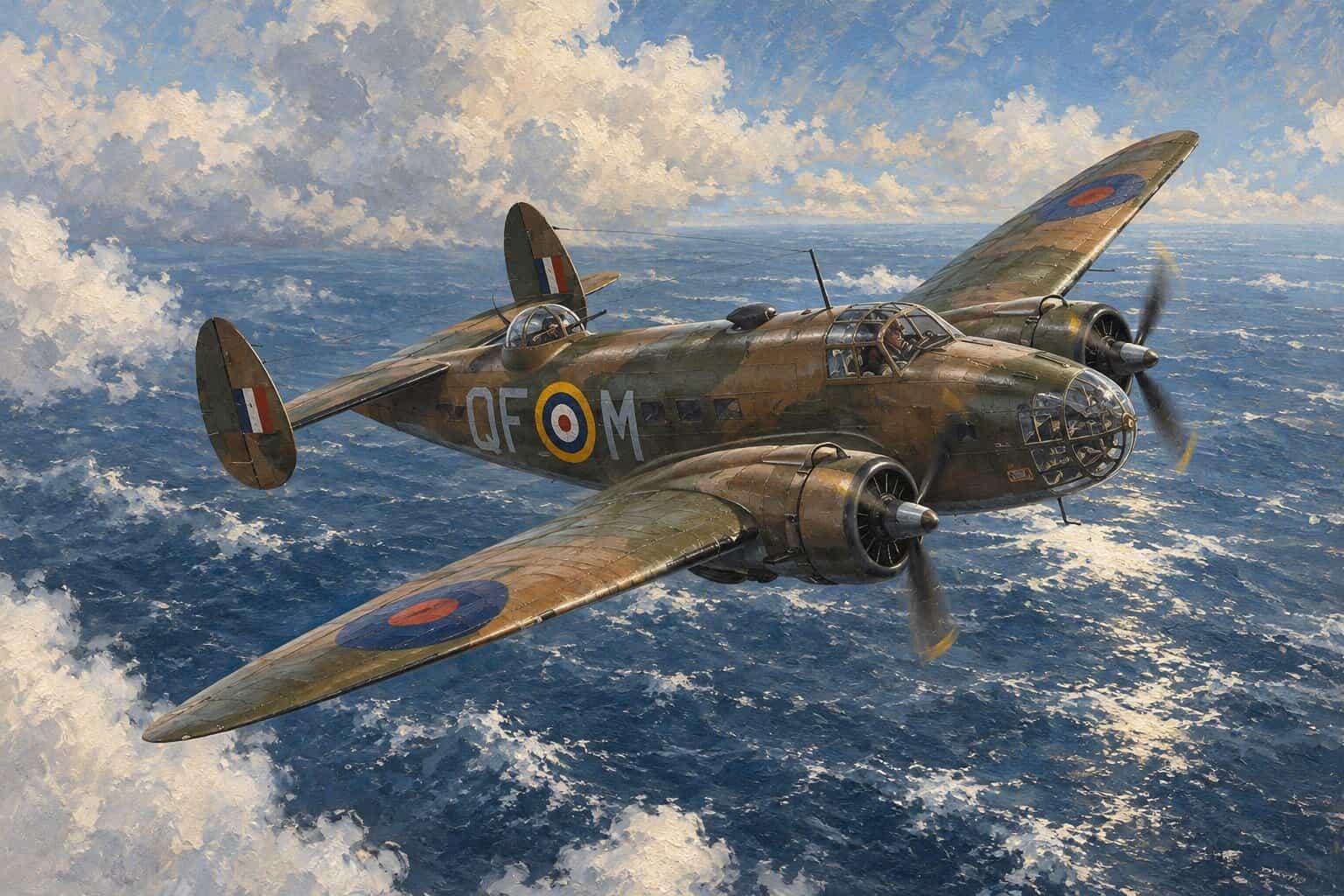
On 10 November 1940, seven Lockheed Hudson bombers left Gander, Newfoundland, on a pioneering delivery flight across the North Atlantic to Britain. Led by Captain D. C. T. “Don” Bennett, the aircraft reached Aldergrove in Northern Ireland the following morning. Their successful crossing demonstrated that military aircraft could be delivered from North America to Britain by air, establishing a foundation for the organised wartime ferry service that followed.
The flight addressed an urgent problem of supply. British aircraft orders in the United States could strengthen the RAF only when completed machines reached Britain. Delivering those aircraft across an ocean contested by German submarines placed further demands on shipping already carrying food, fuel and industrial materials.
Aircraft delivery across the Atlantic
The Lockheed Hudson was an American-built aircraft already serving Britain in maritime reconnaissance and patrol work. The seven machines assembled for the crossing had been manufactured in Burbank, California, and moved through North America before reaching their ocean departure point.
Transporting aircraft by sea involved preparation for shipment, a place aboard a merchant vessel and further work after unloading. Flying suitable aircraft across the Atlantic offered a way to shorten that process while releasing valuable cargo space for other supplies. The aircraft themselves could carry their delivery crews across the ocean under their own power.
Gander occupied a crucial position in this developing route. Newfoundland provided a departure point on the western side of the North Atlantic, bringing North American production closer to the airfields of the United Kingdom. The success of the venture depended on preparation on the ground as well as the performance of the aircraft in flight.
Bennett and the ocean crossing
Bennett led the seven Hudsons into the Atlantic night on 10 November. The flight required sustained navigation over open water, careful fuel management and crews capable of handling changing conditions far from an airfield. Weather, icing and limited communications made the North Atlantic a demanding environment for a delivery operation.
Conditions deteriorated during the crossing. The Hudsons encountered stormy weather and severe icing, forcing the aircraft to separate rather than continue together. Navigation and communications remained difficult, but Bennett’s leadership and the preparations made before departure helped the crews complete the journey. Despite the conditions, every aircraft reached Northern Ireland safely.
On the morning of 11 November, all seven Hudsons reached Aldergrove. The crews disembarked wearing poppies on Remembrance Day. The arrival gave the experiment a clear operational result: the entire group had completed the delivery flight.
From experiment to an organised ferry route
The immediate achievement lay in demonstrating a method of wartime aircraft delivery. A successful group crossing offered a basis for further flights and for the organisation needed to sustain them. Ground facilities, weather information, navigation and the supply of trained crews would all shape the route’s expansion.
The first crossings were organised through the Canadian Pacific Railway’s Air Service Department on behalf of Britain’s Ministry of Aircraft Production. In May 1941, the Ministry established the Atlantic Ferry Organisation, known as ATFERO, to take over the operation. RAF Ferry Command followed on 20 July 1941, building upon the experience gained during these pioneering deliveries. The November 1940 flight belongs to the formative stage of the transatlantic ferry system, when its practical possibilities were being established.
For Britain, the seven arrivals represented a new connection between overseas factories and operational air power. Gander became an important departure point as transatlantic ferrying expanded, while aircraft delivered by air eased pressure on merchant shipping. The Hudsons’ journey on 10–11 November demonstrated how the Atlantic itself could become an aircraft supply route, with lasting consequences for the scale and speed of wartime reinforcement.