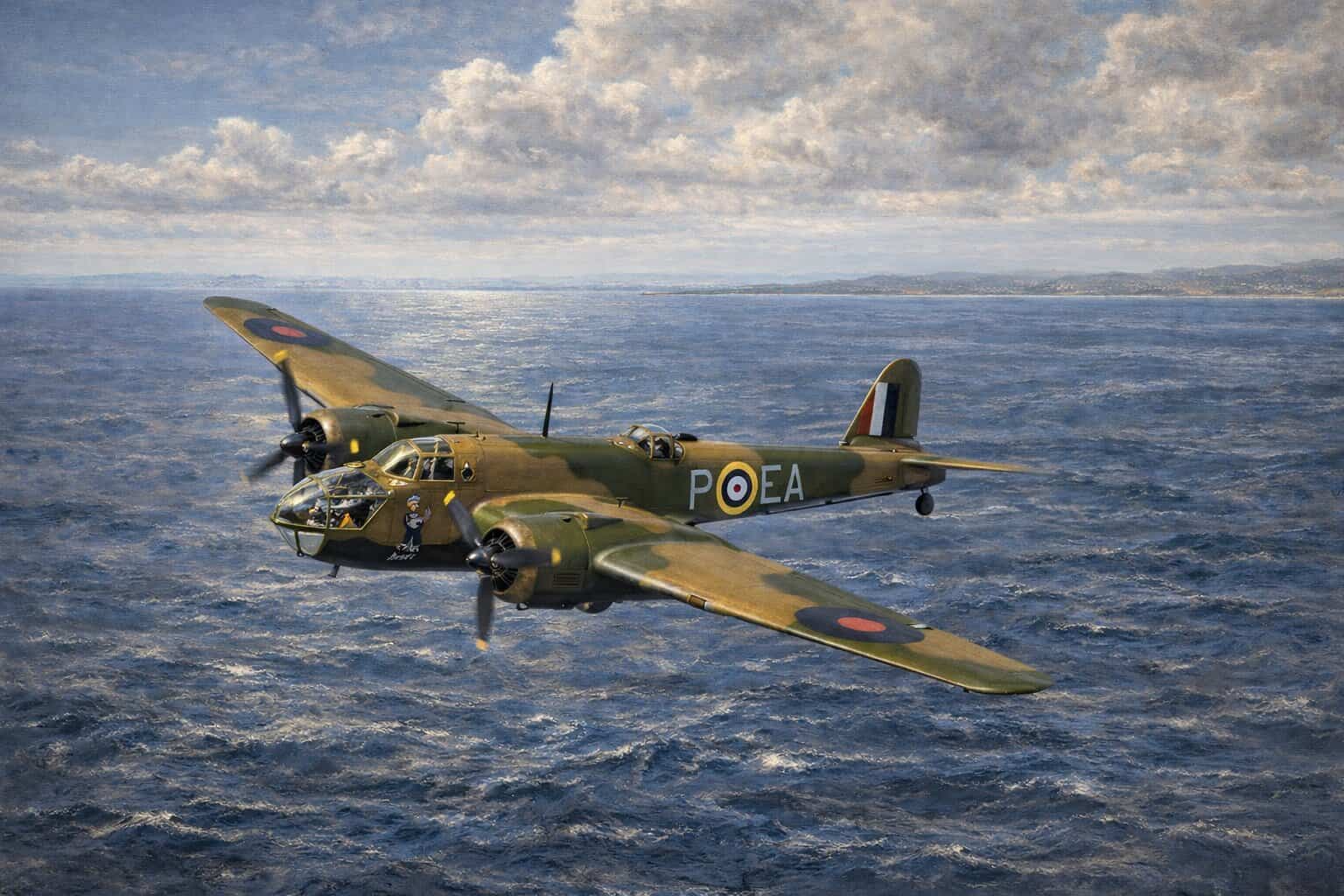
On 13 April 1940, Handley Page Hampden aircraft laid mines in waters off Denmark in the service’s first minelaying operation of the Second World War. What began as a comparatively modest opening operation would grow into a campaign whose cumulative effects were considerable, eventually contributing to the loss of hundreds of enemy vessels. That contrast between a quiet beginning and a substantial long-term effect is one reason the date deserves attention.
Minelaying by air has often sat in the shadow of more visible forms of wartime aviation. Bombing raids, fighter battles and dramatic reconnaissance episodes are easier to picture. Yet aerial mining was a serious strategic tool. Properly employed, mines could obstruct shipping routes, delay movement, force enemy vessels into less favourable channels and impose constant caution on maritime traffic. Their impact was often cumulative rather than spectacular, but cumulative effects can decisively shape a war.
Why waters off Denmark mattered
The choice of waters off Denmark was no accident. The seas around Denmark connected the North Sea to the Baltic approaches and posed considerable challenges to enemy movement. Mining such areas offered a way to contest maritime freedom without requiring continuous direct engagement. For the RAF in 1940, that mattered greatly. Britain needed ways to apply pressure across sea spaces where the enemy relied upon movement, supply and access.
An airborne minelaying operation also demonstrated the flexibility of RAF bombers in the early war period. The Hampden was not only a bomber in the narrow sense. Like several aircraft of its generation, it could be adapted to broader strategic purposes. Mining enemy waters demanded precise navigation, careful release and the discipline to complete a task whose results might not be immediately visible to those who carried it out.
A campaign of indirect pressure
What makes minelaying especially interesting is its indirect character. A bomber dropping explosive force directly on a visible objective, mines worked by denying safe movement and imposing delay, damage and uncertainty over time. That is why the campaign that began off Denmark could later produce results far out of proportion to the modest visibility of its opening sorties.
Significance
The first RAF minelaying operation matters because it shows how Bomber Command and the wider RAF adapted air power to economic and maritime warfare as well as direct attack. It opened a campaign whose effects would accumulate across the war and whose contribution is easy to underestimate precisely because it worked indirectly.
In RAF history, dates such as 13 April 1940 are important not for spectacle but for what they set in motion. The Hampdens that mined Danish waters launched a long-running offensive effort that combined navigation, maritime pressure and strategic intent. It was a quieter beginning than many wartime anniversaries, but it marked the start of one of the RAF’s most effective forms of persistent pressure against the enemy.