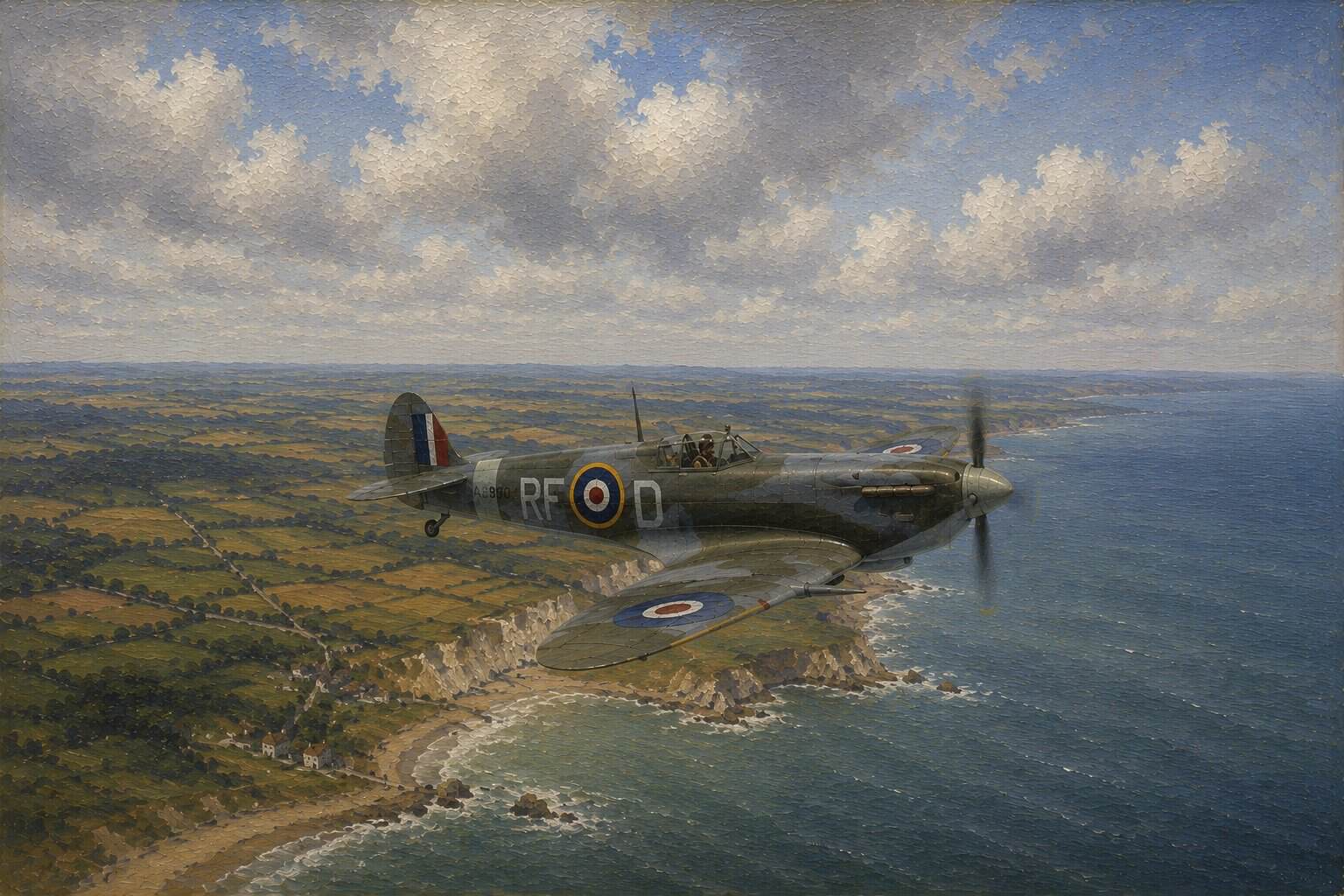
On 24 September 1937, Fighter Command received its first production Supermarine Spitfire, marking the arrival of an aircraft that would later become one of the best-known fighters in British history. At the time, however, the Spitfire was not yet a legend. It was a new service aircraft entering a Royal Air Force that was still modernising its equipment, doctrine and preparedness in the years before the Second World War. That early delivery matters because it captures the point at which an important future capability first became part of frontline RAF planning.
A Fighter For A Changing Air Defence System
The late 1930s were a period of major transition for British air defence. The RAF was moving away from older assumptions and investing in newer aircraft better suited to the demands of modern aerial combat. Fighter Command, still developing its peacetime structure and operational methods, required machines with higher performance, stronger armament potential and greater suitability for rapid interception.
The arrival of the first production Spitfire represented more than the acceptance of a promising aeroplane. It formed part of a wider attempt to equip the RAF for a very different kind of war from that of 1914 to 1918. Speed, climb, handling and modern design all mattered because the fighter force would need to meet advanced threats under increasingly demanding conditions.
New, Unproven And Important
In September 1937, the Spitfire's later reputation had not yet been earned. The aircraft was still new in service terms and its full operational place had yet to be established through experience. That is precisely what makes the date historically valuable. It shows the Spitfire not as an icon viewed through wartime memory, but as an emerging component of RAF rearmament.
Early production delivery also highlights the practical process by which military capability is built. Famous aircraft do not begin as symbols. They begin as new equipment entering service, to be tested, refined and integrated into existing command structures. For Fighter Command, receiving its first production Spitfire marked the beginning of that process.
Significance Before The Battle Of Britain
The event also belongs to the larger story of British preparation before 1939. The interwar years are sometimes overshadowed by the dramatic campaigns that followed, yet they were decisive in shaping what the RAF could do once war came. Modern aircraft entering service before the outbreak of conflict were part of that foundation.
The Spitfire became especially associated with Fighter Command in wartime, but this September 1937 milestone reminds us that its service life began in a quieter atmosphere of development and adjustment. The aircraft still had to be absorbed into squadron life, technical support and operational thinking. Its eventual wartime fame lay in the future.
An On This Day Moment Of Arrival
As an On This Day subject, 24 September 1937 works because it captures a clear moment of arrival. Fighter Command had received its first production Spitfire, and with it a glimpse of the fighter force it was attempting to build. The significance of the date lies not in retrospective mythology but in the practical fact that a new-generation aircraft had entered RAF service.
That made the occasion an important marker in interwar rearmament. It showed the RAF moving towards a more modern air defence system at a time when such progress would soon prove essential. Long before the Spitfire became inseparable from Britain's wartime story, it first appeared as a new and still unproven machine entering Fighter Command's ranks.