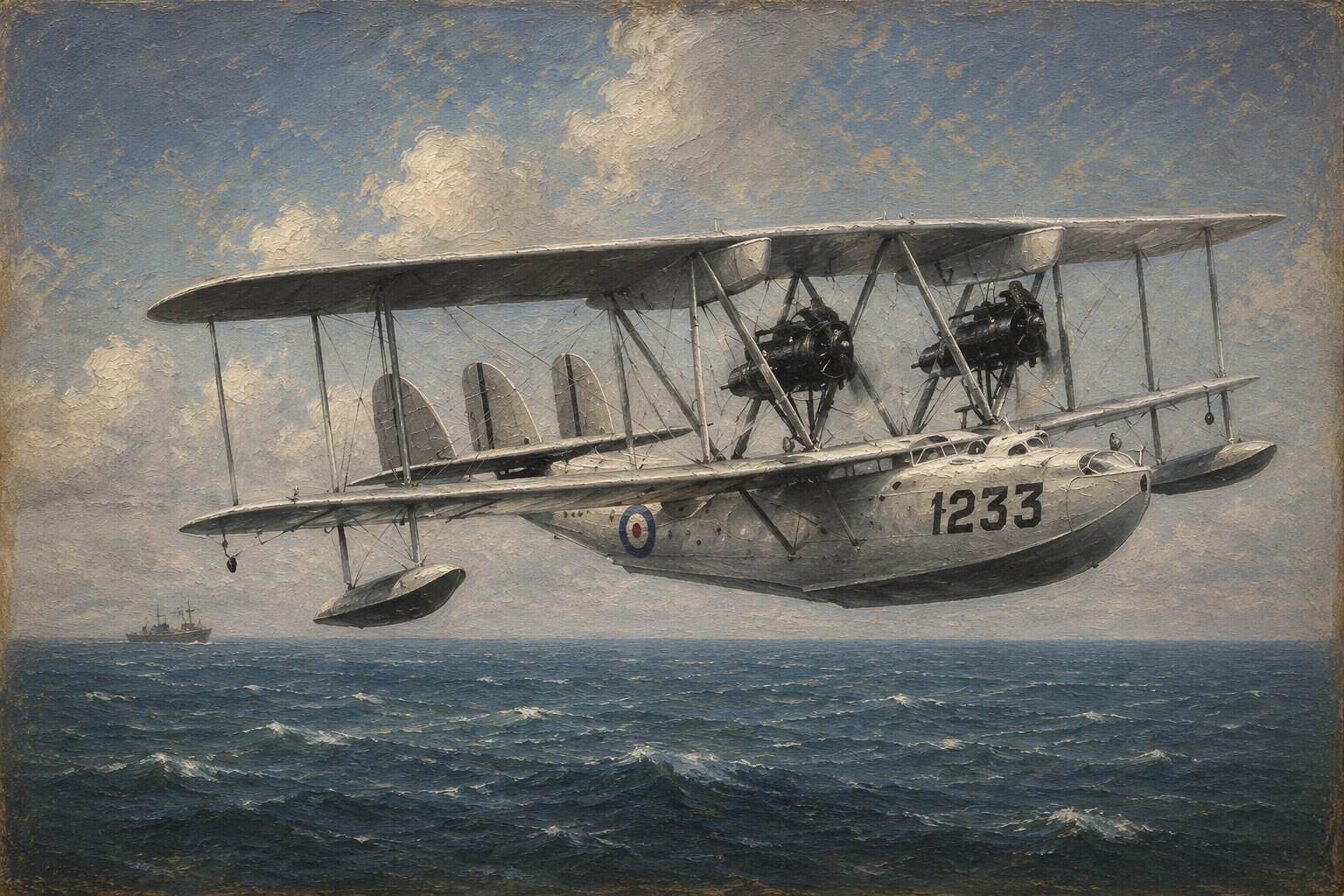
On 28 September 1928, the Under-Secretary of State for Air and the Director of Equipment departed Felixstowe on a long-distance Royal Air Force flying boat inspection flight to Malta, Egypt and Iraq. The journey was administrative in purpose, but it also reflected a broader inter-war reality: long-range air routes, overseas stations and flying boat operations were becoming increasingly important to British air power. As an On This Day subject, the departure offers a useful glimpse of how official attention, aircraft capability and imperial strategy intersected during the late 1920s.
Inter-War Air Power Beyond Britain
The RAF of the inter-war years was shaped not only by questions of home defence but also by the practical demands of maintaining communications and influence across widely separated territories. Distance mattered greatly to British strategy, and air travel promised faster links between the United Kingdom and overseas commands than had previously been possible. In that context, aviation was more than a military instrument. It was also an administrative and strategic connector across an imperial system that depended on reliable movement, oversight and presence.
Inspection tours by senior officials formed part of that process. They allowed decision-makers to observe conditions directly, assess equipment and consider how aircraft might support policy across distant stations. A journey to Malta, Egypt and Iraq therefore touched regions of continuing military and political importance, each linked to Britain’s wider air route ambitions.
Why Flying Boats Mattered
Flying boats held a particular attraction in this period because they seemed well suited to long-distance travel across routes where prepared airfields were limited or unevenly distributed. Coastal and imperial communications could make use of natural water surfaces, and the aircraft themselves symbolised a modern answer to old geographical constraints. For Britain, with global maritime interests and established bases around key sea routes, flying boat development had obvious strategic appeal.
Felixstowe was an appropriate point of departure for such a journey. It had long associations with British flying boat activity, and by the late 1920s, it remained connected to thinking about maritime aviation and longer-range operations. A flight beginning there and extending into the Mediterranean and Middle East represented more than a routine movement. It demonstrated that policy-makers were prepared to engage directly with the operational possibilities of aircraft designed for long stages across water and imperial space.
Administration, Equipment And Reach
The presence of the Under-Secretary of State for Air and the Director of Equipment underlined the official nature of the expedition. This was not simply a publicity flight or a purely ceremonial exercise. It pointed to institutional interest in how aircraft, infrastructure and overseas commands might be linked more effectively. Questions of range, reliability, support and route organisation all lay behind the broader significance of such travel, even when contemporary reporting described the trip in formal administrative terms.
That makes the event especially revealing in inter-war RAF history. The service was not only considering future combat requirements; it was also thinking about administration at distance, strategic mobility and the role of aviation in sustaining imperial commitments. Flying boats appeared to offer one practical means of doing that.
An Inter-War On This Day
On This Day, the departure from Felixstowe highlights a quieter but important side of RAF development between the wars. It shows how official inspection, aircraft capability and overseas strategy were closely connected long before the large-scale demands of the Second World War. The flights to Malta, Egypt, and Iraq reflected confidence in the possibilities of long-range flying-boat operations and the growing value attached to imperial air routes. In that sense, 28 September 1928 marks not a dramatic combat event, but a revealing stage in the RAF’s wider development as an instrument of reach and administration overseas.