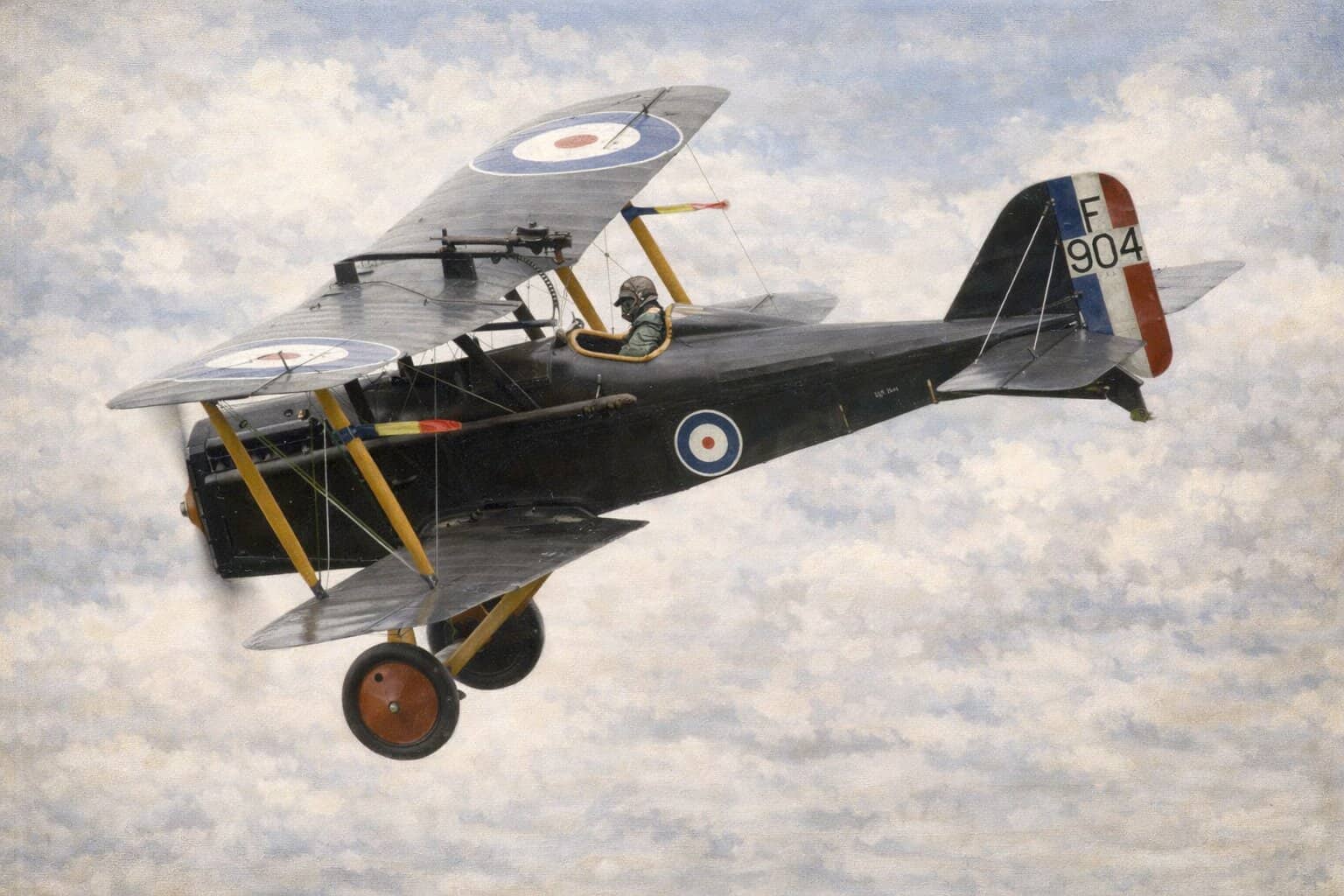
On 8 May 1918, the RAF’s Air Force Areas were redesignated by region as South-Eastern, South-Western, Midland, North-Eastern and North-Western Areas, with corresponding commanders appointed. At first glance, the change might appear administrative rather than operational, but it formed part of the broader effort to turn the recently created Royal Air Force into a coherent national service with a more workable command structure.
The RAF had come into existence only a few weeks earlier, on 1 April 1918, through the amalgamation of the Royal Flying Corps and the Royal Naval Air Service. That merger created the world’s first independent air force, but it also brought together two organisations with different traditions, systems and chains of command. Early 1918 was therefore a period not only of wartime pressure, but also of rapid institutional adjustment.
Building the Structure of a New Service
The redesignation of Air Force Areas reflected the practical need to organise the home establishment of the RAF in clearer territorial terms. Naming areas by region rather than under earlier arrangements helped define responsibility more explicitly and made the command geography of the new service easier to understand and administer.
Such measures mattered because the RAF in 1918 was not simply a force at the front. It also depended on a substantial organisation at home to manage training, supply, aircraft distribution, maintenance and wider support. As the demands of the First World War intensified, administrative clarity became increasingly important. A service that had only just been formed needed reliable structures to sustain operations overseas while building its own identity in Britain.
This kind of redesignation was therefore not mere paperwork. It was part of the process by which the RAF converted a politically bold institutional creation into a functioning military organisation. Command arrangements on the home front could shape how effectively aircraft, men and materiel were prepared for operational use.
Administration and Operational Effectiveness
During the final year of the First World War, British air power was expanding in scale and complexity. The Western Front remained the principal arena of air combat, but air activity also supported maritime and home-defence responsibilities. The newly formed RAF had to oversee all of this while reconciling the inherited systems of its parent services.
Regional redesignation helped reinforce the principle that the RAF needed a stable command framework within Britain itself. It was a reminder that operational effectiveness in the air depended on orderly administration on the ground. Training establishments, stores, technical services and personnel arrangements all required clear oversight, especially in wartime.
The significance of 8 May 1918 lies less in dramatic action than in institutional consolidation. The RAF was still in its infancy, and decisions made in those first weeks helped shape how the service would function during the war's closing stages and beyond.
Why This Was Important
This redesignation of the RAF Areas illustrates a point often overlooked in air-power history: successful operations rely on organisation as much as on aircraft and aircrew. The creation of the RAF was a landmark event, but the service could not rely on symbolism alone. It needed defined structures, named commands and responsible officers to make the new force workable.
On this day, the renaming of the Areas marked one of the quieter but necessary steps in building the Royal Air Force into an effective national institution. It stands as a reminder that the history of the RAF was shaped not only by combat and innovation, but also by the administrative decisions that allowed the service to endure.