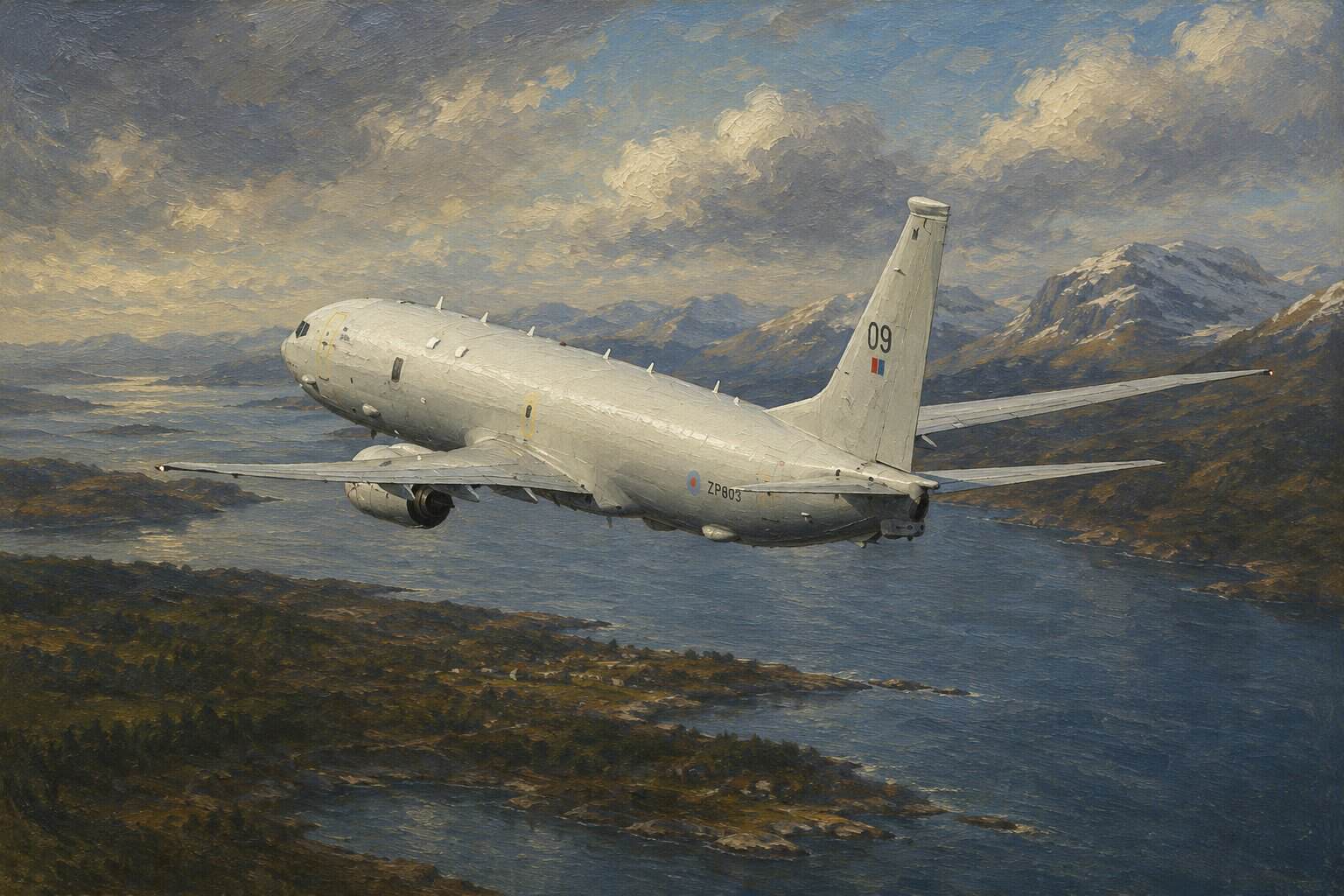
On 13 October 2020, Poseidon MRA1 ZP802, City of Elgin, made the first RAF Poseidon landing at RAF Lossiemouth. Its arrival brought the maritime patrol aircraft to its permanent home in Moray, following an initial period of operations from nearby Kinloss. For the station, the landing marked a visible stage in the development of a combined maritime patrol and fighter base.
The move connected a growing aircraft fleet with the infrastructure built to sustain it. Britain had ordered nine Poseidons, and Lossiemouth was being prepared to accommodate their aircrew, engineers, training equipment and operational support. No. 120 Squadron had already begun operational activity through the temporary arrangements at Kinloss.
From Kinloss to Lossiemouth
The RAF’s first Poseidon arrival in Britain had taken place on 4 February 2020, when ZP801, Pride of Moray, landed at Kinloss. City of Elgin followed it to the UK in March. Kinloss provided an established airfield close to the intended permanent base while extensive work continued on Lossiemouth’s operating surfaces.
That temporary arrangement allowed the aircraft programme to advance alongside the construction programme. Aircraft could arrive, crews could fly and the new maritime patrol force could develop while the permanent station was being adapted for its additional responsibilities. Kinloss also carried a direct connection with the RAF’s earlier maritime patrol fleet through its previous role as a Nimrod base.
The October transfer followed the completion of resurfacing at the intersection of Lossiemouth’s runways. This enabled both Poseidons and temporarily relocated Typhoons to operate from the station. The wider runway project continued towards its formal handover in December, placing the first Poseidon landing within a phased programme of airfield improvements.
A permanent operating centre
The Poseidon Strategic Facility formed a central part of that investment. Its construction provided a three-bay hangar, squadron accommodation, training and simulation facilities, and space for operational and mission support.
These facilities supported the practical demands of introducing a sophisticated maritime aircraft. Sustained patrol operations required trained crews, serviceable aircraft, ground equipment and the means to prepare and support missions. Establishing those functions at Lossiemouth gave the new fleet a permanent centre as further aircraft entered service.
The station’s northerly location also placed it well for operations over the surrounding seas and the North Atlantic. Its maritime role developed alongside the Typhoon force already based there, adding another substantial commitment to the Moray station.
Maritime patrol returns to Moray
The Boeing Poseidon MRA1 restored a dedicated RAF fixed-wing maritime patrol capability after the Nimrod era. Its tasks included anti-submarine warfare and maritime surveillance, with support to the Royal Navy and protection of the UK’s continuous at-sea nuclear deterrent among its principal responsibilities.
Poseidon’s sensors and deployable sonobuoys enabled crews to search for and track activity above and below the sea. Sonobuoys relayed underwater acoustic information to the aircraft, helping the mission crew build a picture of submarine activity. The fleet also provided a means of working closely with allied maritime patrol forces across the North Atlantic.
City of Elgin’s arrival joined that developing capability to its permanent Scottish base. The first landing at Lossiemouth was a basing milestone within the wider introduction of Poseidon into RAF service. Aircraft, personnel and dedicated infrastructure were coming together at the station that would sustain Britain’s renewed maritime patrol force.