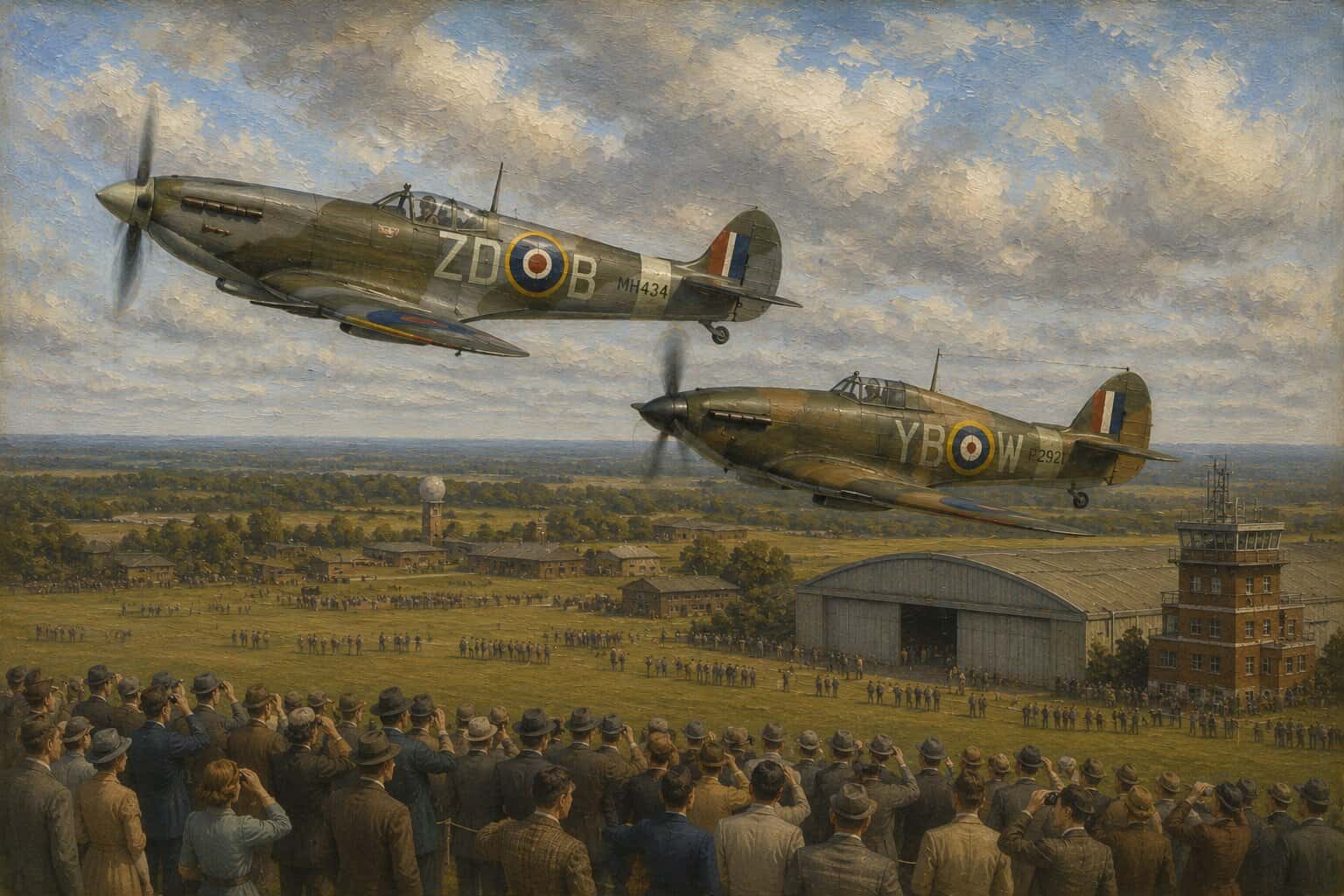
On 13 September 1980, RAF Coltishall marked the fortieth anniversary of the Battle of Britain with a public display. The event was significant because Coltishall was the last operational wartime Fighter Command station still serving in an active RAF role. In that setting, the anniversary became more than a commemoration. It linked living service directly to the memory of 1940 and showed how the RAF continued to present Fighter Command’s story as part of its own institutional identity.
Memory in an operational setting
By 1980, the Battle of Britain already occupied a central place in British public memory. Its language, symbols and personalities were familiar far beyond military circles. Yet remembrance at RAF Coltishall had a special quality because it took place on a station that still belonged to the practical life of the Service rather than to a museum or memorial space alone.
That mattered. The anniversary was not only about looking backwards. It demonstrated continuity between wartime Fighter Command and a modern RAF still operating from a station rooted in that earlier struggle. The display therefore connected generations of service, placing contemporary personnel within a longer historical tradition.
Why Coltishall mattered
Coltishall’s position as the last operational wartime Fighter Command station gave it symbolic weight. During the war, Fighter Command stations had been the working framework of Britain’s air defence. By 1980, most belonged to history in a more complete sense. Coltishall’s survival in front-line use gave it a distinctive authority as a place where commemoration and operational continuity could meet.
The fortieth anniversary display thus served both public and institutional purposes. For the public, it offered a visible reminder that the Battle of Britain still occupied an honoured place in national history. For the RAF, it reinforced the idea that present-day service remained connected to the values and traditions associated with 1940.
Commemoration and identity
Events of this kind matter because armed services are shaped not only by equipment and policy, but by the stories they tell about themselves. The Battle of Britain had become one of the RAF’s defining inheritance narratives. Marking the anniversary at an active station gave that inheritance practical form. The station itself became evidence that history was not wholly separate from the present Service.
This does not mean the RAF of 1980 was simply the Fighter Command of 1940 continued unchanged. The strategic world, aircraft and missions were entirely different. But public ritual at Coltishall showed that institutional identity could still be grounded in selected wartime memory even amid later change.
Significance
The Coltishall anniversary display of 13 September 1980 matters because it shows how the RAF connected living service with the commemoration of its most famous defensive battle. The event preserved Fighter Command’s symbolic importance while placing it within the everyday reality of an operational station. In RAF history, it stands as a useful example of how memory, station identity and national story could be brought together in one visible act of remembrance. It also showed how stations themselves could act as carriers of institutional memory.