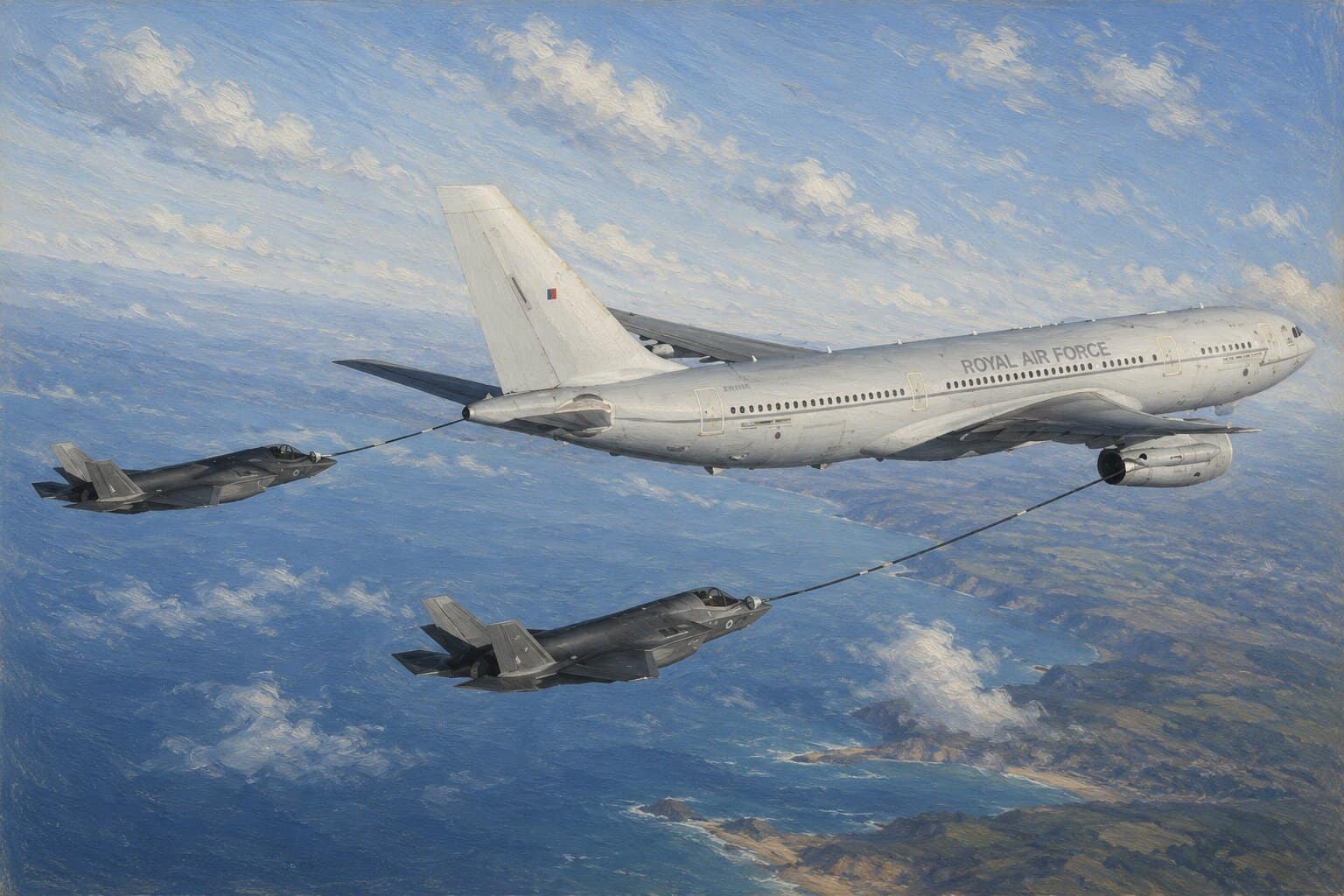
Fuel systems were among the least visible but most decisive elements of RAF aircraft design. Internal tank arrangement, fuel management, transfer systems, and refuelling practices all affected the range an aircraft could cover, the time it could remain on task, and the margin available when weather, navigation errors, or enemy action disrupted a sortie. In RAF service, endurance was a practical operational factor rather than a simple technical figure.
Background
The RAF's earliest aircraft operated within short distances and modest performance limits, but expanding operational demands soon made fuel capacity and consumption central planning concerns. Fighters needed sufficient endurance for patrol, interception, and return, while bombers and reconnaissance aircraft required reliable fuel systems capable of supporting long flights under varying power settings, altitudes, and loads.
As aircraft became faster and more heavily equipped, fuel ceased to be just a matter of tank volume. Designers had to consider distribution, balance, protection and accessibility for maintenance. Internal tanks needed to feed engines reliably during manoeuvre, climb and descent, while crews required simple procedures for selection and transfer. Any failure in that chain could end a sortie regardless of the aircraft's other strengths.
Tank Design And Fuel Management
RAF aircraft used a variety of internal arrangements according to role. Single-engined fighters depended on compact systems that preserved performance while keeping fuel close to the aircraft's centre of gravity. Larger aircraft needed distributed tankage across wings and fuselage, with pumps, selectors and cross-feed arrangements that allowed fuel to be managed over long missions.
Combat conditions made protection essential. Self-sealing tanks reduced the danger posed by gunfire, while sensible tank placement could limit the immediate effect of damage. Yet protection always carried weight penalties. RAF design therefore balanced endurance against vulnerability, and capacity against the performance demanded by the role.
Fuel management was also a crew task. On long flights, crews had to monitor consumption, select tanks in sequence, preserve balance and maintain contingency reserves. That mattered in aircraft such as the Avro Lancaster and de Havilland Mosquito, where operational success depended on combining speed or payload with enough endurance to reach distant targets and recover safely. What looked like a technical subsystem on paper became a live operational discipline in the cockpit.
Range, Endurance And Operations
Range shaped RAF strategy at every level. During the Battle of Britain, fighter endurance affected patrol patterns, interception windows and the time available over defended areas. In bomber operations, fuel state influenced route choice, bomb load and diversion planning. For maritime and transport missions, endurance determined whether an aircraft could search, escort, supply, or recover over vast distances while maintaining useful time on station.
The RAF's wider wartime and post-war experience repeatedly showed that nominal range figures were only a starting point. Weather, drag from external stores, low-level flight, evasive routing and engine setting all changed real endurance. Aircraft that appeared adequate in brochure terms could prove constrained in service unless fuel systems and planning practice were matched to the mission.
Post-war development extended the same logic rather than replacing it. Aircraft such as the English Electric Canberra and Panavia Tornado reflected new balances between speed, payload and fuel fraction, while long-distance transport and support operations during periods such as the Berlin Airlift demonstrated the continuing operational importance of efficient fuel planning. Later aerial refuelling further expanded endurance, but it did not remove the need for careful fuel-system design within the aircraft itself.
Significance
For the RAF, fuel systems linked engineering directly to operational reach. They governed not merely how far an aircraft could fly, but how long it could fight, search, strike, patrol or divert safely under real conditions. Endurance affected tactics, basing, sortie planning and the credibility of long-range air operations.
The most useful RAF aircraft were therefore not simply those with large fuel capacity, but those whose tank layout, management systems and consumption characteristics suited their role. Fuel remained a quiet determinant of effectiveness across every era of RAF service.