RAF aircraft have depended on navigation and cockpit systems as much as on speed, power or armament. The ability to hold height, find a route, identify a target and return in poor weather has long determined whether air power could be applied effectively. From basic flight instruments and radio aids to radar, inertial systems and modern digital avionics, RAF operational capability has been shaped by the quality of the information available to crews.
Background
Early RAF navigation relied heavily on map reading, compass work, visual reference and the judgement of pilots or specialist navigators. That was sufficient only within clear limits. Night flying, poor weather and long-distance operations exposed the dangers of depending on visual cues alone, while faster aircraft reduced the time available for correction. Instrument flying therefore became a core service requirement rather than a specialist accomplishment.
The basic cockpit instrument set – altimeter, airspeed indicator, compass, attitude and engine instruments – created the minimum framework for controlled flight. Even so, those instruments were only the foundation of a wider system. Training, standard procedures, and radio communication were equally necessary for crews to use the information effectively under operational pressure.
Radio Navigation And Wartime Development
As RAF operations became more demanding, radio navigation aids and airborne electronics expanded what crews could do. During the Second World War, systems for navigation and target-finding reduced some of the uncertainty inherent in long-range night operations. Radar and radio aids improved the ability of bomber and night-fighter forces to work beyond visual range and in poor conditions, while specialised equipment increasingly shaped tactics as well as routeing.
Aircraft such as the Avro Lancaster and de Havilland Mosquito benefited from advances that linked navigation more closely to bombing accuracy, interception and reconnaissance. These systems did not eliminate error, jamming or weather limits, but they narrowed the gap between planned and achieved operations. In RAF terms, that mattered because an aircraft could only exploit its speed, payload or range if it could also be placed with reasonable confidence over the required area.
From Instruments To Avionics
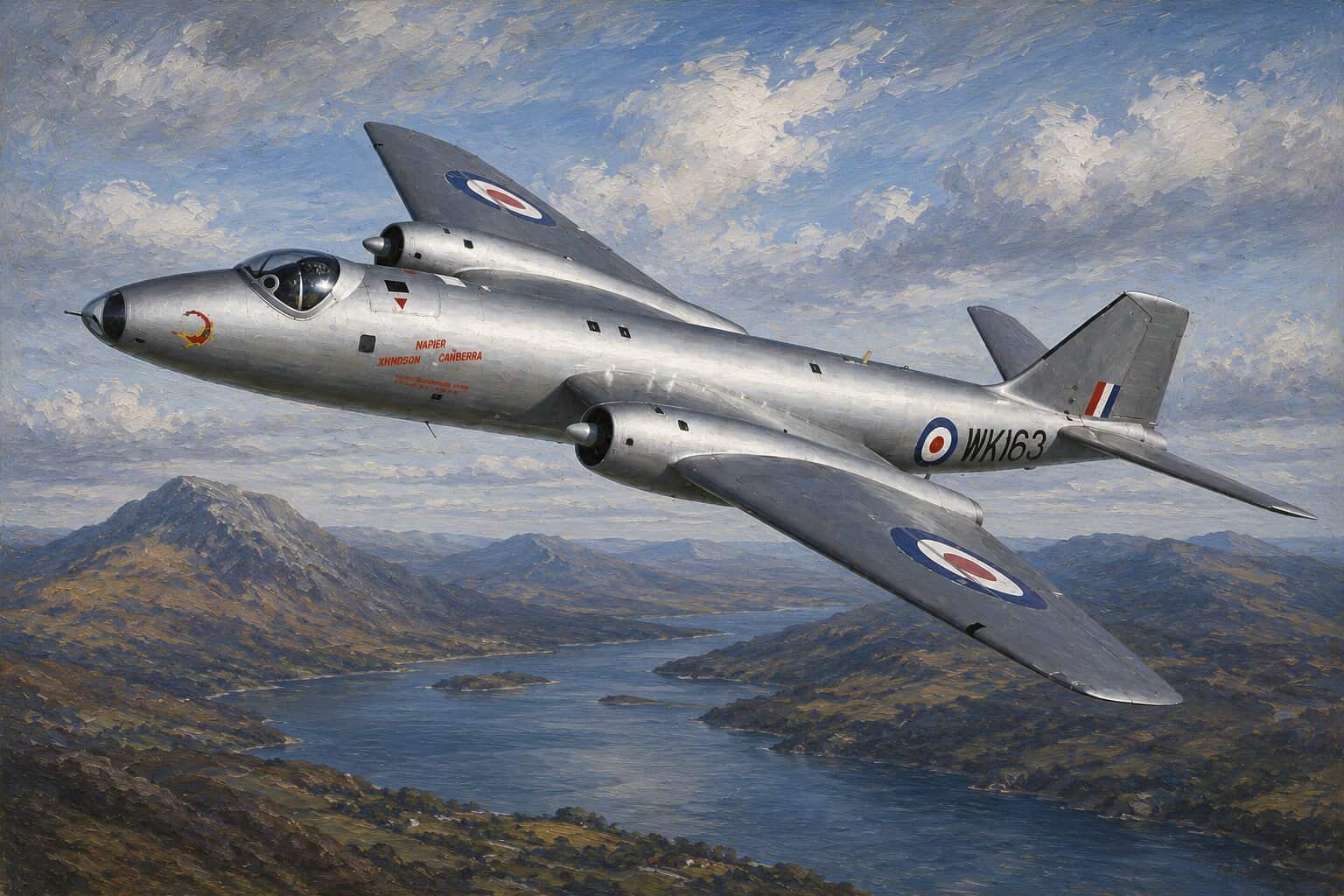
The post-war and Cold War periods transformed cockpit systems from collections of aids into increasingly integrated avionics suites. Jet speed, higher operating altitude and all-weather expectations demanded more precise navigation, attack and display systems. Aircraft such as the English Electric Canberra introduced new standards of high-altitude operational flying, while later types made greater use of radar, inertial navigation, attack computers and multifunction displays.
For strike aircraft, accurate low-level navigation became especially important. The Panavia Tornado depended on integrated systems that allowed crews to navigate and attack at high speed in demanding conditions. Modern fighters such as the Eurofighter Typhoon add further layers of digital processing, sensor fusion and display management, reducing pilot workload while improving situational awareness. The principle, however, remained consistent with earlier RAF experience: the value of an aircraft depends partly on how well it informs the crew.
Significance
Navigation and avionics altered the practical meaning of air power. They allowed the RAF to fight at night, in cloud, over sea, at low level and at long distance with greater confidence than visual flying alone would permit. They also supported more accurate weapons delivery, better formation control and safer recovery in deteriorating conditions.
In RAF service, these systems were not secondary refinements. They were operational enablers that widened the circumstances in which aircraft could be used. As air warfare became faster and more complex, the quality of instruments and avionics increasingly distinguished a merely capable airframe from a truly effective operational aircraft.