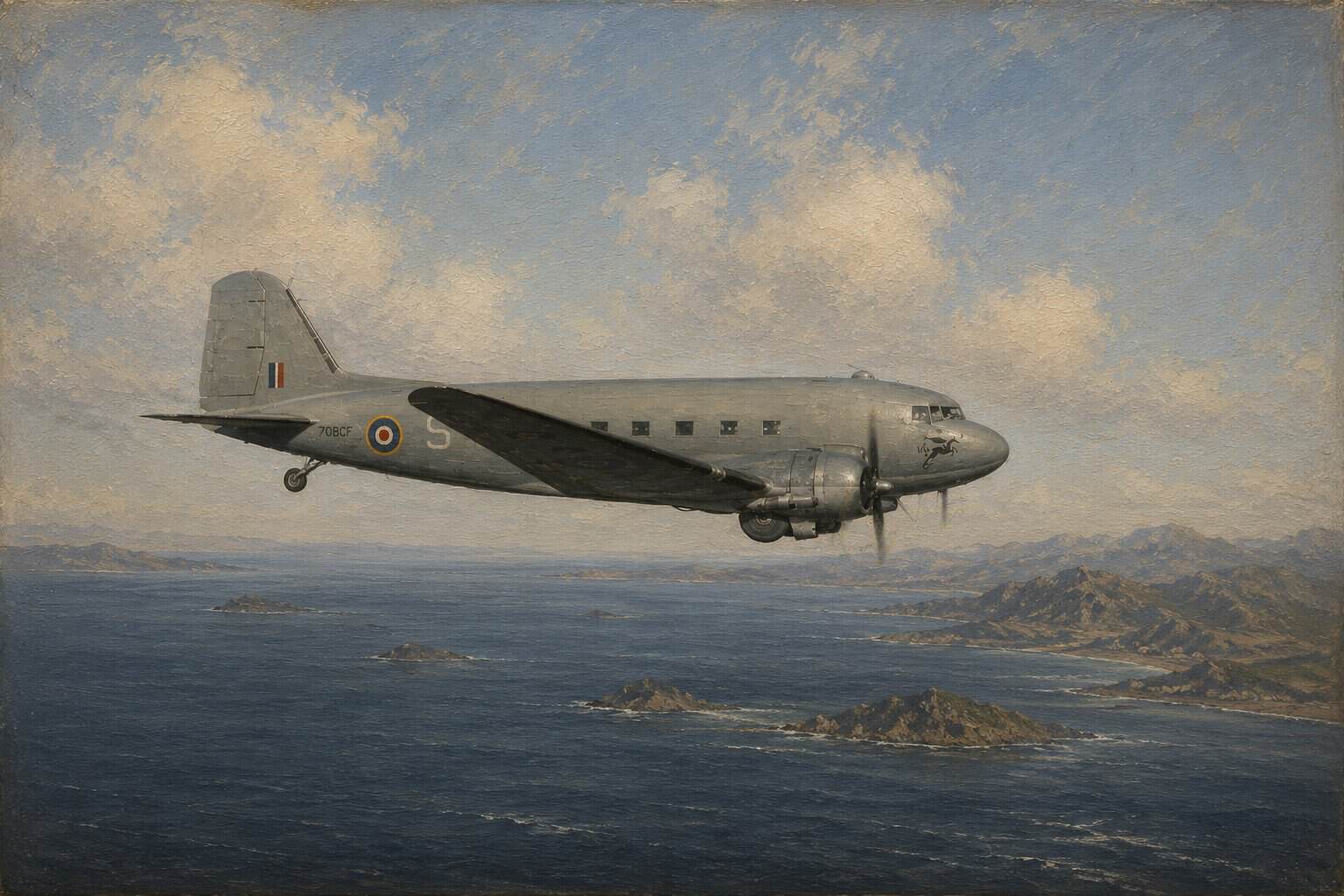
On 23 August 1944, Dakotas of No. 267 Squadron, flying alongside United States Army Air Forces transports, evacuated more than a thousand wounded Yugoslav partisans from improvised landing strips. The operation was a striking demonstration of what Allied air transport could achieve by the war's later stages. In difficult country, far from conventional bases and proper medical infrastructure, aircraft were used not simply to move troops or supplies, but to rescue casualties from an active resistance theatre.
Air transport and the Balkan war
By 1944, the Balkans had become an important area of Allied special operations and support to resistance movements. Yugoslav partisans were tying down Axis forces, gathering intelligence and sustaining a prolonged struggle under severe pressure. Their effectiveness made them militarily valuable, but it also created a practical problem. Wounded fighters often had to be treated in remote conditions, with limited equipment and little prospect of quick evacuation by road or sea.
Air transport provided a risky solution, but it was often the only realistic option. The Dakota, already one of the most important transport aircraft of the war, was especially suited to such work. It could carry useful loads, operate comparatively flexibly and sustain the sort of repeated sorties needed in support missions. In Yugoslavia, those qualities made it a crucial link between remote partisan zones and the wider Allied war effort.
Improvised landing strips and difficult flying
Operations of this kind were never simple. Aircraft had to reach rough or temporary landing grounds, often hastily prepared and vulnerable to weather, enemy activity, and the basic limitations of the terrain. Pilots and crews could not rely on the normal conveniences of established airfields. They were flying into spaces shaped by urgency rather than infrastructure.
That is part of what makes the evacuation so significant. Removing such large numbers of wounded men required organisation on the ground, coordination in the air and repeated confidence that transport aircraft could land, load and depart safely under pressure. The mission therefore stands as an example of Allied air power being used with flexibility rather than brute force. It was an operation of movement, survival and endurance rather than attack.
More than logistics
The evacuation also had political and strategic value. Supporting Yugoslav partisans was not merely a humanitarian gesture, though the humanitarian dimension was real and immediate. It also reinforced Allied commitment to resistance forces whose actions affected the wider campaign in south-eastern Europe. By helping to preserve experienced fighters and maintain morale, air transport contributed to the continuing usefulness of partisan warfare against Axis control.
This is why the operation should be understood as more than an impressive transport achievement. It linked aircraft, special operations and irregular warfare in a direct and practical way. The Allied air effort was not confined to bombing targets or escorting formations. It could also sustain resistance movements and save lives in places where conventional military systems struggled to reach.
Significance
The Dakota evacuation of wounded Yugoslav partisans on 23 August 1944 matters because it shows the maturity of Allied air transport by the later war years. Aircraft were being used not only for strategic movement between formal bases, but for demanding casualty evacuation from improvised strips in contested regions. The episode also reflects the close relationship between air power and resistance support in occupied Europe. In that sense, it is a reminder that RAF transport operations were sometimes decisive precisely because they were practical, adaptable and human in their effects.