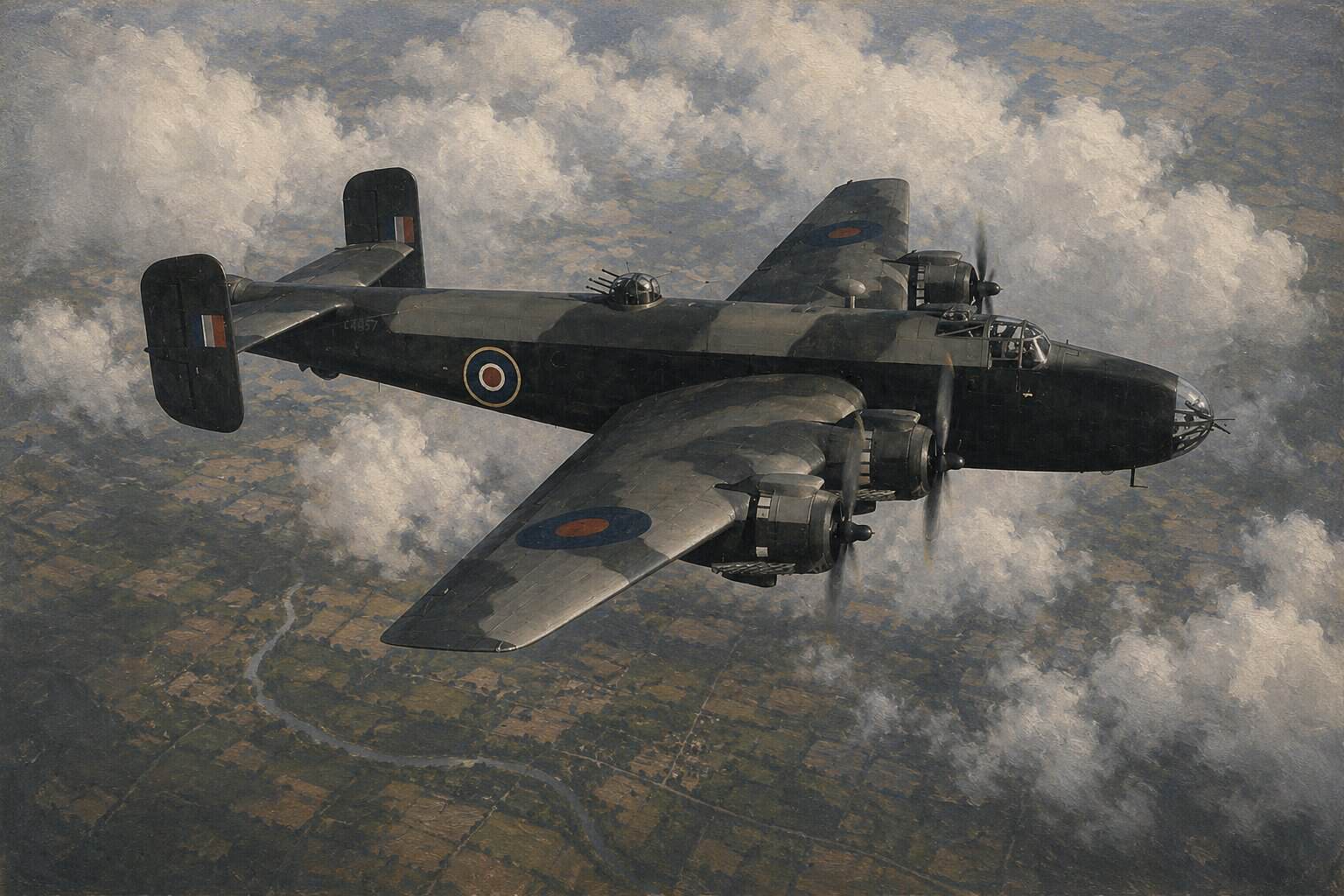
On 25 August 1941, the RAF took a quiet but important administrative step when No. 1419 Flight was expanded and redesignated as No. 138 Squadron. On paper, it was a change of title and status. In practice, it marked the formal recognition of a rapidly growing wartime task: the use of aircraft and aircrew to sustain clandestine links with resistance, intelligence and sabotage networks across occupied Europe.
In the summer of 1941, Britain was still fighting without a second front in western Europe. For the Special Operations Executive and the Secret Intelligence Service, air transport offered one of the few reliable means of reaching agents and friendly organisations behind enemy lines. By the time No. 1419 Flight became 138 Squadron, demand for such work had outgrown the idea of a small improvised detachment. The RAF was acknowledging that special duties flying had become a permanent and increasingly significant part of the air war.
From Improvisation to Squadron Status
No. 1419 Flight had been created to support these covert missions at a time when the whole enterprise was still feeling its way. Aircraft, crews, and procedures all had to be adapted to work that differed sharply from conventional bombing, reconnaissance, or fighter operations. Routes were long and often flown at night. Navigation had to be exact. Loads might include agents, containers of supplies, wireless equipment, arms or other stores needed by underground movements. The redesignation to 138 Squadron reflected the increasing scale of the commitment. Contemporary accounts make clear that pressure for a larger, dedicated special duties unit had been building for months as the requirements of SOE expanded. Wing Commander T. A. ‘Teddy’ Knowles, who had commanded the flight, continued in command as the new squadron took shape. Even so, the change was not an overnight transformation into a large, fully mature formation. In practical terms, the unit initially continued on an effectively enhanced-flight basis while additional crews and resources were found.
Aircraft, Crews and the Secret War
Early special duties operations were conducted with aircraft such as the Armstrong Whitworth Whitley, later complemented in this field by the Westland Lysander for exceptionally hazardous pick-up and landing work. These were not glamorous operations. Crews flew in darkness, often at low level, and usually without the public recognition that attended more visible RAF campaigns. Their passengers were frequently agents whose names could not be publicised, and their destinations were fields, drop zones and improvised reception points in occupied countries.
The special duties force also reflected the international character of Britain’s wider war effort. As the organisation developed, Polish and other Allied exile personnel were increasingly involved in missions connected with their homelands. The need to support underground organisations in places such as Poland and Czechoslovakia gave added urgency to the RAF’s decision to formalise the unit. What had begun as an expedient was becoming an institution.
Significance Beyond the Paperwork
No. 138 Squadron later became strongly associated with RAF Tempsford and with the wider special duties effort that sustained resistance movements and intelligence channels in occupied Europe. The administrative act of 25 August 1941 deserves attention not because it was dramatic in itself, but because it showed the RAF adapting to a form of warfare that sat between conventional air operations and clandestine statecraft.
The squadron’s work would never produce the same sort of headline statistics as a major bombing raid or a fighter battle. Its significance lay elsewhere: in the quiet delivery of men, equipment and contact to people resisting Axis rule. In that sense, the creation of 138 Squadron represented a recognition that air power could do more than destroy targets. It could also sustain hidden networks, carry political purpose across frontiers, and connect Britain directly to the underground war being fought on the continent.