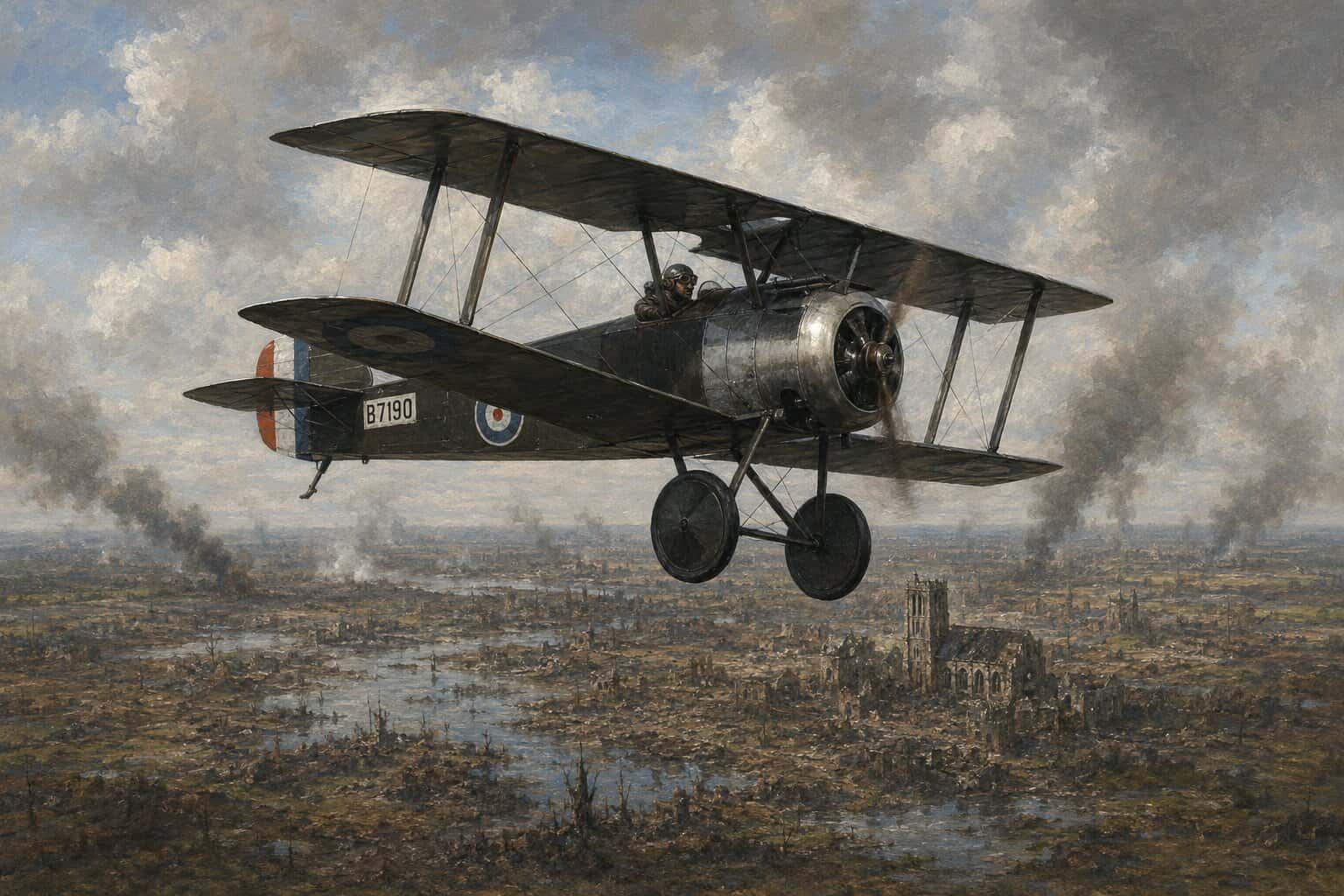
On 8 August 1918, Amiens Offensive air support was asked to do far more than watch the battlefield. As the Allied attack opened east of Amiens, British aircraft were sent against bridges, roads and communications behind the German front in an effort to deepen the shock of the ground assault. The moment captured both the growing confidence of the Royal Air Force in combined operations and the hard limits under which it still had to fight.
The opening of the Amiens offensive is often remembered for the speed and surprise of the ground attack, yet air action was an important part of that wider effort. British commanders wanted to disrupt enemy movement as reserves tried to reach the battlefield. Aircraft took on tasks that pointed beyond reconnaissance alone. They were expected to interfere with transport, hinder communications and add pressure to a retreating or confused enemy rear.
Striking Behind the Front
That ambition mattered. By the summer of 1918, air power was no longer treated simply as an adjunct to artillery observation. It was increasingly used as an arm that could shape events beyond the immediate trench line. Attacks on roads, bridges and communication routes reflected a clear operational idea: if movement behind the front could be delayed or disorganised, the effects of the Allied offensive would be amplified.
In that sense, 8 August showed the RAF thinking more boldly about what aircraft might achieve in support of a major land battle. Hitting the enemy’s rear areas offered the possibility of isolating the battlefield, complicating command and slowing the arrival of reserves. Even where destruction was limited, the threat from the air could impose confusion and caution. The mere need to move under attack could interfere with an already strained defensive response.
The Limits Were Still Severe
Yet the same day also revealed how much early air interdiction depended on hope as well as proven effect. British crews faced heavy losses, and bombing accuracy remained constrained by the technology of the period. Aircraft could harass, damage and unsettle, but they could not yet deliver the kind of precise and repeatable attacks that later generations would take for granted.
That limitation is important to remember. It is tempting to read later air-power ideas back into 1918 and assume that the disruption of transport links automatically produced decisive operational paralysis. The reality was harder. Targets were difficult to identify and hit consistently, weapons were limited, and crews operated in dangerous conditions against determined resistance. The concept was advancing faster than the tools available to execute it.
A Sign of a Maturing Air Arm
For all that, Amiens remains a significant moment in RAF history. It demonstrated that British air power was being employed with broader operational intent during one of the war's decisive offensives. The day’s missions showed a service-learning approach to influence the battle not only above the front line but across the enemy’s depth, even if the results were uneven and costly.
That is why the air effort at Amiens deserves attention. It was not a story of flawless precision or effortless control from above. Rather, it marked a stage in the maturing relationship between air and land warfare: ambitious, imperfect and increasingly important. On 8 August 1918, RAF aircraft helped express a larger Allied idea that victory could be pursued by pressure throughout the battlefield system, not only at its forward edge.