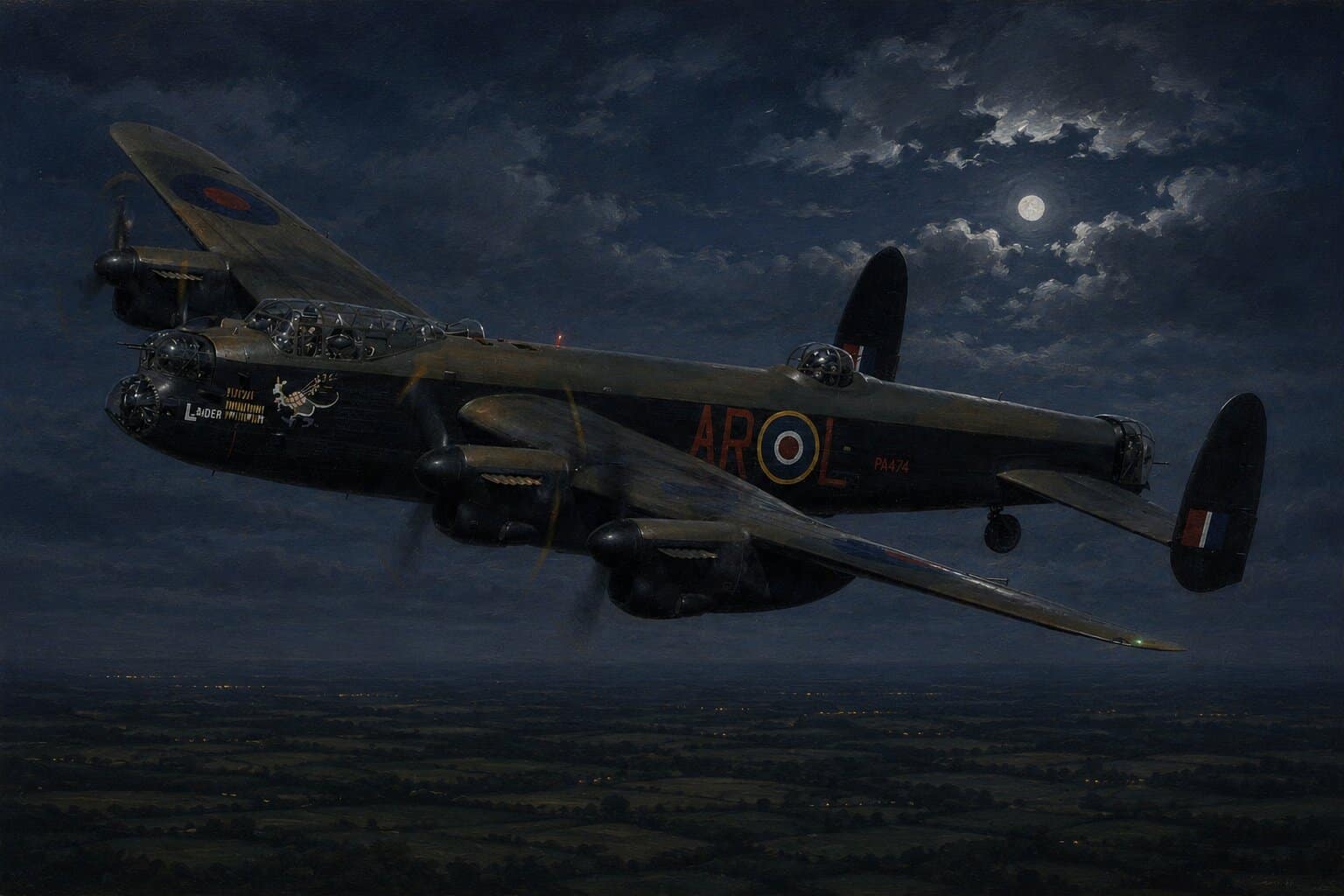
On 24 July 1943, RAF Bomber Command and the United States Army Air Forces opened the Battle of Hamburg, the beginning of the combined offensive later known as Operation Gomorrah. The campaign immediately stood out for its scale, intensity and innovation. Most notably, the RAF introduced Window, strips of metallic foil dropped to confuse German radar defences. The opening blow mattered not only as a heavy raid on a major German city, but as a turning point in the electronic contest between bomber and defender.
The opening of a major combined campaign
Hamburg was a significant industrial and port city, making it an important target within the wider Allied bombing offensive. By the summer of 1943, Bomber Command had expanded greatly in strength and confidence, while Anglo-American coordination in strategic bombing was becoming more systematic. The attacks on Hamburg reflected that growing weight of effort.
This was not a single isolated sortie. It was conceived as a sustained series of blows delivered by night and day, designed to damage industry, disrupt administration and stretch the German air defence system. In that respect, the opening of the battle represented the maturing of the combined bomber offensive into a campaign of concentrated, repeated pressure.
Window changes the terms of the fight
The most famous feature of the opening RAF raid was the use of Window. German radar and night-fighter control had exacted a severe toll on Bomber Command, and any method of reducing their effectiveness was immensely important. By releasing clouds of foil strips cut to interfere with radar, RAF crews complicated enemy detection and tracking at a critical moment.
The result was not invulnerability but a sharp operational advantage. Window disrupted the defensive picture and helped the attacking force penetrate with reduced effectiveness from German radar-directed systems. In practical terms, it demonstrated that the bomber offensive was not simply a contest of numbers and courage. It was also a contest of science, countermeasure and adaptation.
Destruction and consequence
The wider Battle of Hamburg became one of the most destructive bombing campaigns of the war. Its effects on the city were immense, and later raids dramatically intensified that devastation. The opening attacks therefore began a period of terrible urban damage and civilian suffering alongside military and industrial disruption. Any honest account has to recognise both dimensions.
From the RAF point of view, the battle was significant because it showed what Bomber Command could do when mass, planning, improved navigation and electronic countermeasures were combined. It also revealed how quickly the balance of advantage in the air war could shift when a new technique reached operational use.
Why 24 July 1943 still matters
The beginning of the Battle of Hamburg deserves attention because it captures several essential features of the later air war over Europe: coalition planning, technological innovation, strategic ambition and the harsh human consequences of area bombing. The introduction of Window alone makes the date a landmark in RAF history.
In wider air-war terms, Hamburg demonstrated that air campaigns were becoming increasingly systemic. Victory no longer depended only on better pilots or sturdier aircraft. It also depended on disrupting networks of detection, control and response. On this day, Bomber Command attacked a great city, but it also attacked the logic of Germany’s air defence system. That made the opening of the Hamburg battle one of the most consequential RAF operations of 1943.