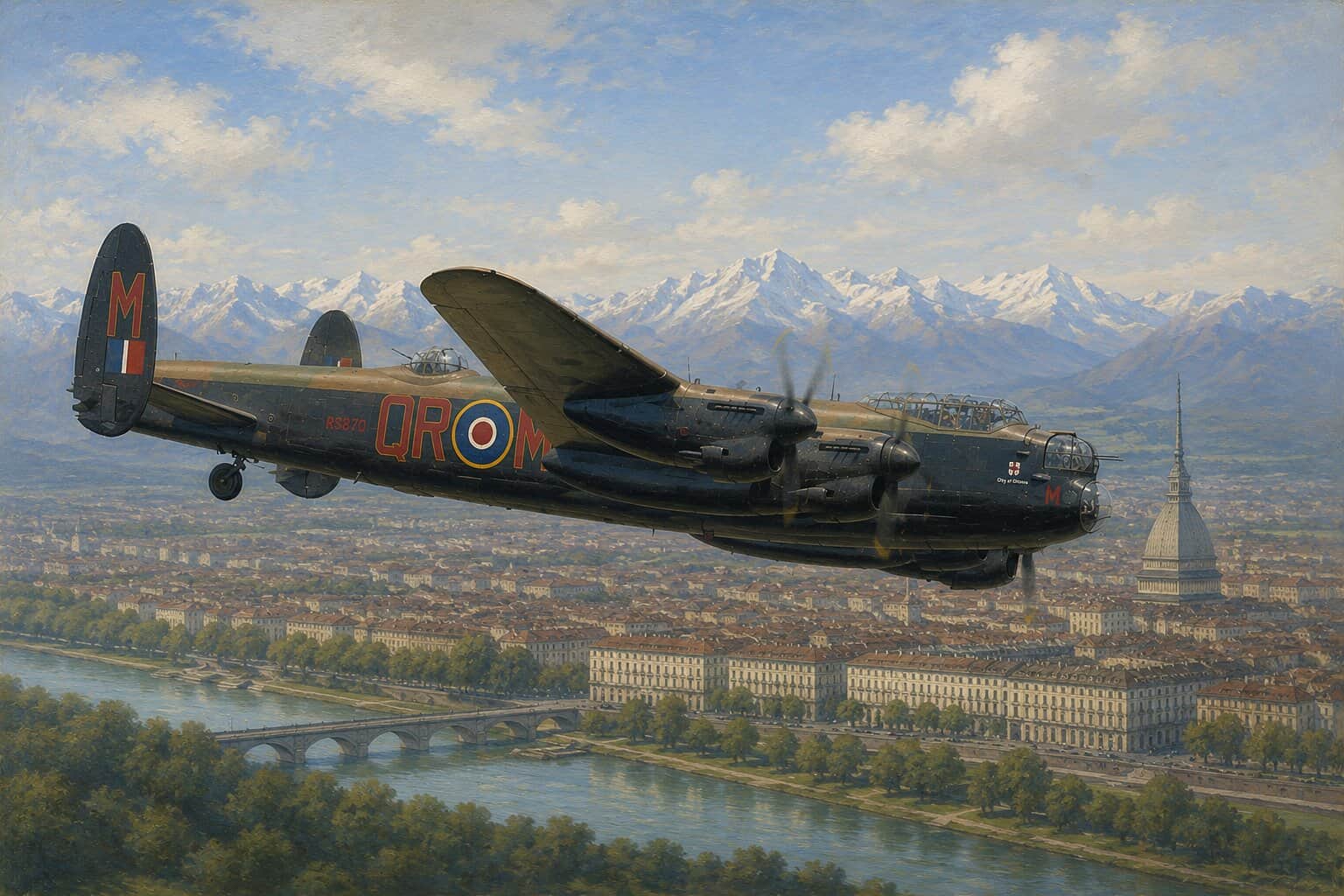
On the night of 12/13 July 1943, Acting Wing Commander John Dering Nettleton VC failed to return from a raid on Turin while flying with No. 44 Squadron. Already famous for the leadership that had earned him the Victoria Cross during the Augsburg raid of April 1942, Nettleton was one of the most distinguished officers in Bomber Command. His disappearance on operations was therefore felt both personally and symbolically across the Service.
From decorated leader to operational loss
Nettleton’s reputation rested on far more than a single award, but the Augsburg raid had made his name widely known. Leading Lancasters at very low level in daylight against a heavily defended industrial target, he had shown determination and steadiness of a very high order. Yet the fact that such an officer was still flying demanding operations in 1943 also says much about Bomber Command. Experience mattered, and senior men continued to face the same dangers as the crews they led.
The Turin raid was itself a demanding undertaking. Northern Italy was a long-range target, and in July, the short summer night reduced the hours of darkness available to returning bombers. Aircraft crossing back over the Bay of Biscay at dawn or after first light were especially vulnerable. That geography and timing turned even a successful attack on the target into a hazardous return journey.
Loss on the way home
It was during that return phase that Nettleton was lost. German fighters intercepted aircraft from the force as they came back from Italy, and several Lancasters failed to return. Nettleton’s aircraft was among those missing. In operational terms, this was grimly familiar to Bomber Command: a raid could be completed, bombs dropped and course set for home, yet the crew still had to survive the final miles through enemy action, fatigue and navigation difficulties.
For the RAF, the loss of such a decorated officer carried particular weight. Men like Nettleton served as examples of offensive spirit, professional competence and visible leadership. Their deaths reminded everyone that gallantry brought no immunity from the ordinary attrition of the bomber war.
Significance of the moment
Nettleton was later commemorated on the Runnymede Memorial, which records the names of airmen and women with no known grave. That memorial context matters. It captures the uncertainty that surrounded many wartime losses, when crews were first reported missing and only later understood to have been killed. Families, comrades and stations often lived for days or weeks with incomplete knowledge.
The event also reflects the wider character of Bomber Command’s campaign in 1943. This was the year of expanding heavy-bomber offensives, increasing operational tempo, and continued heavy losses. Even elite crews and famous leaders remained exposed to the same basic arithmetic of distance, enemy defence and mechanical risk.
A wider air-war reflection
The disappearance of John Dering Nettleton on 12/13 July 1943, stands at the meeting point of heroism and vulnerability. He had already secured a place in RAF history through his Victoria Cross, but his final sortie showed that Bomber Command’s campaign was relentless and unsparing. Reputation, skill and leadership all mattered; none guaranteed survival.
That is why this date endures. It marks not only the loss of a distinguished officer, but also the reality of the bomber offensive at its height: long range, hard targets, dangerous returns and the constant possibility that even the most celebrated airman might not come back.