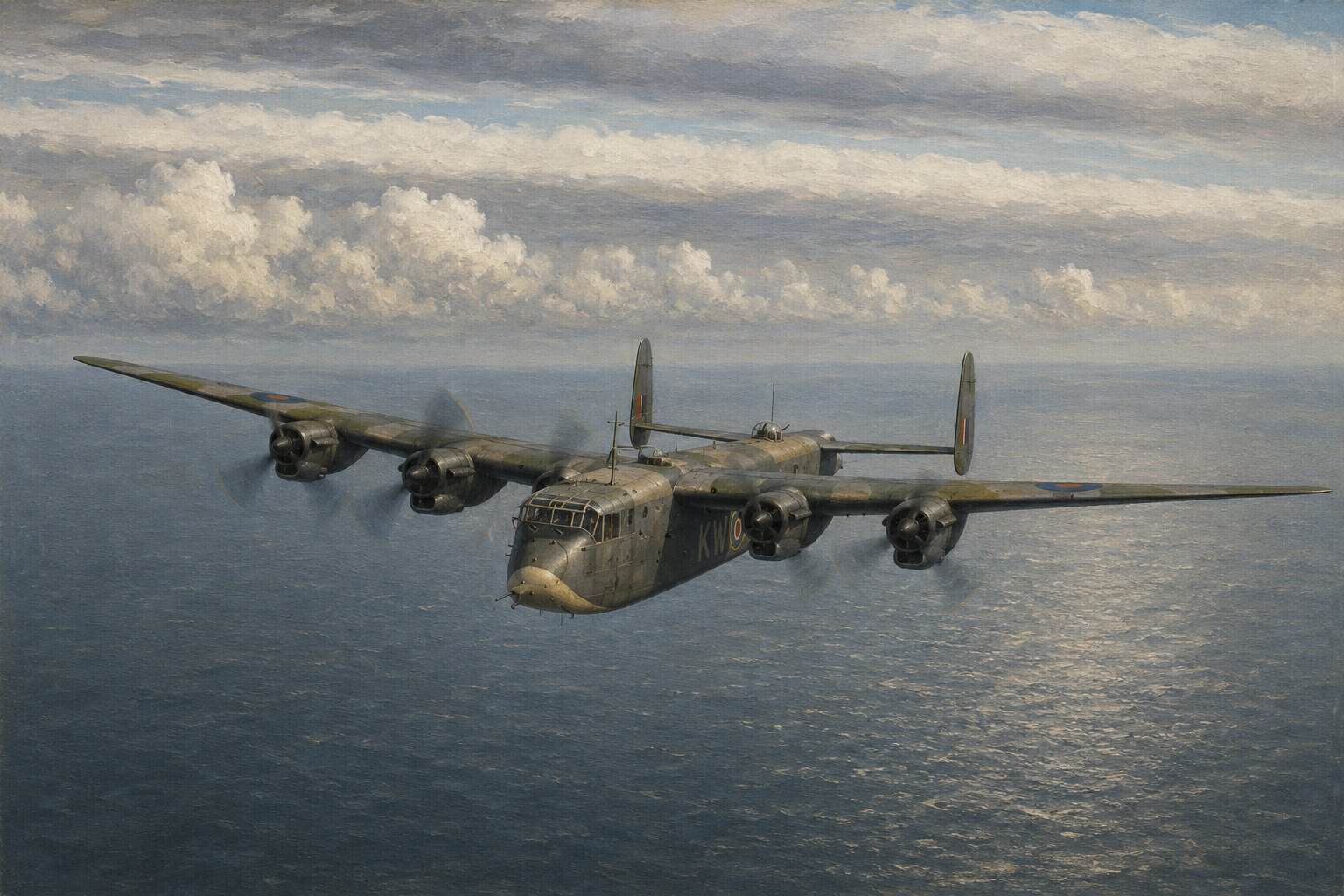
The Soviet blockade of West Berlin from 24 June 1948 to 12 May 1949 was the first great crisis of the Cold War, and the Western powers answered it with aircraft rather than tanks. For Britain, the RAF’s part in the Berlin Airlift turned air transport into an instrument of foreign policy, and the crisis brought American bombers to British airfields and helped produce NATO.
Why did the Soviet Union blockade Berlin?
The blockade began after the Western powers introduced a new currency in their zones of Germany in June 1948, a reform the Soviet Union opposed because it pointed towards a separate West German state. On 24 June 1948 the Soviet occupation authorities closed every road, rail and canal route into the western sectors of Berlin, which lay deep inside the Soviet zone (Imperial War Museums).
About 2.5 million people in West Berlin, and the Allied garrisons there, now depended on whatever the Western powers could bring in.
Why did Britain and the United States choose an airlift?
An airlift avoided the two worst choices: abandoning West Berlin, which would have shown that pressure short of war could force the West to retreat, or forcing a convoy through by land, which risked war with the Soviet Union. The three air corridors from Hamburg, Hanover and Frankfurt had been agreed in writing in 1945, so closing them would have meant firing on aircraft.
The US military governor, General Lucius Clay, drove the American effort, while the British government under Ernest Bevin committed the RAF from the first days. The British operation was called Plainfare and the American one Vittles.
What did the RAF contribute?
The RAF flew Dakotas, Yorks and Hastings into Gatow in the British sector, and Sunderland flying boats onto the Havel lake, with British civilian charter aircraft flying alongside. The full story of Operation Plainfare, its aircraft, tonnages and losses is told in the Chronicle’s article on the RAF in the Berlin Airlift.
Across the whole Allied effort, almost 200,000 flights delivered about 1.5 million tons of supplies (Deutsches Historisches Museum). At the peak, aircraft landed every three minutes.
How did the crisis change Britain’s defence?
The Berlin crisis brought American nuclear-capable bombers to Britain for the first time in peacetime, when about sixty B-29s of Strategic Air Command landed at RAF bases in July 1948 and stayed. That deployment began a long partnership described in the Chronicle’s article on the RAF and Strategic Air Command.
The crisis also hurried the creation of NATO, signed in Washington on 4 April 1949 while the airlift was still running, and tied Britain’s defence to an American alliance for the rest of the Cold War.
How did the Berlin blockade end?
The Soviet Union lifted the blockade on 12 May 1949, after almost eleven months in which the airlift had kept West Berlin supplied (Imperial War Museums). Flights continued into the autumn to build up stocks in case the roads were closed again.
A memorial unveiled at Tempelhof in 1951 honours the airmen and civilians who died during the airlift.
Why does the Berlin Airlift matter to the RAF?
The Berlin Airlift showed that transport aircraft could win a political contest without a shot being fired, and it made air mobility a lasting part of RAF strategy. The lessons fed into the growth of RAF Transport Command, told in the Chronicle’s article on RAF Transport Command.
The wider crisis is explored in the long-read on the RAF and the Berlin crisis, and the airlift’s launch is marked in the Chronicle’s On This Day entry on the launch of the Berlin Airlift.