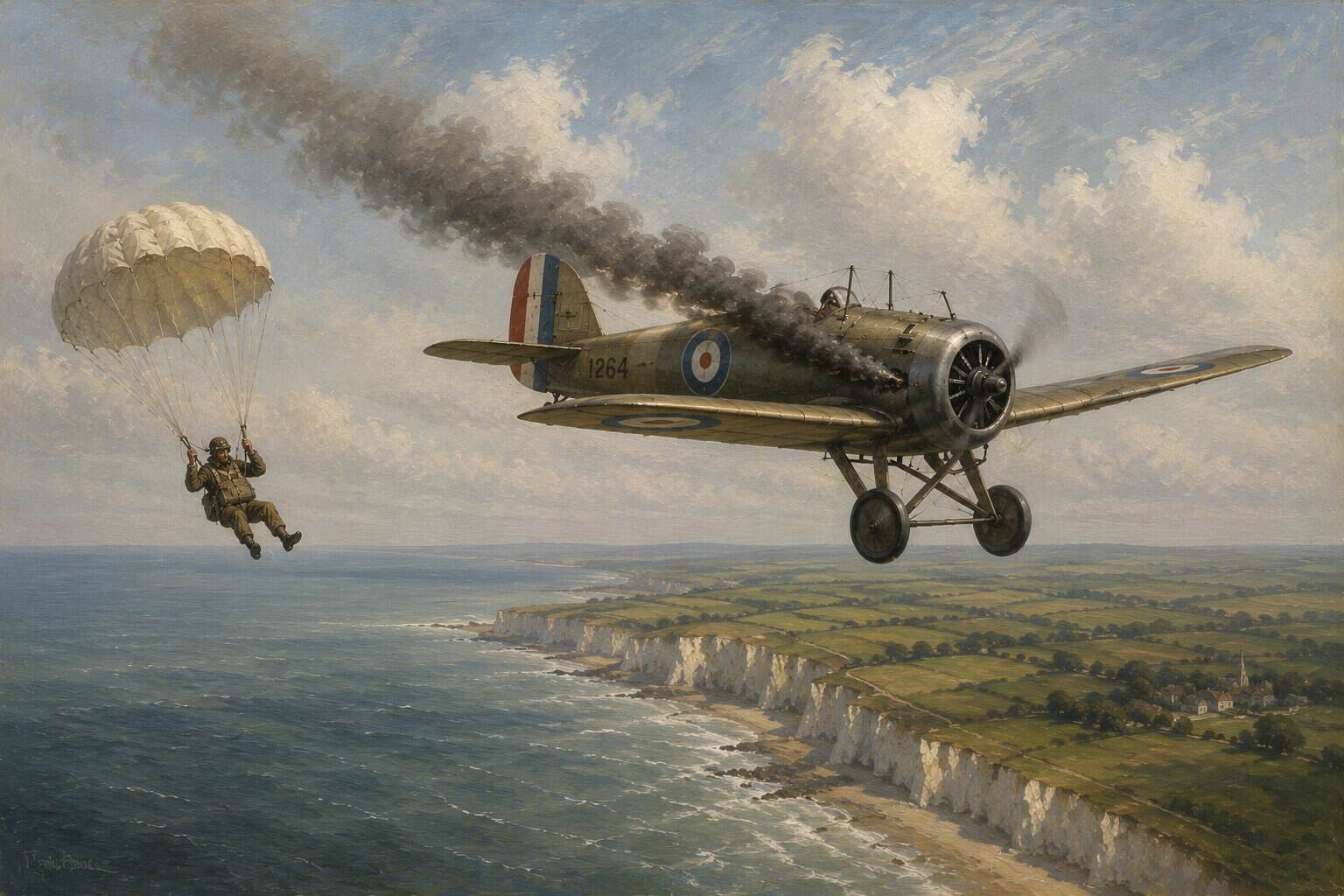
On 17 June 1926, Pilot Officer Eric Pentland became the first RAF officer to leave an aircraft by parachute in an emergency. It was not a famous combat episode or a celebrated wartime raid, but it marked an important moment in the RAF's development between the wars. Pentland's survival highlighted a simple truth that air forces were still learning in the 1920s: when an aircraft could no longer be saved, the life of the man flying it still could be.
A new answer to an old danger
Early military flying remained dangerous work. Aircraft were improving, but reliability, structural strength, instrumentation and emergency procedures were still developing. For many aviators, a serious failure in the air could quickly become fatal. In that setting, the idea of abandoning an aircraft by parachute still carried great uncertainty. It required training, nerve and a willingness to trust equipment that had not yet acquired the unquestioned place it would later hold in military aviation.
Pentland's emergency escape stood out for more than its drama. By becoming the first RAF officer to use a parachute in such circumstances, he demonstrated that survival by deliberate escape was possible within the service. What might once have seemed desperate, doubtful or even unthinkable now had a clear and practical example behind it.
The interwar RAF and the value of survival
The interwar RAF is often remembered for air policing, imperial commitments and arguments about strategy, yet it was also a period in which the service was refining the everyday disciplines of professional flying. Accidents, technical failures and hard lessons in peacetime mattered because they shaped how the RAF thought about training and preservation of skilled personnel.
Pentland's escape belongs in that story. It showed that air safety was not only a matter of keeping an aircraft intact. It also meant giving aircrew a realistic chance to survive when control was lost or recovery was no longer possible. In institutional terms, that was a significant shift. A modern air force could not treat experienced pilots as expendable assets, especially when every trained officer represented time, money and hard-won expertise.
A quiet milestone with lasting meaning
What happened on 17 June 1926 did not by itself settle every debate about parachutes or emergency procedure, but it helped move the discussion in a clearer direction. Firsts matter in military history because they turn theory into precedent. Once an RAF officer had successfully escaped in this way, the parachute was harder to dismiss as an unnecessary burden and easier to defend as a practical safeguard.
That gives Pentland's escape a wider significance than the bare fact might suggest. It sits at the meeting point between human survival, technological change and the RAF's professional maturation. The service that entered the Second World War with more developed safety practices and stronger ideas about preserving trained aircrew did not emerge overnight. It was shaped, in part, by interwar incidents like this one.
Eric Pentland's emergency parachute escape remains a small but revealing landmark. On a single June day in 1926, one officer's decision to trust a parachute helped point the RAF towards a safer and more modern understanding of flight.