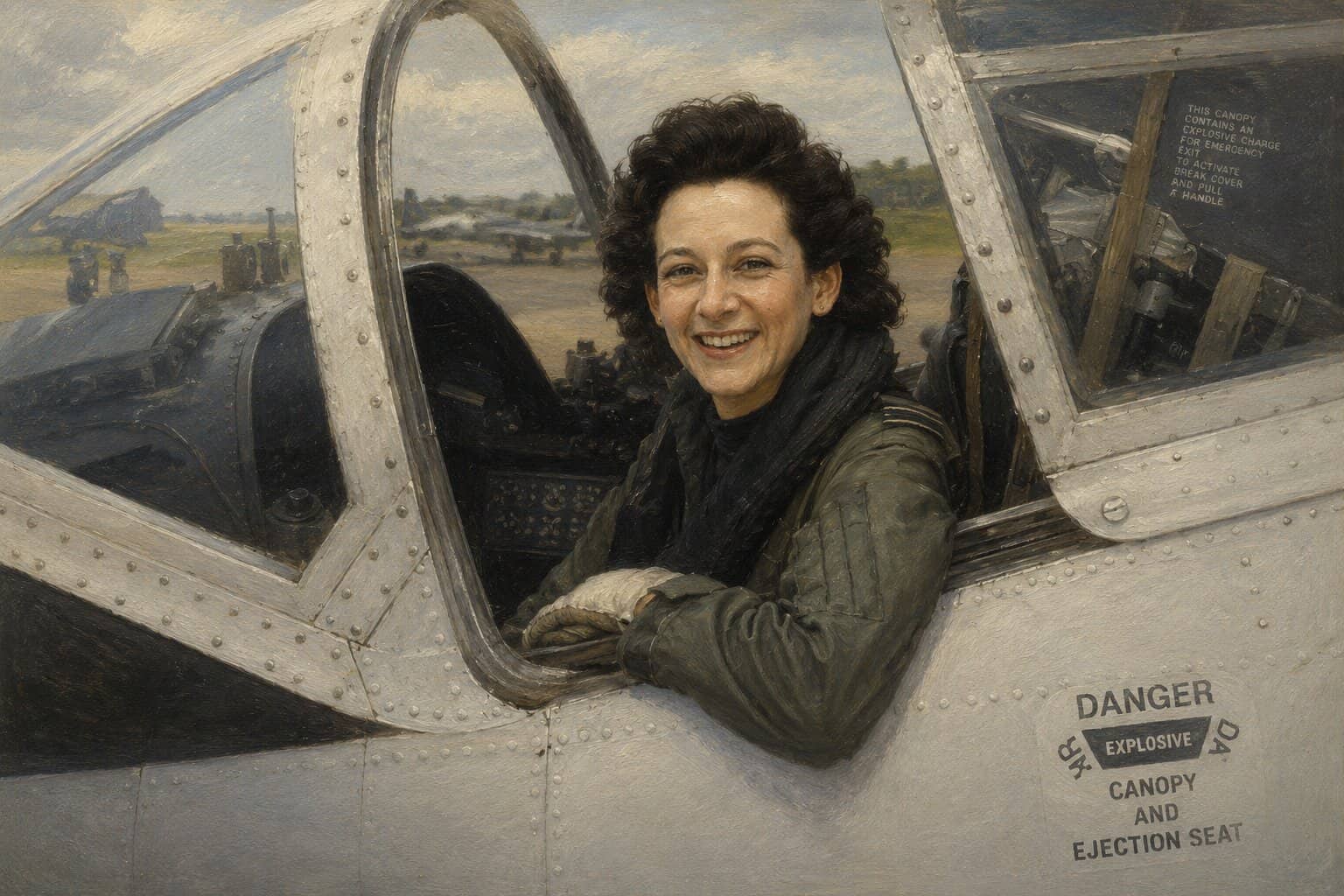
On 14 June 1991, Julie Ann Gibson became the RAF’s first female regular pilot graduate, a landmark in the service’s modern history and in the opening of front-line professional pathways to women on equal formal terms. The significance of the moment lay not in ceremony alone, but in what it represented: a longstanding institutional barrier had been crossed within the Royal Air Force’s own flying branch.
A breakthrough in RAF service life
Women had contributed to British military aviation for decades before 1991, whether through the Air Transport Auxiliary in wartime, service in the Women’s Royal Air Force, or a wide range of technical and support roles. Yet the award of pilot wings to a female regular RAF officer carried a distinct meaning. It marked admission to a branch that had traditionally been reserved for men, within the everyday professional structure of the post-war service.
Julie Ann Gibson’s achievement belonged to a broader story of change in the armed forces. Progress in military institutions often comes through policy decisions, training reforms and selection standards that appear administrative on paper but are profound in effect. When someone becomes the first to pass through a newly opened route, the event is both personal and institutional. Gibson had earned the same qualification that identified an RAF pilot, and that fact gave the occasion lasting historical weight.
From graduation to service flying
Her subsequent career underlined that this was not a symbolic appointment without practical consequences. Gibson had previously served as a ground-based officer before being selected for flying training, and after graduation, she went on to operational flying duties. She later served with No. 32 Squadron flying Hawker Siddeley Andovers and, after promotion, on the Lockheed C-130 Hercules at RAF Lyneham.
That progression matters because it shows the event was about capability, not tokenism. The RAF was not merely marking an exceptional headline; it was integrating a qualified pilot into the service’s real operational and transport flying environment. That is where change becomes durable. Once training leads into normal squadron life and active aircraft service, precedent becomes practice.
Why the date matters
The importance of 14 June 1991 is best understood as a turning point rather than an isolated first. Historic milestones can appear sudden, but they usually rest on earlier pressure for reform and are only fully meaningful if they help reshape what follows. Gibson’s graduation did exactly that. It demonstrated in visible form that the RAF’s pilot branch was changing and that future female aircrew would follow through the same professional system.
In a service that values continuity, tradition and standards, such moments are especially significant. They show that institutions can preserve their identity while widening the range of those who serve within them. For RAF history, this event deserves more than a brief mention as a modern footnote.
Gibson’s graduation is best understood as the visible crossing of a threshold already approaching. After 14 June 1991, the question was no longer whether a woman could qualify through RAF pilot training, but who would follow.