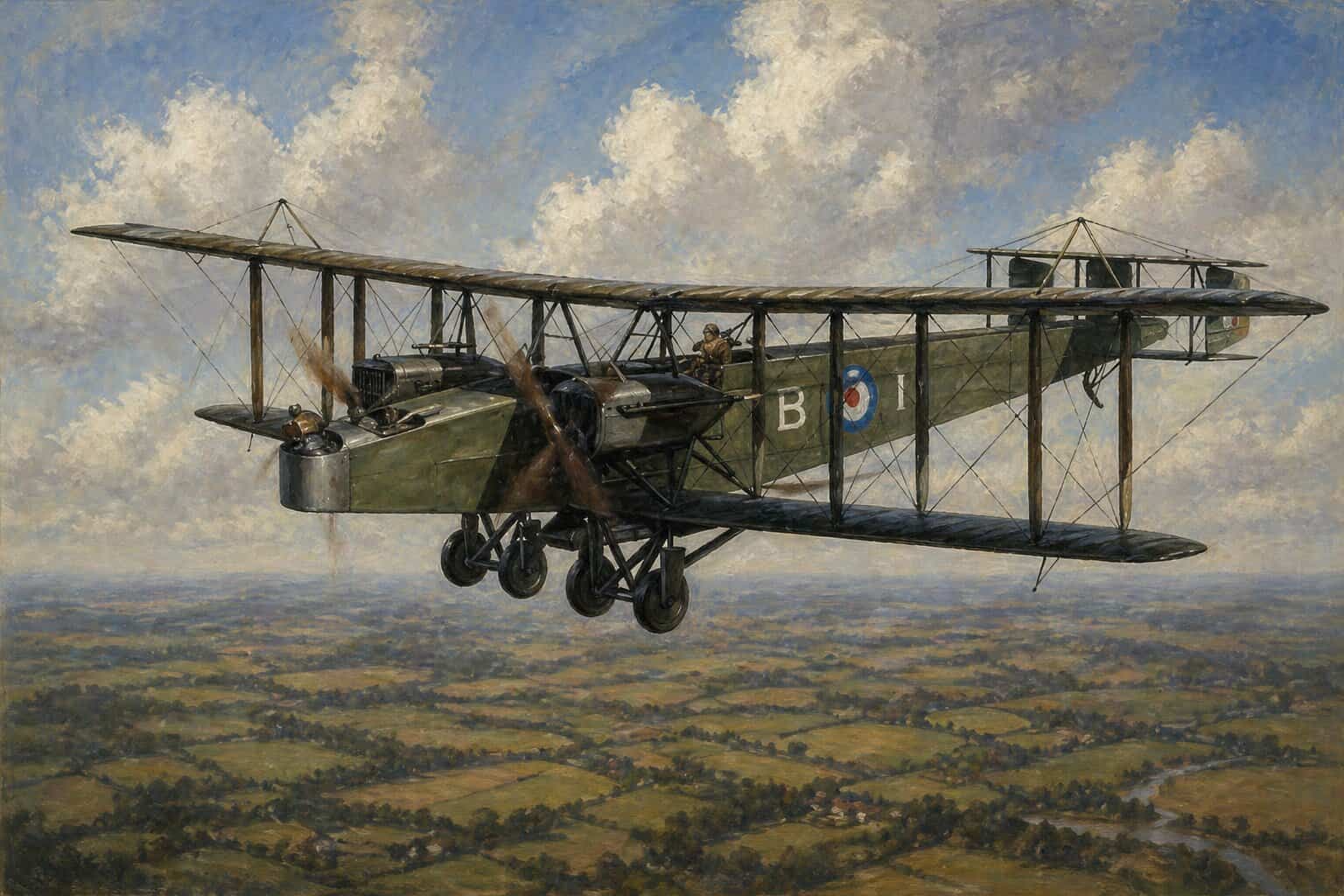
On 28 May 1918, Captain C. H. Darley led a low-level Handley Page raid against the lock gates on the Bruges-Zeebrugge Canal. The aim was straightforward but ambitious: to damage the lock system and help bottle up German naval traffic on the inland waterway en route to Zeebrugge. According to the surviving outline, Darley’s aircraft released three 520-pound bombs, but the attempt did not succeed in stranding enemy vessels. Even so, the raid illustrates the increasingly purposeful way in which British air power was being directed against maritime infrastructure in the closing year of the First World War.
The canal mattered because Bruges and Zeebrugge formed part of a linked naval system. German destroyers, torpedo craft and submarines operating from the Flanders coast depended upon protected approaches and supporting facilities inland. If the locks could be disabled, movement through the canal might be restricted at a moment when Allied forces were seeking every means to reduce pressure from the U-boat campaign and German light naval forces in the Channel and southern North Sea.
A difficult target at low level
Attacking lock gates from the air in 1918 was far from simple. Bombing technology, sights and navigation were all much less developed than they would become in later decades, while a structure such as a lock demanded precision rather than area attack. A heavy bomber also had to reach the target, identify the correct aiming point and deliver its bombs accurately enough to produce useful engineering damage. That was difficult even in good conditions. It became harder still if the aircraft had to come in low, where ground fire and the sheer speed of events reduced the margin for error. The Handley Page force was one of Britain’s principal heavy-bomber assets of the period, capable of carrying substantial bomb loads. Yet aircraft alone did not guarantee success. The problem was as much a matter of method as of courage: how to use a relatively new weapon against a small but important point target. Darley’s raid belongs to that wider story of wartime experimentation, in which crews were asked to undertake missions that demanded accuracy beyond what contemporary systems could reliably provide.
Results and significance
The immediate outcome was disappointing. The bombs failed to achieve the desired effect, and enemy vessels were not trapped by a shattered lock system. That failure should be acknowledged plainly. Even so, the raid is significant because it shows the RAF’s predecessor services thinking in operational terms that now seem strikingly modern. Rather than attacking only troops or broad industrial areas, they were trying to hit a chokepoint whose destruction might generate wider effects disproportionate to the number of bombs dropped.
It also reflects the growing integration of air action with the wider campaign against the Flanders bases. The famous Zeebrugge and Ostend operations of 1918 are often remembered for their naval drama, but air attacks formed part of the same strategic effort to disrupt German access to the coast. Darley’s mission falls within a broader Allied effort to apply pressure on the infrastructure that sustained enemy operations.
A Wider Reflection on Early Air Power
For RAF history, 28 May 1918 offers a useful reminder that not every important mission was a success in the immediate tactical sense. Early air power advanced through both difficult trials and clear victories. Raids such as this one revealed both the promise and the limitations of bombing in its formative years: the promise of striking critical nodes deep within an enemy system, and the limitations imposed by accuracy, defences, and technology.
Darley’s attack on the Bruges canal locks did not produce the decisive result intended, but it still belongs in the story of how British airmen learned to think about infrastructure, access and operational effect. On this day, the service was already grappling with ideas that would shape air warfare for decades to come.