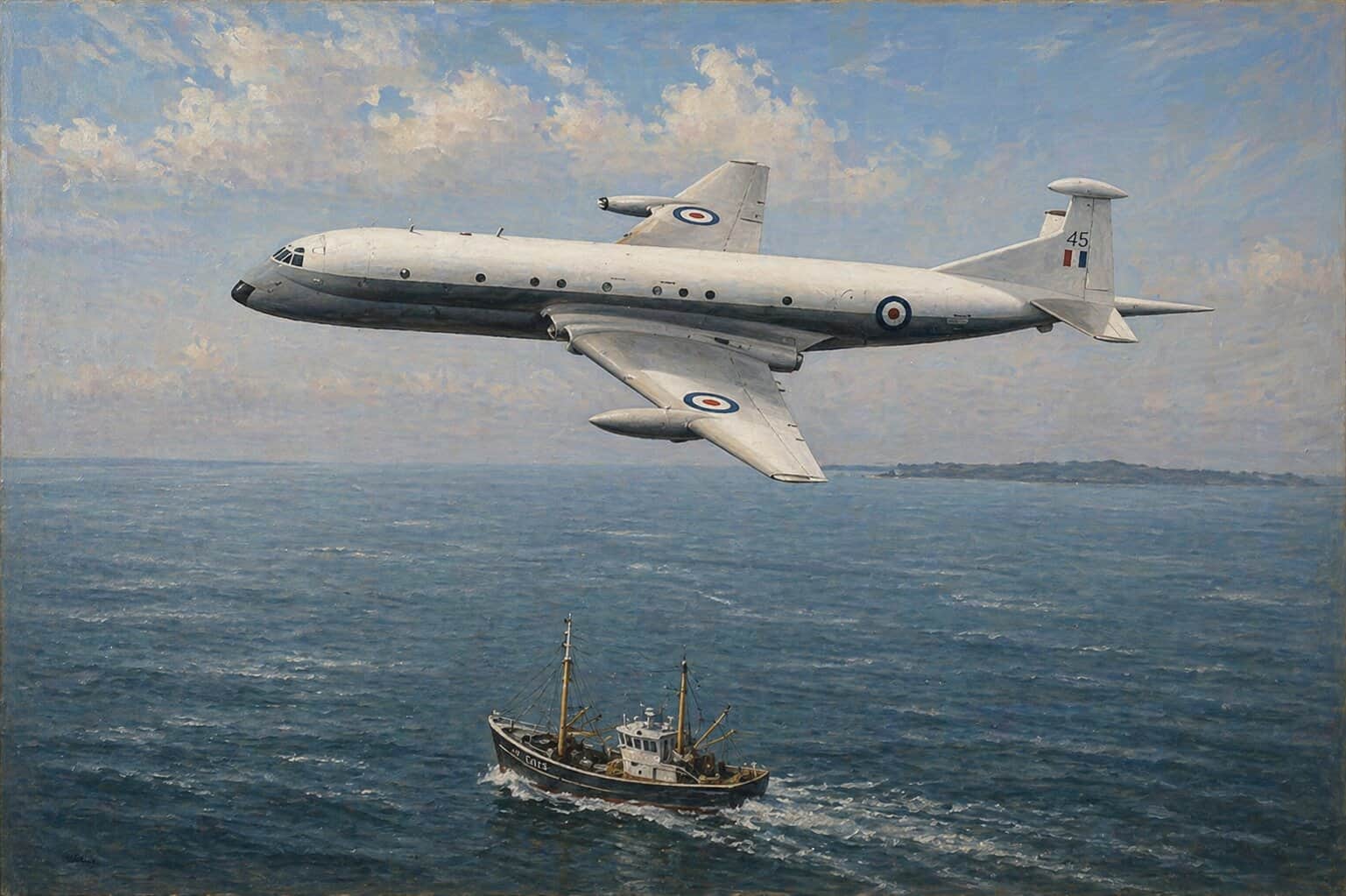
On 17 May 1973, RAF Nimrods began surveillance patrols over Icelandic gunboats and British trawlers operating inside the declared 50-mile fishing zone during the Second Cod War. The start of these patrols illustrated the RAF’s role in a politically tense maritime dispute, where the issue was not conventional war but the protection of British interests, the monitoring of contested waters, and the management of a dangerous confrontation between allies.
The Cod Wars between Britain and Iceland were rooted in disputes over fishing rights and maritime jurisdiction, but they held broader political significance because they involved a NATO ally and threatened to create a serious diplomatic strain in the North Atlantic. In that setting, the role of the RAF was one of observation, presence and support rather than offensive action.
The RAF and a Maritime Dispute
The aircraft used was the Nimrod, the RAF’s principal maritime patrol aircraft of the period. Well-suited to long over-water missions, the type enabled Britain to monitor fast-moving incidents across a broad stretch of ocean and maintain a clear picture of encounters between Icelandic patrol vessels and British trawlers.
That surveillance role mattered. The dispute at sea could escalate quickly, and reliable information was essential for both operational awareness and political decision-making. By deploying Nimrods, the RAF helped provide the British authorities with a means of monitoring events as they unfolded in contested waters.
The use of aircraft in this context also showed the flexibility of air power. The RAF was not being employed for bombing, air defence or transport, but for maritime observation in support of national policy. Such tasks could be less dramatic than wartime operations, yet they were still important in periods of international tension.
Deterrence and Surveillance
The Second Cod War was marked by repeated confrontations at sea, especially over the extension of Iceland’s exclusive fishing limits. For Britain, the issue involved both the livelihood of its fishing industry and the principle of navigation and access in international waters. For Iceland, it was a matter of sovereign control and economic survival.
RAF surveillance did not settle those competing claims, but it played a practical role in managing a volatile situation. By keeping watch on Icelandic gunboats and British trawlers, Nimrod crews contributed to a more informed British response. They underlined that the dispute was being taken seriously at the national level.
The patrols also belong to the wider Cold War story of the RAF. In the 1970s, the service was deeply involved in NATO responsibilities, maritime reconnaissance and support to British strategy in the North Atlantic region. Operations connected with the Cod Wars sat within a broader pattern of peacetime readiness and strategic presence.
Cold War Maritime Significance
The beginning of Nimrod surveillance patrols on 17 May 1973 is a useful reminder that RAF history is not confined to declared wars and famous combat operations. Air power could also be applied in contested political situations where information, endurance and presence mattered more than firepower.
The patrols showed that RAF effectiveness in a crisis could rest on persistence, situational awareness and disciplined reporting rather than on the use of weapons. In that sense, the Nimrod sorties belong to the practical history of Cold War maritime containment, where information and presence were often Britain’s most useful tools.