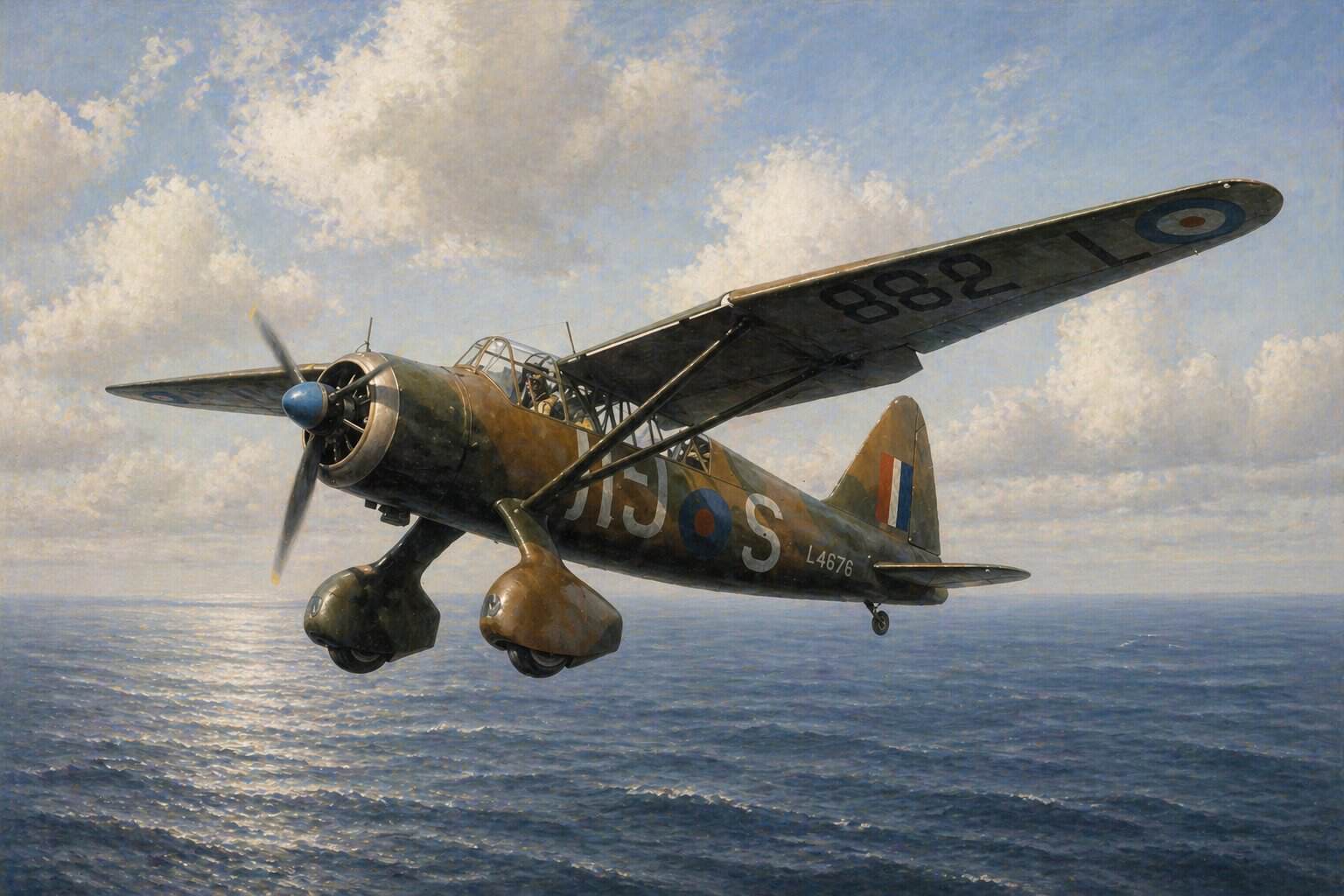
On 22 May 1940, Army Co-operation Lysanders began hazardous supply drops to the surrounded garrison at Calais. The mission was simple in concept but severe in execution: small RAF aircraft were sent into a shrinking battlefield to deliver essential stores to troops cut off by the German advance. It was one of those episodes in which air power was used not for decisive attack, but to sustain resistance under extreme pressure.
Improvisation in the Battle of France
The position at Calais was already grave. German forces had driven rapidly to the Channel, isolating Allied formations and placing garrisons such as Calais under intense strain. In such circumstances, every hour of continued resistance mattered. Holding a port, delaying enemy movement and forcing the diversion of effort could all shape events beyond the immediate perimeter.
The Lysander was not a transport aircraft in the usual sense. It was designed for Army Co-operation work, especially liaison, observation and short-field utility. Yet war often compels aircraft into roles beyond their original design. When the garrison needed supplies and ordinary surface communications had become precarious or impossible, the RAF used what it had. That decision itself speaks to the urgency of the moment.
The dangers of the mission
Flying to Calais in May 1940 was no routine delivery task. The airspace was contested, the ground defences were active, and the tactical situation was unstable. Any aircraft making a low-level or carefully positioned drop faced the combined hazards of enemy fire, navigation under pressure and the sheer difficulty of placing supplies where surrounded troops might recover them quickly. Even when the drop was completed, there could be no guarantee that everything sent would prove usable on the ground.
That helps explain why the episode deserves attention. The bravery in such missions did not rest upon a spectacular strike or a famous dogfight. It rested upon persistence in the face of an unfavourable battlefield. To continue flying into an encircled port with necessities required a quieter sort of courage, but courage all the same.
What the drops achieved
Supply by air could not transform the strategic position at Calais. A few aircraft carrying limited loads were never going to reverse the wider collapse of the front. The value of the operation was therefore measured differently. It provided immediate assistance where assistance was still possible, showed that the garrison had not been abandoned, and illustrated the RAF’s willingness to adapt to battlefield need.
Such efforts also belonged to the larger struggle unfolding along the Channel coast. The defence of Calais imposed pressure on the German timetable at a crucial stage of the campaign. Any support that helped sustain the defenders, even briefly, had significance beyond the weight of the parcels dropped. Air supply in this context was part of a broader attempt to gain time in a crisis when every second counted.
Why the episode matters
The Lysander supply drops to Calais are a useful reminder that RAF history is not made only of grand bombing offensives or famous fighter battles. Air power also includes liaison, communication, emergency resupply and tactical improvisation. In 1940, the service was still learning, adapting and responding to a fast-moving continental disaster. Missions such as this reveal how flexible aircraft could become when circumstances demanded it.
For the men in Calais, the arrival of supplies from the air offered limited but real assistance; for the RAF, the sortie showed how aircraft could still serve an encircled force in a collapsing campaign. The episode belongs to the early-war record of improvisation, when modest means were used to sustain resistance for as long as possible.