On This Day, 1939: On 21 October 1939, 46 Squadron Hurricanes intercepted Heinkel He 115 floatplanes over the North Sea in the…
Read the entry →
Marshal of the Royal Air Force
Hugh Trenchard
Learn how Hugh Trenchard helped secure the RAF as an independent service and shaped British air power through war and the inter-war years.
Early Life
Hugh Montague Trenchard was born at Taunton, Somerset, on 3 February 1873. His early education gave little sign of the authority he would later exercise in British military aviation, and he struggled to distinguish himself academically before entering the Army. In 1893, he was commissioned into the Royal Scots Fusiliers and began the long imperial service that shaped his outlook before the age of air power.
His Army career took him to India, South Africa during the Boer War, and West Africa. In South Africa, he was severely wounded, and the effects of that injury left him in poor health for a prolonged period. During convalescence in Switzerland, he recovered sufficiently to resume active life, and the experience became one of the turning points in a career that might otherwise have remained that of a conventional infantry officer.
Entry into Service
Trenchard turned to flying only in 1912, when military aviation was still experimental and far from institutionally secure. He qualified as a pilot in the pre-war Royal Flying Corps and soon joined the Central Flying School, where training, doctrine and command were beginning to take shape. This move placed him close to the small group of officers who would define British air service culture before and during the First World War.
The shift from infantry to aviation suited him. Trenchard was less important as a pioneering pilot in the romantic sense than as an organiser, disciplinarian and commander. He recognised early that military aviation would matter only if it could be expanded, administered and used offensively rather than kept as a minor auxiliary arm.
Operational Career
During the First World War, Trenchard rose rapidly through the senior command structure of the Royal Flying Corps. He held important field appointments and, in 1915, became commander of the Royal Flying Corps in France. There he oversaw a period of rapid growth under the intense pressures of the Western Front, where reconnaissance, artillery observation, air fighting and bombing all became increasingly important to the British war effort.
His command style was energetic, austere and demanding. Trenchard believed that British air units had to maintain constant offensive pressure even when losses were heavy, arguing that the air service could not protect the Army simply by remaining on the defensive. That view helped shape the RFC’s ethos and left a lasting mark on RAF thinking. It also contributed to later debate, because the costs of relentless offensive action could be severe.
Major Actions or Commands
In January 1918, Trenchard became the first Chief of the Air Staff during the creation of the Air Ministry, though his first tenure was brief and marked by disagreement within the new machinery of an independent air service. Later in 1918, he took command of the Independent Air Force, Britain’s strategic bombing formation operating against Germany in the war’s closing phase.
His greatest institutional influence came after the war. Returning as Chief of the Air Staff in 1919, he remained in post until 1930. He played a central role in securing the Royal Air Force‘s status as an independent service at a time when its continued existence was not guaranteed. He shaped officer training, command structures and service identity, while also arguing for the importance of strategic bombing and for the use of air power in imperial policing.
That legacy was consequential but not uncomplicated. Trenchard’s advocacy of an independent air arm helped preserve the RAF and gave Britain a coherent air service between the wars. At the same time, later historians have debated both the moral implications and the practical assumptions underlying the bomber doctrine and air-control policies associated with his period of influence, particularly in relation to imperial operations such as those in Iraq.
Later Life and Death
Trenchard retired from the RAF in 1930, having become one of the most powerful figures in British military administration. He later served as Commissioner of the Metropolitan Police, a role that showed how far his public standing extended beyond the armed services. In later life, he remained closely associated with the RAF as one of its elder statesmen and symbolic founders.
He died in London on 10 February 1956. His ashes were buried in the RAF Chapel at Westminster Abbey, an indication of the place he had come to occupy in the service’s historical memory.
Historical Significance
Hugh Trenchard is remembered above all as the leading architect of RAF independence and one of the principal founders of British air power as an institution. He was not chiefly significant for personal combat achievement, but for helping define how air forces would be organised, led and defended within the state.
The description of Trenchard as the father of the RAF remains widely used and broadly justified, though it can oversimplify a more collective and contested history that also involved other military and political figures. Even so, his influence on command culture, inter-war doctrine and the survival of the independent air service was profound. Few individuals did more to shape the form the RAF took in its first generation.
| Dates | Role | Unit | Aircraft |
|---|---|---|---|
| 1893-1912 | Infantry officer | Royal Scots Fusiliers and British Army service in India, South Africa and Nigeria | |
| 1912-1914 | Pilot and instructor | Central Flying School and the Royal Flying Corps | Qualified as a military aviator in the pre-war air service |
| 1915-1917 | Commander | Royal Flying Corps in France | Directed rapid expansion and offensive air operations on the Western Front |
| 1918 | Chief of the Air Staff; Commander | Air Ministry; Independent Air Force | Led the new air service briefly, then commanded Britain's independent bombing force |
| 1919-1930 | Chief of the Air Staff | Royal Air Force | Secured RAF independence and shaped inter-war doctrine, organisation and training |
| 1931-1935 | Commissioner | Metropolitan Police | Senior public appointment after retirement from the RAF |
Trenchard is chiefly remembered as the father of the Royal Air Force, a reputation rooted less in personal flying achievement than in institution-building, command and political persistence. His standing rests on preserving the RAF as an independent service and shaping its inter-war identity, but his association with strategic bombing doctrine and imperial air control also makes his legacy a subject of continuing historical debate.
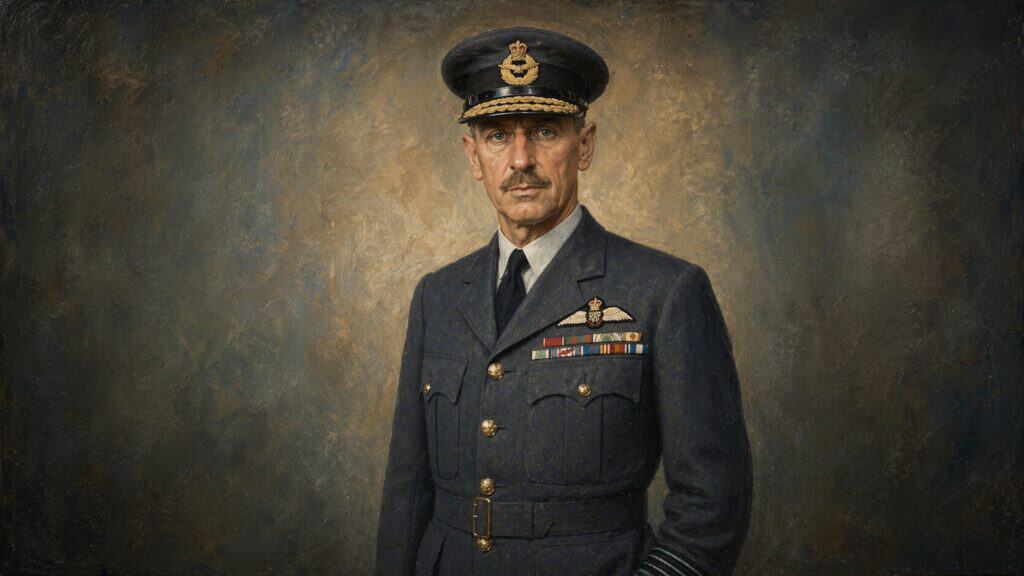
Trenchard Resigns as Chief of the Air Staff in 1918
Why Hugh Trenchard’s 1918 resignation after a dispute with Lord Rothermere became an early leadership crisis…
12 April 2026 · 3 minThe RAF Is Founded as the World’s First Independent Air Force
On 1 April 1918, the Royal Air Force was founded through the merger of the RFC…
1 April 2026 · 3 minFirst Operational Radar Aircraft Detection Trial Conducted
On 26 February 1935, Britain carried out an early radar aircraft-detection trial, a key step towards…
26 February 2026 · 4 min