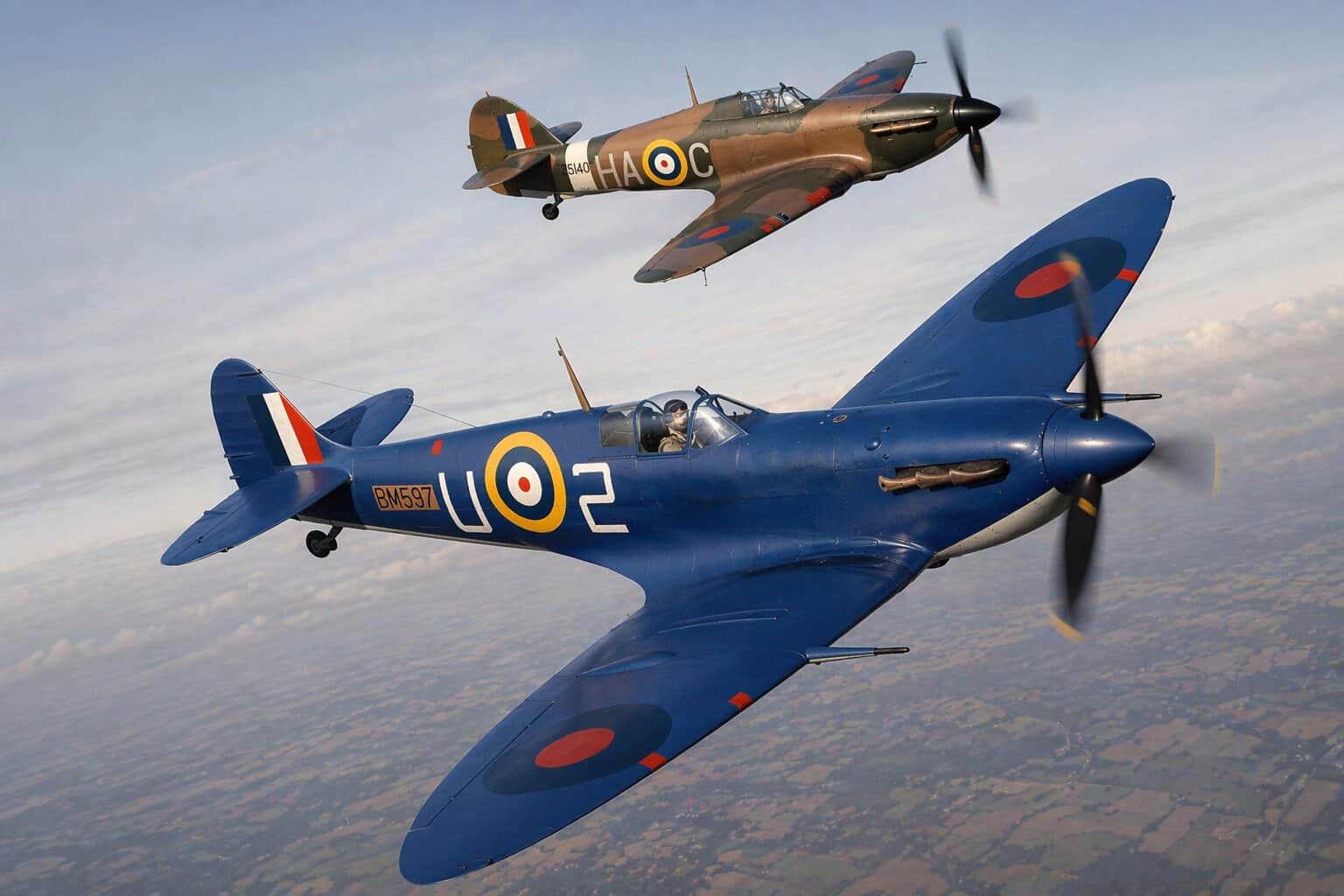
Malta’s survival as an Allied base in the central Mediterranean depended in large part on the Royal Air Force’s ability to keep fighter strength on the island despite sustained Axis pressure. Between 1940 and 1942, repeated deliveries of Hawker Hurricane and later Supermarine Spitfire aircraft helped prevent the island’s air defence from collapsing. Reinforcement by air was not simply a matter of replacing losses. It was an ongoing operational struggle involving carriers, ferry flights, maintenance, dispersal, and the rapid integration of new aircraft into combat.
Background
Malta occupied a position of unusual importance in the Mediterranean war. From the island, Allied air and naval forces could threaten the sea routes on which Axis armies in North Africa depended. That made Malta an obvious target. The island’s airfields, docks and support facilities came under persistent attack, especially when the Luftwaffe reinforced the Regia Aeronautica in the theatre.
For the RAF, the problem was not only to defend Malta itself but to preserve an offensive base close enough to disrupt Axis communications. Aircraft losses on the island could not easily be made good by conventional means. Shipping routes were dangerous, local resources were limited, and the tempo of operations imposed severe strain on pilots, ground crews and infrastructure. Reinforcement from outside became essential.
Delivering Fighters To Malta
Early in the siege period, Hawker Hurricane fighters formed an important part of Malta’s defence. Their arrival provided a necessary increase in strength, but losses and serviceability issues meant reinforcements had to continue. As the air battle intensified, Supermarine Spitfire deliveries became increasingly important, particularly in 1942, when the defence of the island reached a critical stage.
These reinforcements were often delivered by carrier launch operations, with fighters flown off in the western Mediterranean and sent on to Malta. Operations such as Operation Calendar illustrated both the ingenuity and the risk involved. Delivering the aircraft was only the first part of the problem. Newly arrived fighters required fuel, servicing, dispersal and immediate protection from attack. Aircraft that had completed the journey to Malta could still be destroyed on the ground if the island’s defensive organisation was not ready to absorb them.
The reinforcement effort depended on more than just pilots and aircraft. Ground crews, repair arrangements, airfield management and a more coherent fighter-control system all mattered. As experience accumulated, Malta’s defenders became better able to conceal, refuel, rearm and commit new arrivals before they were lost to bombing or strafing.
Operational Effect
Reinforcement by air did not end the siege in a single stroke. Attrition remained severe, and the RAF on Malta still faced periods when aircraft numbers, pilot fatigue and maintenance pressures threatened to undermine the defence. Even so, repeated deliveries prevented a decisive collapse. They ensured that the island retained a fighter force capable of contesting Axis attacks and imposing a cost on every major assault.
That mattered beyond local air defence. As fighter strength improved, Malta became better able to protect its airfields and harbour areas, and the island’s wider offensive role could be revived. Aircraft based there contributed to the growing pressure on Axis shipping moving between Italy and North Africa. In that sense, reinforcement was not merely defensive; it helped preserve Malta as an operational base from which the Allies could influence the wider campaign.
Significance
The RAF’s reinforcement of Malta by air showed how closely aircraft supply, air defence and maritime strategy were connected in the Mediterranean war. The arrival of Hurricanes and Spitfires did not remove Malta’s vulnerability, but it prevented the island from being neutralised at a moment when its loss would have eased Axis communications and weakened Allied reach in the central Mediterranean.
The episode also demonstrated that air power depended on organisation as much as on aircraft performance. Carrier delivery, local command arrangements, dispersal, servicing and sustained operational management all shaped the result. By keeping Malta in the fight, the RAF helped preserve a base whose continued resistance carried consequences well beyond the island itself.