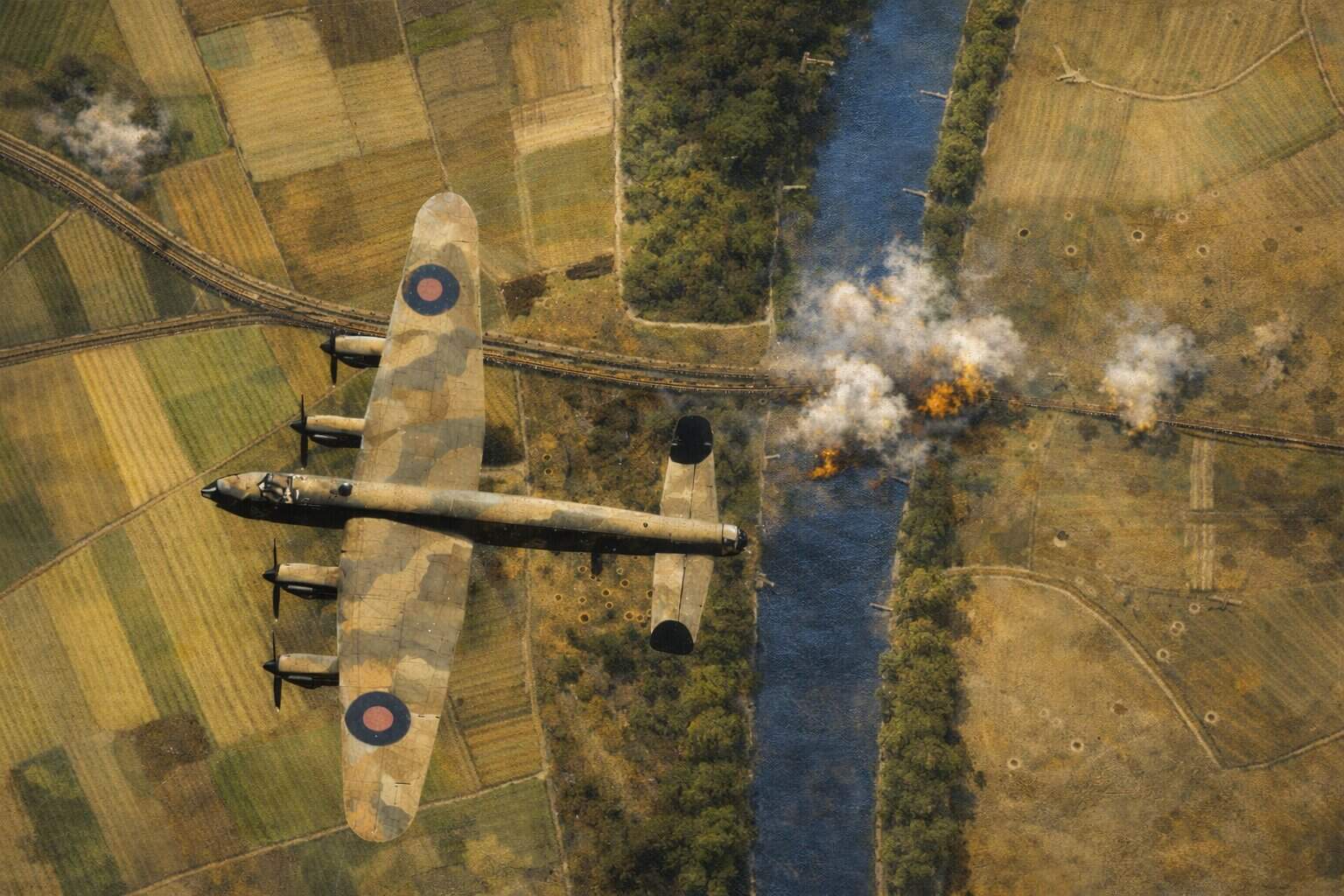
On 14 March 1945, Squadron Leader C. C. Calder of 617 Squadron dropped the 22,000-lb Grand Slam bomb from an Avro Lancaster on the Bielefeld viaduct, collapsing the structure. The attack marked the first operational use of the largest conventional bomb employed by the RAF during the Second World War. By that stage of the conflict, the Allied air offensive had reached a high level of technical and tactical sophistication, and the Grand Slam represented one of its most striking expressions.
The target itself mattered greatly. Viaducts were essential parts of the enemy’s transport network, carrying rail traffic and sustaining the movement of troops and supplies. Striking such structures could create serious disruption, especially in the closing months of the war when Germany’s ability to move resources was already under intense pressure. The destruction of the Bielefeld viaduct had both practical and symbolic significance.
What Made the Grand Slam Different
The Grand Slam was designed as a weapon for destroying especially strong or important targets. Its immense weight is central to its story, but the bomb’s significance lies not only in size. It reflected a particular wartime effort to defeat hardened structures that ordinary bombing might damage only incompletely. Rather than merely scatter destruction, such weapons were intended to produce decisive structural effects.
By March 1945, Britain’s bombing campaign had moved far beyond the earlier years of improvisation and limitation. Equipment, methods and target selection had all developed. The first use of the Grand Slam showed how air power was being applied with increasing precision against specific strategic infrastructure. It was a demonstration not simply of force, but of maturing capability.
The Attack on Bielefeld Viaduct
Squadron Leader Calder’s attack achieved the intended result: the viaduct collapsed. That outcome was important because it validated both the new weapon and the specialised methods developed to deliver it. The raid mattered in both engineering and operational terms. It showed that the RAF could now bring exceptional destructive force against carefully selected infrastructure whose survival had military value.
Significance
The first Grand Slam raid belongs to the final phase of the bomber offensive, when RAF air power was increasingly directed against targets whose destruction could produce immediate disruption. The attack on Bielefeld was not simply an instance of using a larger bomb for dramatic effect. It was an application of accumulated wartime experience in weapon design, target analysis and delivery technique.
For that reason, the first operational use of the Grand Slam stands as an important moment in RAF history. It linked 617 Squadron, the Lancaster and the new bomb in a demonstration of how far the RAF’s heavy-bomber war had evolved by 1945. The collapse of the viaduct gave the raid a clear practical result, while the weapon itself symbolised the extreme end of Britain’s wartime effort to defeat hardened targets from the air.