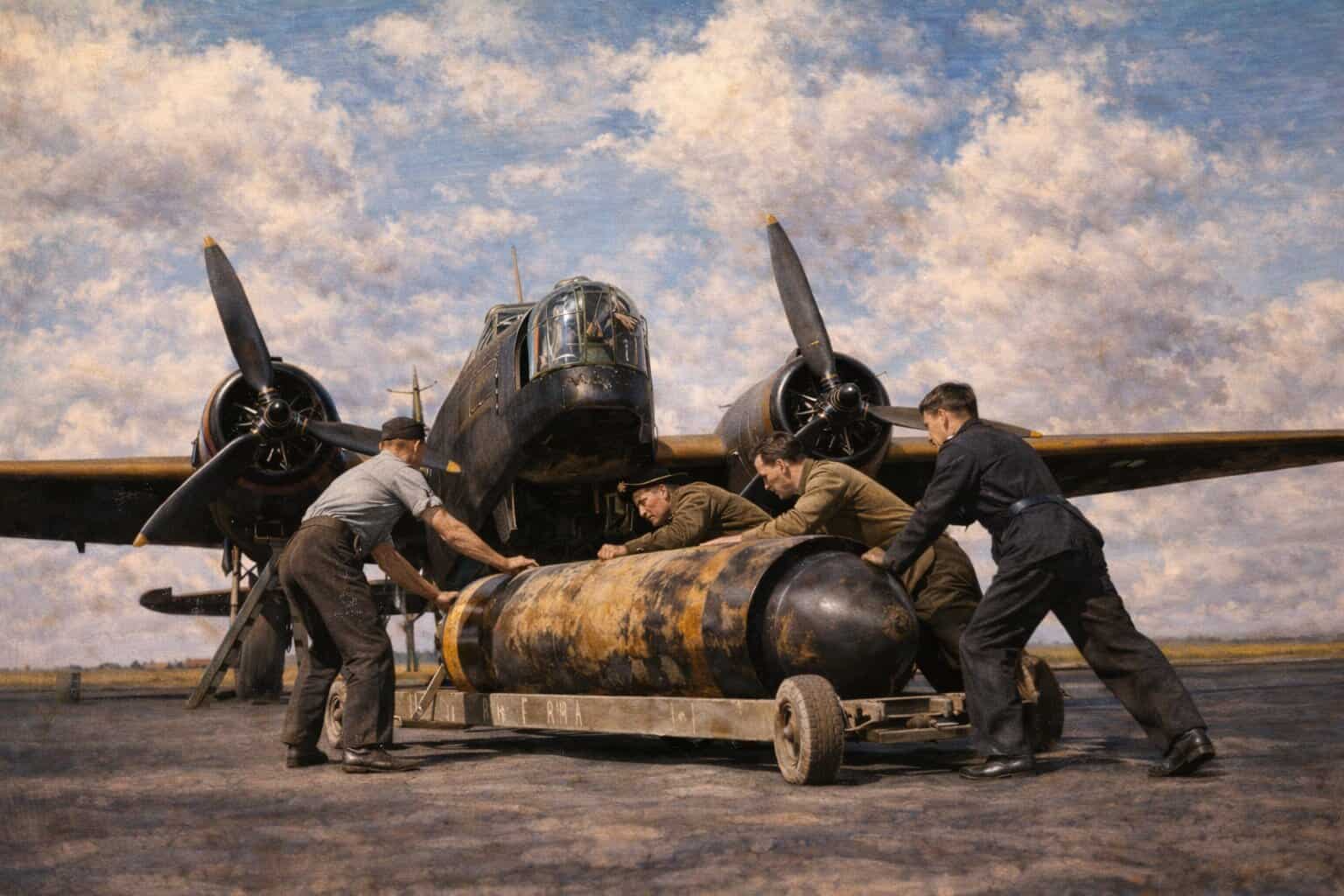
On 31 March 1941, Bomber Command made the first operational use of the 4,000-pound high-capacity bomb during an attack on Emden, with the weapon carried by a Vickers Wellington. The event was significant not simply because a new munition had entered combat, but because it reflected an important stage in the RAF’s continuing attempt to increase the striking effect of its bomber force.
In the early years of the Second World War, when bombing accuracy, aircraft performance and operational doctrine were all under intense scrutiny, the arrival of a much heavier bomb offered a new means of concentrating destructive power.
The Search for Greater Effect
By 1941 the RAF had already learned hard lessons about the limits of bombing with smaller loads under difficult operational conditions. Weather, darkness, navigation problems and enemy defences all reduced the certainty with which attacks could achieve the desired result. In response, Bomber Command sought ways to maximise the impact of those aircraft that did reach their targets.
A larger high-capacity bomb promised a more powerful blast effect against industrial and urban structures, making each successful hit potentially more consequential. The 4,000-pound bomb was therefore not merely a bigger weapon in a simple numerical sense. It represented an effort to shape bombing around blast power and structural damage on a larger scale. This was part of a broader wartime pattern in which the RAF constantly adapted equipment in order to translate operational effort into greater practical effect.
The Attack on Emden
Emden, as a German port and industrial centre, was an appropriate target for the introduction of such a weapon. Bombing attacks against ports aimed to disrupt trade, naval utility, industrial activity and the wider functioning of the enemy war economy. In choosing a target of that type, the RAF was applying a strategic logic already present within the bomber offensive: strike at facilities and urban-industrial areas that supported major effort to increase the effect of Bomber Command attacks at a time when the service was still searching for the most effective means of strategic attack.
Significance
The first operational use of the 4,000-pound bomb matters because it joined new technology to a wider doctrinal development within the RAF. Heavier high-capacity weapons were part of the service’s effort to translate bomber sorties into greater blast effect and more serious physical damage against important targets. The attack on Emden therefore signalled not merely the arrival of a new bomb, but a broader shift in how destructive power was being conceived and delivered.
In RAF history, such changes are important even when they lack the drama of a famous raid or air battle. The introduction of the 4,000-pound bomb formed part of the steady wartime process by which Bomber Command adapted its equipment and methods. What appeared at first to be a technical innovation quickly became part of the broader offensive logic of the bomber war.